
I analyzed 250M AI responses. Here is the uncomfortable truth about AI Search right now.
After processing more than 250,000,000 AI answers across eight major answer engines, the patterns are no longer interesting. They are definitive. A few of them completely rewrite how marketers should think about visibility in an AI driven world.
Download a copy of my presentation here.
1. AI Search is not following Google. It is building its own ranking system
One of the clearest signals in the entire analysis: ChatGPT’s chosen sources overlap with Google only 39 percent. Humans heavily overweight the top of the SERP. LLMs do not. They distribute attention more evenly across positions 1 through 10.
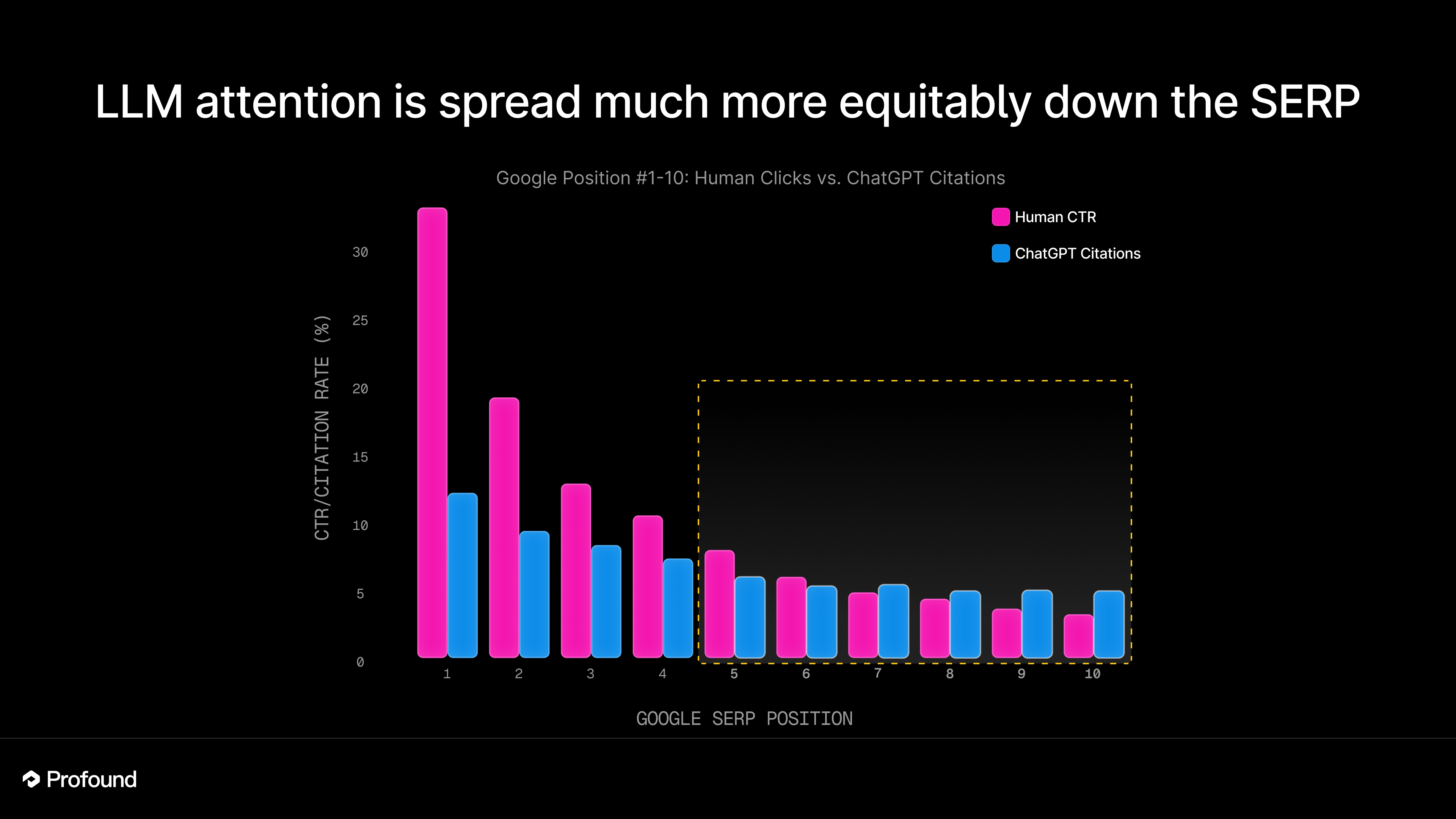
If your strategy is built around winning position 1, you are optimizing for a world that no longer reflects how AI selects information. Visibility now comes from being the best answer, not the highest SERP rank.
My takeaway: AI engines already operate as independent ranking systems. The gap is widening.
2. If you are not indexed by Google, your AI visibility is dead
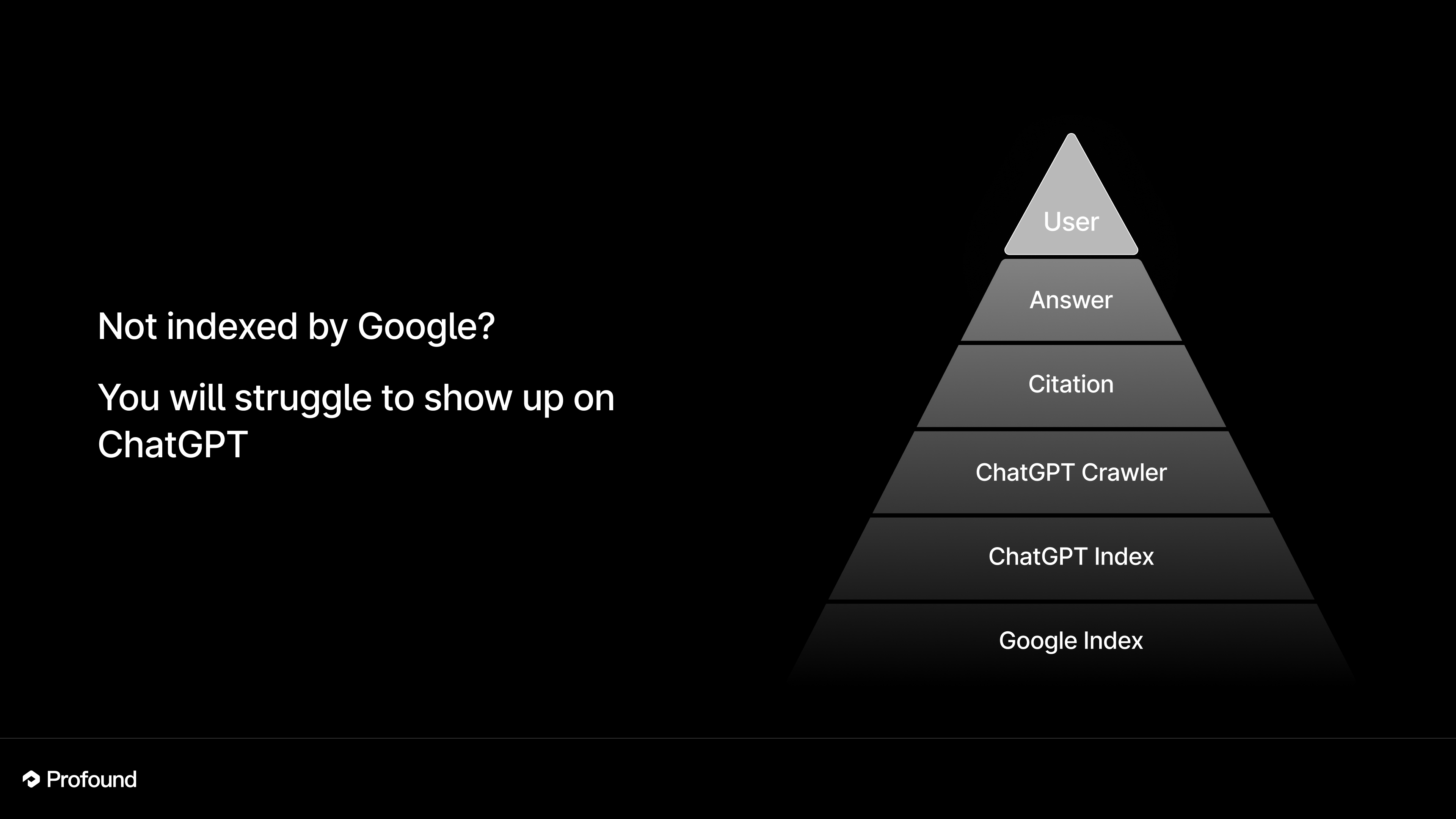
If you are missing from Google’s index, you are missing from ChatGPT’s index. SEO is no longer the finish line. It is the qualifying round. The real competition happens at the citation layer.
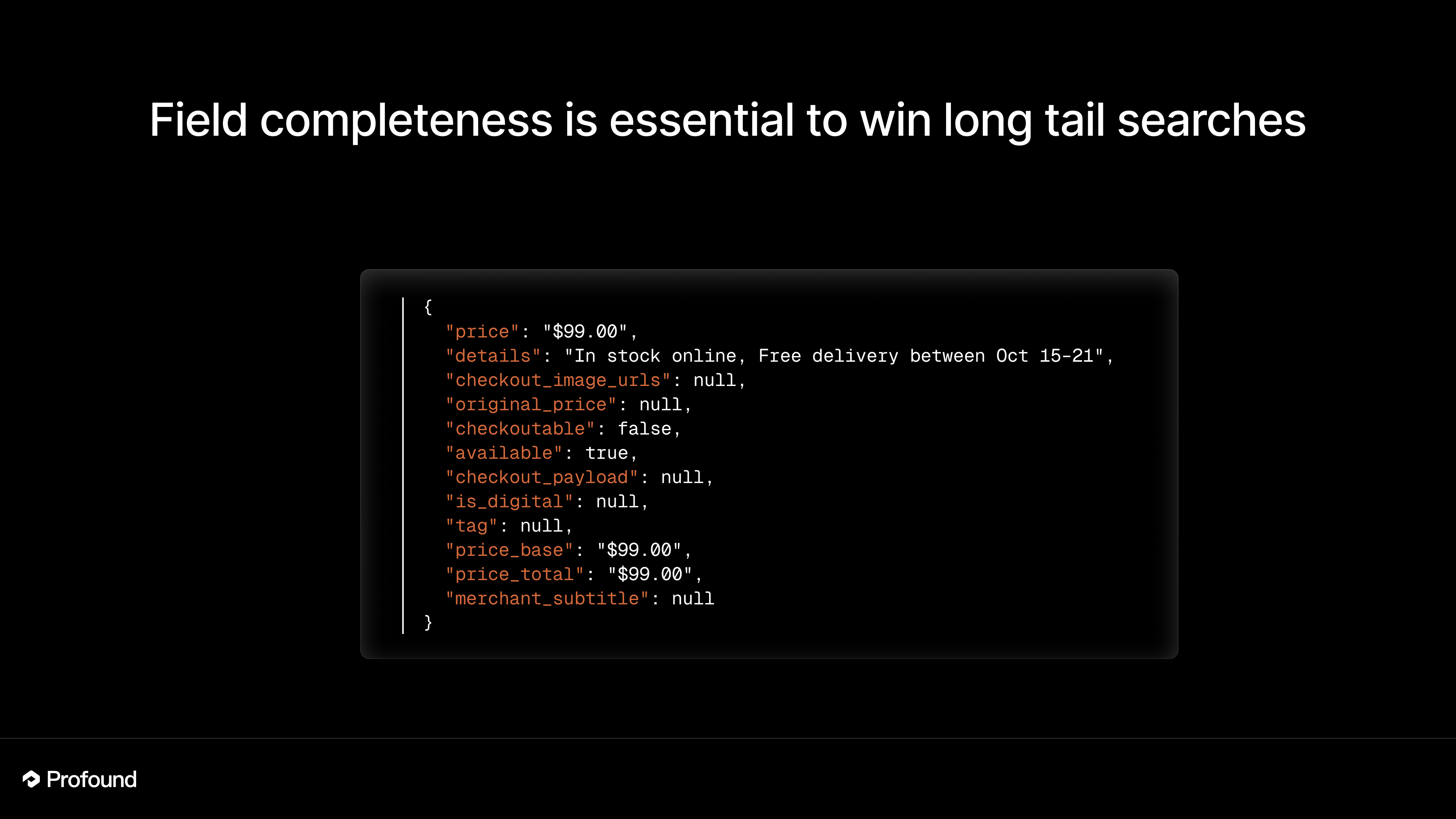
3. OpenAI is shifting from scraping to structured product feeds
This is a transformation that most marketers have not internalized. The old world relied on scraping HTML and hoping the model parsed it correctly. The new world relies on structured feeds. Product attributes like stock, ratings, and specs flow directly into the answer engine.
This shift mirrors what happened in Google Shopping years ago. The brands with clean, structured, machine ready product data will win. Brands with messy PDPs will slowly disappear.
And PDP fundamentals still matter. The products that appear most often in AI answers also have richer content profiles:
- 848 percent more FAQs
- 103 percent more videos
- 36 percent higher ratings
- 23 percent more spec entries
- 18 percent longer titles
- 11 percent higher prices
- 7.7 percent more natural language URLs
AI does not guess. It cites. And it cites the most complete products.
4. AI engines generate their own search queries. You need to understand the fan out
A single question produces an average of 2.4 underlying queries. A prompt about cinnamon generated intent families such as gourmet spice shops, specialty spice shops, and grocery stores near me.
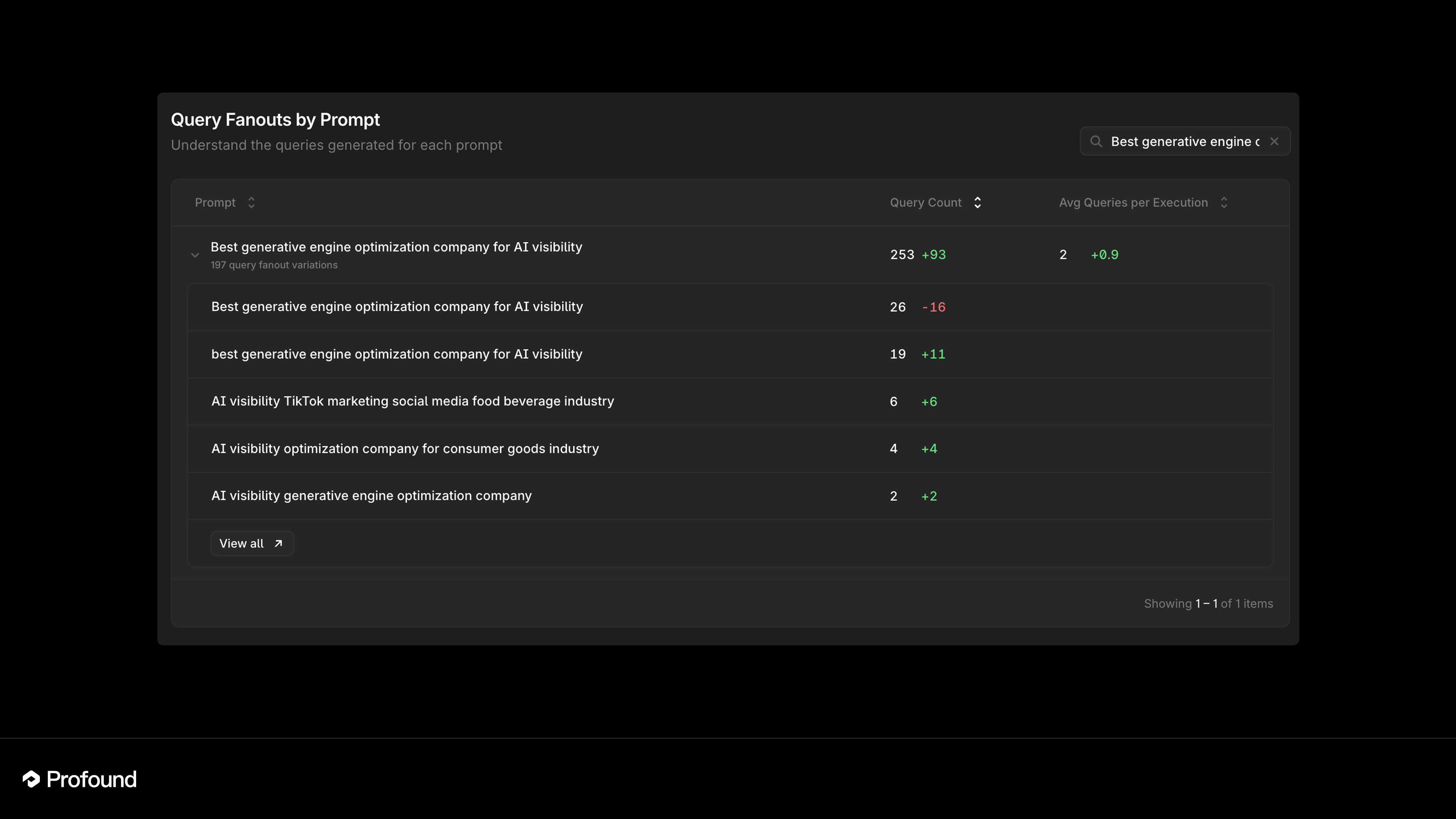
You no longer rank for keywords. You rank for the intents the model derives from the user’s question. The model decides the vocabulary. Brands need to measure AI query clusters, not keywords.
5. Content must be architected to be cited
AI visibility belongs to content that satisfies the model’s scoring function for trust, coverage, clarity, specificity, and machine interpretability.
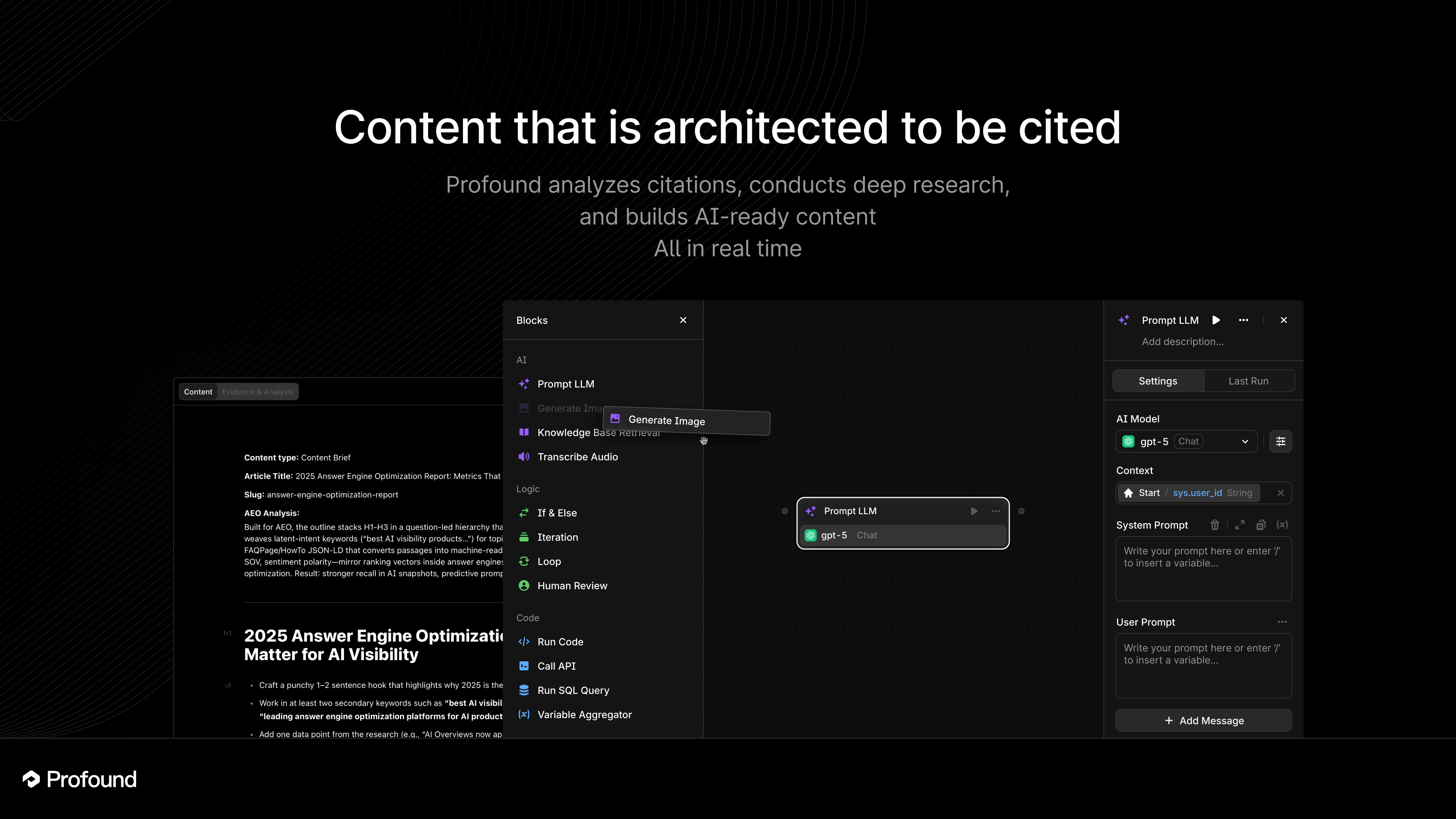
Models cite content that is structured, explicit, factual, and context rich. This is why Profound is investing in citation intelligence, page authority tracking, prompt and topic volume modeling, and AI ready content creation.
My takeaway: Brands that design content for citation will own the next decade of search visibility. Everyone else will fade without realizing why.
What happens now
AI Search is becoming the most important and most misunderstood channel in digital marketing. The opportunity is massive, but uneven. Most brands will lose visibility quietly. A small number will see what is changing and adapt early. The gap between those groups will compound quickly.
If you want to understand how answer engines interpret your brand, you need to measure it directly. Without visibility into your AI presence, you are guessing.