
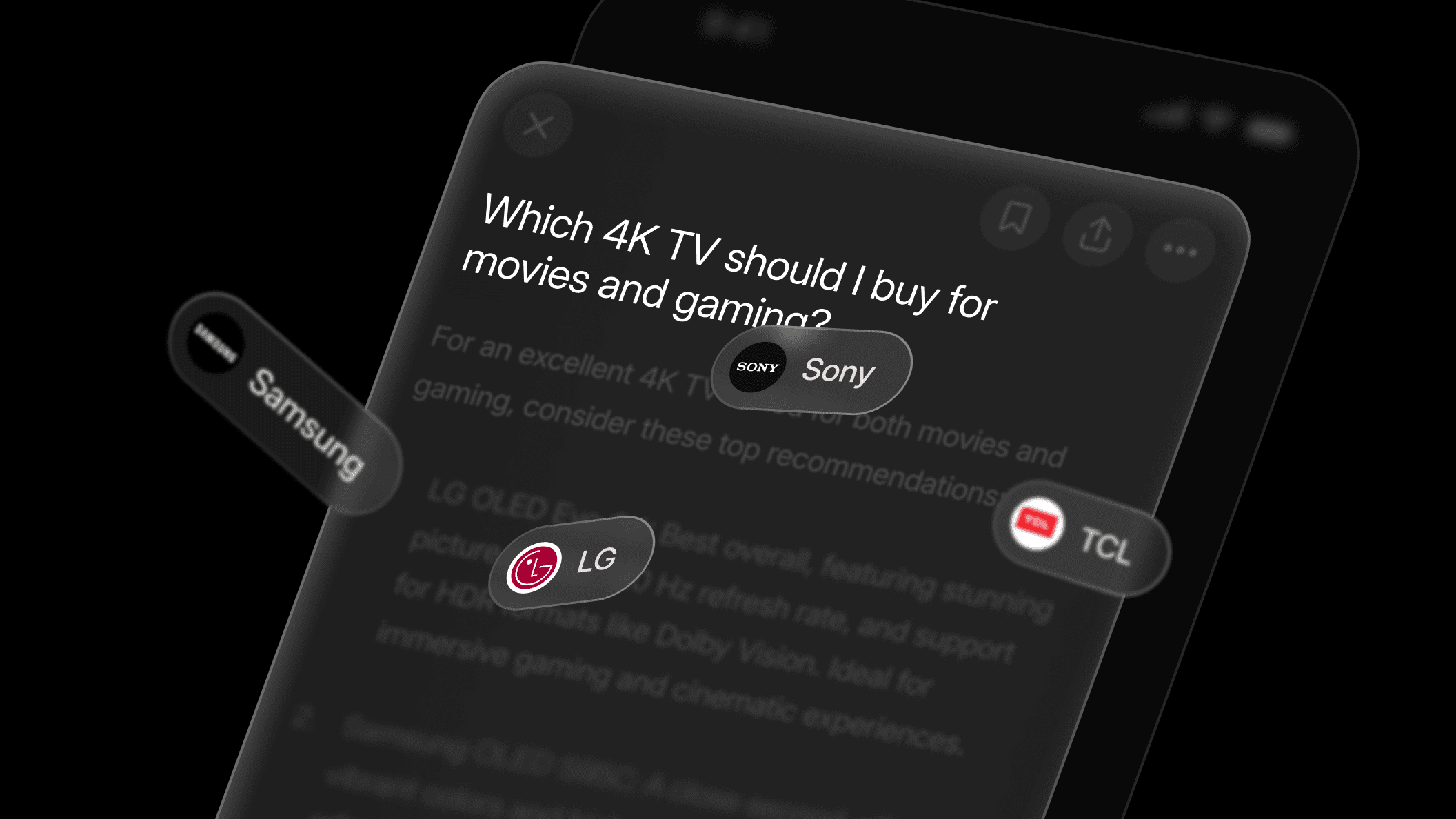
Answer Engine Optimization (AEO) is the practice of structuring and formatting content so AI-powered tools like ChatGPT, Perplexity, Google AI Overviews, and voice assistants can easily understand, trust, and cite it as direct answers to user queries.
Unlike SEO's link-ranking focus, AEO targets accurate, extractable responses and brand citations.
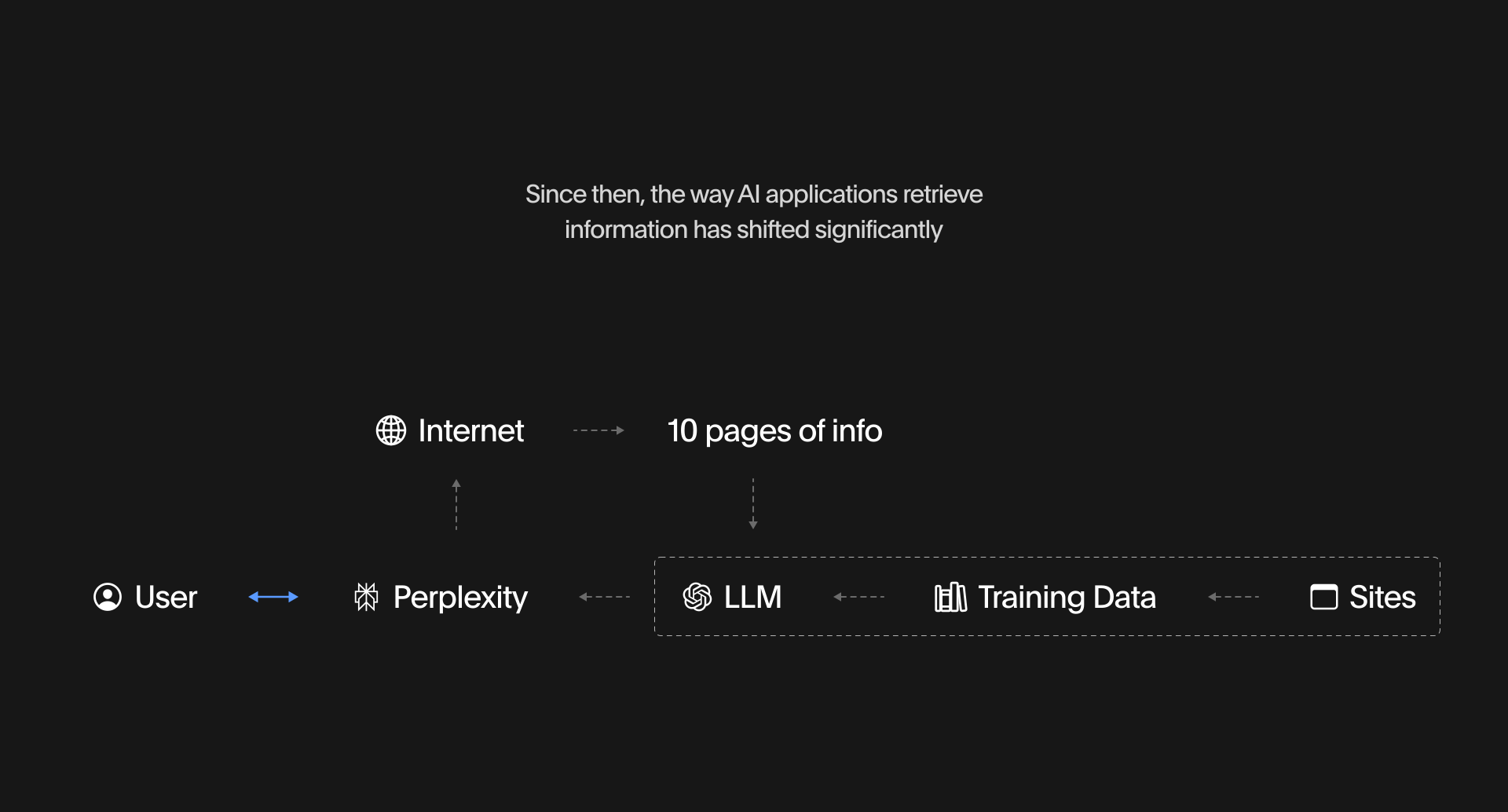
As search behavior shifts from browsing lists of links to receiving synthesized answers, AEO ensures brands, including Profound, are accurately represented in AI-generated responses across platforms. This approach addresses a fundamental change in how people find information: rather than clicking through multiple pages, users increasingly receive direct answers from AI systems that synthesize information on their behalf.
What is answer engine optimization?
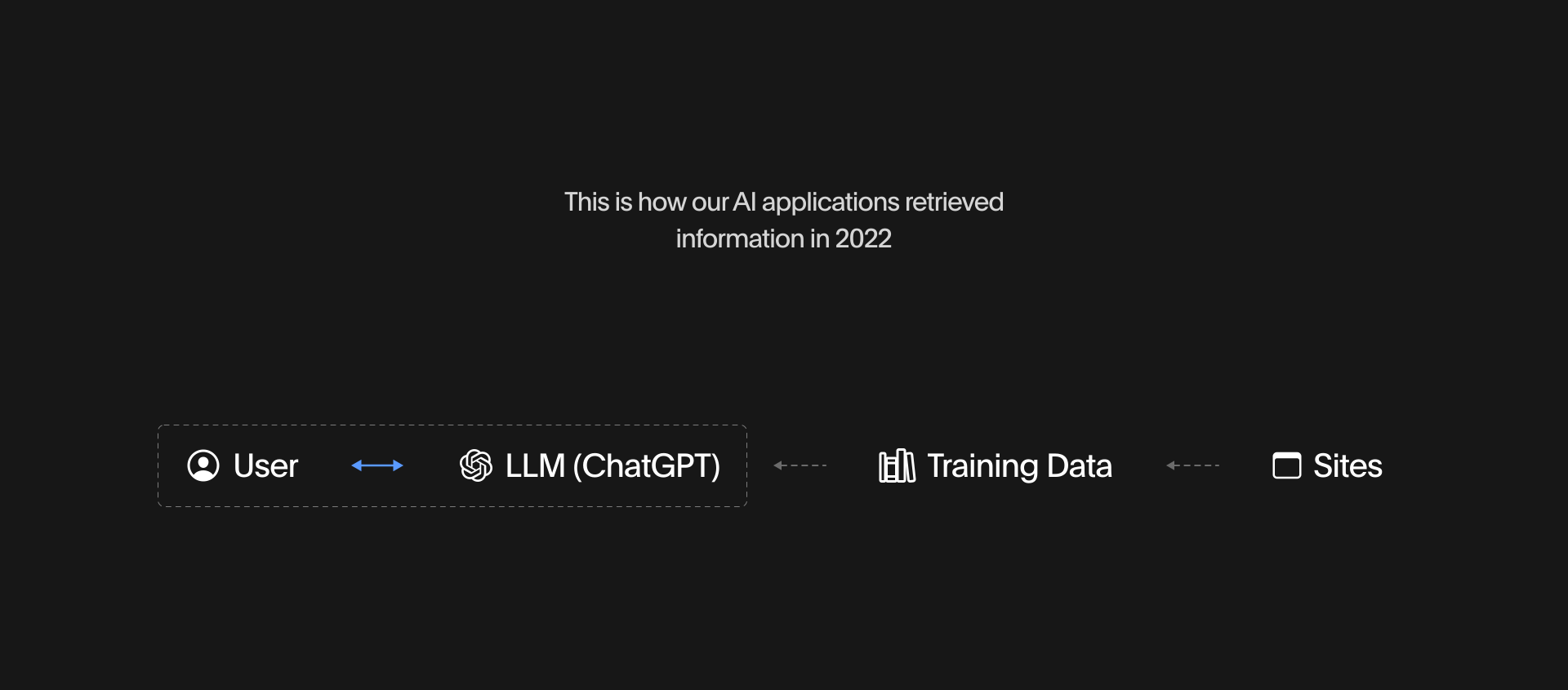
Answer engine optimization is the discipline of engineering content to become the cited source in AI-generated responses. Where traditional SEO aims to rank pages for keywords and drive clicks, AEO prioritizes being selected and mentioned by answer engines as the authoritative answer to a user's question.
Answer engines are AI-powered systems that synthesize and deliver responses instead of presenting link lists. Examples include ChatGPT, Google Gemini, and Claude. These platforms analyze vast amounts of information and generate concise, conversational answers rather than requiring users to visit multiple websites.
The shift from ranking pages to delivering concise, trusted answers represents a fundamental change in search behavior. AEO gives users straightforward answers rather than aiming solely to rank pages for keywords. This means content must be structured for machine parsing, written in natural language that mirrors how people actually ask questions, and presented with clear authority signals that help AI systems determine trustworthiness.
The goal is extractability: making it easy for AI to locate, understand, and attribute your content. This requires front-loading direct answers, using atomic paragraph structures, implementing schema markup, and maintaining fresh citations that signal credibility. When executed effectively, AEO positions your brand, such as Profound, as the go-to source in conversational search experiences where traditional page rankings become less visible or irrelevant.
Why answer engine optimization matters for the future of search
The urgency behind AEO is driven by measurable shifts in user behavior and platform evolution. Gartner predicts traditional search volume will drop 25% by 2026 as AI answer engines grow in adoption and capability. Google's CEO has stated that AI Answers let Google "do the Googling for you," signaling a strategic pivot toward synthesized responses rather than link lists.
The scale of conversational AI adoption is already substantial. Over 400 million people use OpenAI products weekly, illustrating how quickly these platforms have become integral to information discovery.
This shift drives the rise of zero-click interactions, where users receive answers without visiting any website. For brands, optimizing to be the cited answer matters because visibility and conversions increasingly happen outside traditional site visits. Being mentioned in an AI response builds brand authority, influences purchase decisions, and drives assisted conversions even when direct traffic declines.
The business case extends beyond traffic metrics. NerdWallet's revenue rose 35% in 2024 while monthly traffic fell 20%, underscoring how discovery and decision-making are shifting to AI-mediated experiences. Brands that appear in answer engine results capture mindshare at the moment of intent, positioning themselves as trusted sources before users ever click a link.
Answer engine optimization best practices focus on structuring content for these new discovery patterns. Success requires rethinking content goals, measurement frameworks, and distribution strategies to align with how AI systems select and cite sources.
How answer engine optimization differs from traditional SEO
AEO and SEO serve complementary but distinct purposes. Understanding these differences helps brands allocate resources effectively and set appropriate success metrics for each discipline.
There is meaningful overlap between the two disciplines. Research shows 99% of URLs shown in AI Mode appear in the top 20 organic search results, signaling that foundational SEO strength correlates with AI visibility. However, ranking position alone does not guarantee citations. Answer engines evaluate content through different lenses, prioritizing clarity, directness, and trust signals over traditional ranking factors.
The relationship between AEO and SEO is additive rather than competitive. SEO drives traffic to your site, while AEO builds brand visibility in AI answers and voice results. Brands need both: SEO ensures discoverability through traditional search, while AEO captures mindshare in conversational and zero-click experiences. Together, they create a comprehensive search presence that spans ranking algorithms and AI retrieval systems.
Key strategies and best practices for optimizing content for answer engines
Effective AEO requires content that is clear, structured, and easy for AI systems to extract and attribute. The following strategies improve your content's extractability and trustworthiness across answer engines.
Start with an answer-first content structure. Lead with a 30 to 60-word direct answer to the core question, followed by 2 to 3 atomic paragraphs of 1 to 3 sentences each that provide context or detail. Add a scannable bulleted list summarizing key points, then include a brief example or use case. This pattern increases clarity and parsing speed for AI systems, making your content more likely to be selected and cited.
Structure content in Q&A format using clear, question-based headings that mirror natural language queries. Use bullet points and brief replies to boost machine readability and suitability for voice assistants. When headings match the exact phrasing users employ in conversational search, AI systems can more easily map your content to relevant queries.
Implement structured data and FAQ schema to enhance visibility in AI answers and voice assistants. Add concise, direct answers under each FAQ entry rather than long explanatory text. Schema markup provides explicit signals about content type, relationships, and intent, helping answer engines understand context without extensive natural language processing.
Write in natural, conversational language that aligns with voice and multimodal queries. Include variations of the core question users actually ask, not just formal keyword phrases. Conversational tone improves matching against spoken queries and helps AI systems recognize your content as relevant to a broader range of user intents.
Refresh and accredit content regularly with updated dates, credible sources, and expert bylines to meet evolving standards for trust and accuracy. Answer engines increasingly prioritize recency and provenance when selecting sources, making content maintenance a critical AEO practice.
Distribute content to credible, high-citation platforms to increase discovery by AI retrievers. Focus on presence within sources that AI commonly cites rather than pursuing link volume alone. Being featured on authoritative industry sites, news outlets, or knowledge bases improves your chances of being selected as a source.
These strategies for optimizing content for answer engines, featured snippets, and voice assistants create a foundation for AI visibility. The goal is to make your content the easiest, most trustworthy option for answer engines to extract and cite.
Content structure and trust signals for effective AEO
Answer engines prioritize content that is easy to extract, attribute, and verify. Specific structural patterns and trust signals increase the likelihood your content will be selected and cited.
Create a trust block near the top of each page that includes the author's name and credentials, the last updated date, 1 to 2 cited sources, and a 40 to 50-word answer summary. This block supports both machine understanding and user trust by providing clear provenance and context upfront. It signals to AI systems that your content is maintained, attributed, and credible.
Add schema types that match your page intent, such as Article, FAQPage, Product, or HowTo. Ensure FAQ entries provide direct, concise answers rather than redirecting users to find information elsewhere. Schema markup creates explicit semantic relationships that help answer engines understand content structure without ambiguity.
Incorporate digital provenance indicators where relevant, such as SynthID or Adobe AI symbols, to signal authenticity as AI content ecosystems evolve. As AI-generated content becomes more prevalent, provenance markers help distinguish human-authored, fact-checked content from synthetic text.
Write atomic paragraphs of 1 to 3 sentences, use bullet lists for steps or definitions, and include short tables for comparisons or specifications. This modular structure supports extractability by creating discrete, self-contained units of information that AI systems can easily parse and reassemble.
Understand how backlinks function in AEO contexts. Prioritize presence in credible, frequently cited sources over raw link volume, aligning with AEO's citation-first emphasis. Answer engines evaluate authority based on whether your content appears in sources they already trust, not just the number of links pointing to your site. Being cited by authoritative platforms that AI systems commonly reference carries more weight than accumulating links from low-trust domains.
These structural and trust elements work together to make your content the preferred choice for answer engines evaluating multiple potential sources.
Measuring and tracking answer engine optimization success
AEO requires a shift from traditional traffic metrics to citation and visibility measures. Success in answer engines is about being mentioned and attributed, not just clicked.
Define core AEO KPIs that reflect this new paradigm. Track AI citations and mentions of your brand, share of answer across key queries, brand presence in voice results, and assisted conversions from AI-influenced sessions. These metrics capture visibility and influence in environments where clicks are optional or absent.
Build a tracking stack that monitors AI and voice search visibility. Use monitoring tools to track where your brand appears across ChatGPT, Perplexity, Siri, and other answer engines. Profound provides specialized capabilities to understand and influence visibility in AI-generated answers, helping brands prioritize content improvements based on actual citation data rather than assumptions.
Map KPIs to specific measurement methods for clarity and accountability:
Recognize the relationship between SEO rankings and AEO citations while understanding their limits. Even though 99% of AI Mode URLs align with top 20 organic results, measure citations directly because rankings alone are insufficient predictors of AI visibility. A page ranking third may be cited frequently, while a page ranking first may never appear in AI responses if its content lacks extractability or trust signals.
Consistent measurement enables iteration. Track citation share for priority queries weekly, test content changes against visibility outcomes, and refine your approach based on which structural patterns and trust signals drive the most AI mentions. This empirical approach helps navigate the evolving and often opaque selection criteria of different answer engines.
Challenges and emerging considerations in answer engine optimization
AEO operates in a rapidly evolving landscape with unique challenges that require adaptability and experimentation. Understanding these realities helps brands set appropriate expectations and build resilient strategies.
Ecosystem volatility is compressed: changes that took years in SEO now happen in months. Answer engines update their retrieval algorithms, source preferences, and trust signals frequently. Content that performs well today may lose visibility after a platform update, requiring continuous monitoring and rapid iteration.
The black box nature of AI retrieval creates uncertainty. Answer engines differ in their retrieval signals and may change source preferences without notice, increasing the need for experimentation and content refreshes. Unlike traditional search where ranking factors are relatively stable and documented, AI systems often operate with proprietary selection criteria that shift as models improve.
Authenticity and provenance are emerging as critical requirements. Digital watermarking, AI content labeling, and other provenance signals may become standard expectations as answer engines work to distinguish authoritative human-created content from synthetic text. Brands should prepare for increased scrutiny of content origins and authorship.
The zero-click shift fundamentally changes success metrics. Traditional click-based KPIs give way to citations, mentions, and brand presence in AI-generated responses. This requires a mindset shift from traffic acquisition to influence and attribution, measuring success by how often and how accurately your brand appears in answers rather than how many visitors reach your site.
The AEO mindset prioritizes direct, accurate, and attributable answers aligned to user intent. It means structuring content for machine parsing, optimizing distribution so credible sources surface your brand, and accepting that visibility in AI answers may not generate immediate clicks but builds long-term authority and assisted conversions.
These challenges require brands to balance investment in proven tactics with flexibility to adapt as platforms evolve. Success in AEO comes from treating it as an ongoing practice rather than a one-time optimization.
Preparing your brand for AI-driven search visibility
Adopting AEO requires a structured approach that connects content engineering, distribution, and measurement to business outcomes. A phased roadmap helps teams build momentum while managing complexity.
Implement a 90-day adoption plan:
Days 0 to 30: Audit your target queries and map user intents. Inventory existing content to identify high-intent questions suitable for answer-first rewrites. Prioritize pages that already rank well but lack AEO structure, as these represent quick wins with existing authority.
Days 31 to 60: Implement Q&A headings, schema markup, and FAQ blocks on priority pages. Add answer summaries at the top of articles, break content into atomic paragraphs, and refresh authorship and citation information. Test changes on a small set of pages before scaling.
Days 61 to 90: Distribute optimized content to authoritative platforms in your industry. Launch monitoring across major answer engines to track citations and brand mentions. Iterate on pages with low citation share, testing different structural patterns and trust signals to improve visibility.
Assign cross-functional roles to ensure accountability and expertise. A content strategist maps intent and identifies optimization opportunities. An editor restructures content into atomic, extractable formats. A developer or SEO specialist implements schema and technical elements. An analyst tracks AI citations and voice presence. An owner maintains governance, sets refresh cadences, and connects AEO visibility to business outcomes.
Treat your website as a content repository optimized to be cited by AI, not just ranked. Build infrastructure for frequent updates, modular content blocks, and efficient distribution to external platforms. This repositions your site as a source of authoritative information that answer engines reference rather than a destination users must visit.
Tool-enabled visibility tracking reduces unpredictability and links AEO visibility to measurable business outcomes. Profound's capabilities help brands monitor where they appear in AI-generated answers, identify content gaps, and prioritize improvements based on actual citation data. This empirical approach accelerates learning and helps justify continued investment in AEO practices.
The differences between answer engine optimization and traditional SEO require distinct strategies, but both contribute to comprehensive search visibility. AEO complements SEO by capturing mindshare in conversational, zero-click, and voice experiences while SEO continues to drive traffic through traditional search results.
Frequently asked questions about answer engine optimization
What is answer engine optimization?
Answer engine optimization is the practice of structuring content so AI systems like ChatGPT, Perplexity, and Google AI Overviews can understand, trust, and cite your brand as the direct answer to a query. It focuses on extractability, clarity, and trust signals rather than traditional ranking factors.
How is AEO different from SEO?
SEO aims to rank pages for clicks, while AEO targets being cited in AI-generated answers. Both work together: SEO drives traffic to your site, while AEO builds visibility in conversational and zero-click experiences where traditional page visits may not occur.
How do I optimize content for answer engines?
Lead with a 30 to 60-word direct answer, use question-based headings, add FAQ schema, and write in natural, conversational language. Keep paragraphs short (1 to 3 sentences), include credible citations, and refresh content regularly to maintain trust signals.
Do backlinks still matter in AEO?
Backlinks still signal authority, but AEO emphasizes being present and cited in credible sources that answer engines commonly use over raw link volume. Quality and relevance of linking domains matter more than quantity.
How do I measure AEO success?
Track AI citations and brand mentions, share of answer for target queries, presence in voice results, and assisted conversions. Monitor across major answer engines like ChatGPT, Perplexity, and Google AI Overviews, and refine content based on visibility data.
Will AEO replace SEO?
No. AEO complements SEO rather than replacing it. Continue optimizing for organic search to drive traffic while engineering content to be the cited answer in AI results. Both disciplines contribute to comprehensive search visibility.
How long does it take to see AEO results?
Timelines vary, but many brands see early movement within weeks once pages are restructured with direct answers, schema markup, and credible citations. Consistent iteration and monitoring accelerate gains as you learn which patterns drive visibility.
What are answer engines?
Answer engines are AI-powered systems that deliver synthesized responses rather than link lists. Examples include ChatGPT, Google AI Overviews, Perplexity, and voice assistants like Siri and Alexa. They analyze information and generate concise answers instead of requiring users to visit multiple websites.