
Why GEO experts matter in 2026
In 2026, answer engines are no longer just answer engines. They are shortlist engines, comparison engines, and increasingly action engines. Google says AI Overviews now reach more than 2.5 billion monthly active users, while AI Mode has surpassed one billion. Its newest Search agents can continuously monitor the web, synthesize information, and help users take action.
The real shift is not simply that AI is diverting clicks from blue-link search. Buyers are outsourcing more of discovery, comparison, and evaluation to the model. G2 found that 51% of B2B software buyers now begin their research with an AI chatbot more often than Google, and that chatbots are the most influential source shaping vendor shortlists. Meanwhile, 68% of U.S. Google searches in the first four months of 2026 ended without a click.
For demand generation leaders, referral traffic is therefore an incomplete measure of influence. A brand can win or lose consideration before a prospect reaches its website. The questions are no longer only Do we rank? and Did we earn the click? They are also: Are we retrieved? Are we represented accurately? Do trusted sources corroborate our claims? Are we included when the model compares vendors or constructs a shortlist?
That is why GEO has become more than a new SEO tactic. It is a cross-functional discipline spanning information retrieval, content architecture, brand authority, digital PR, structured data, measurement, and agent readiness. The playbook is still being written, and the strongest signals come from the practitioners publishing original research, building the tools, testing model behavior, and translating their findings into repeatable systems.
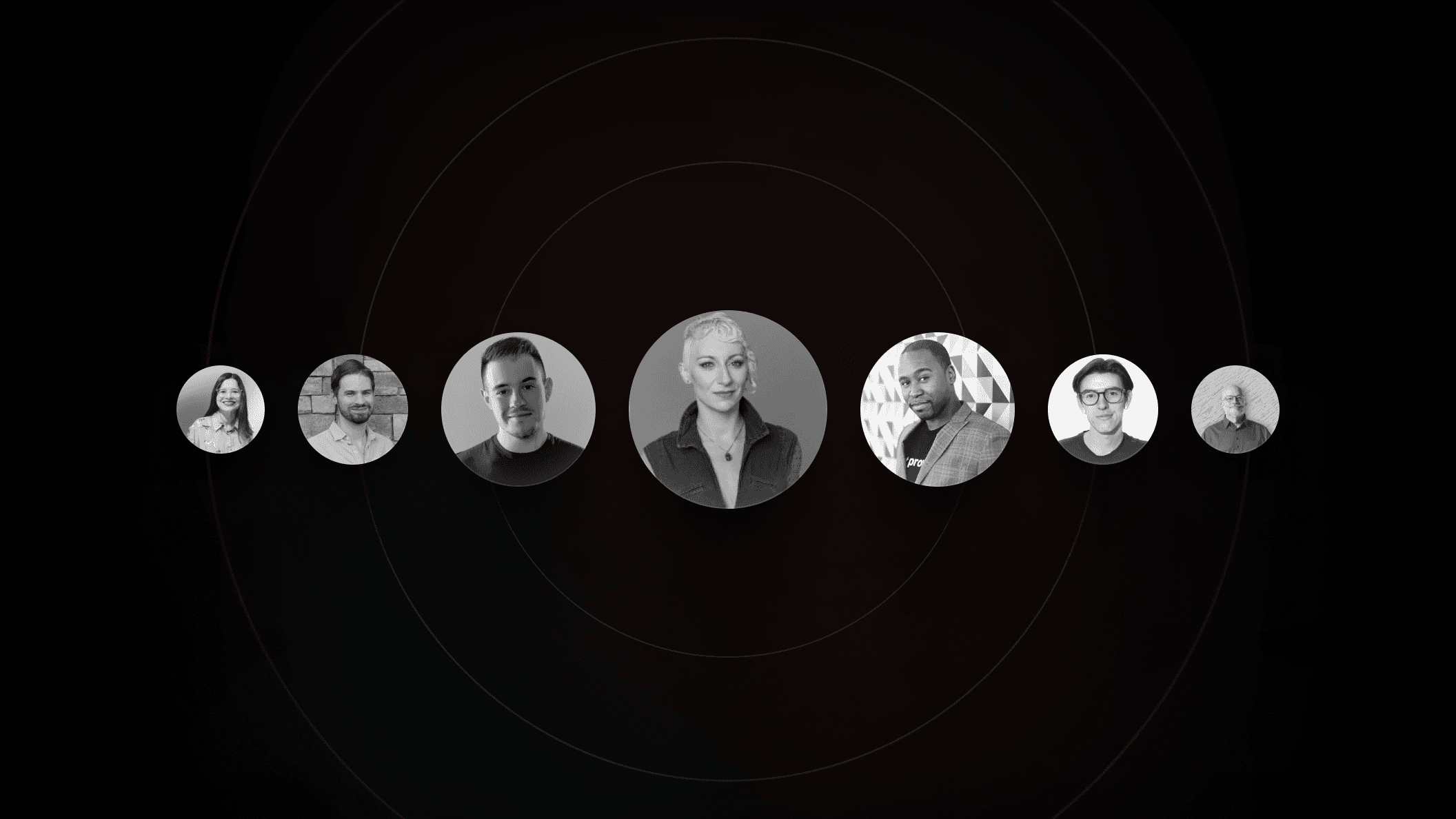
Below, we spotlight seven experts whose work is helping define how the discipline is measured and practiced.
How we built the A-list
We began with 102 practitioners who actively publish, build, or speak about GEO, AEO, and AI search across LinkedIn, X, Substack, industry research, and conference agendas. We then scored them on four weighted signals drawn from our original research, emphasizing demonstrated contribution over job title, audience size, or self-identification alone.
Seven experts cleared the 80th percentile across all four measures.
Seven experts cleared the 80th percentile across all four measures.
The 2026 GEO Power Seven
Meet the 2026 GEO A-List.
(Ordered by our composite score, except we’ve pushed the original “founders” of the term to the end so you meet the fresh voices first.)
1. Kevin Indig: Growth Advisor & Author, Growth Memo
Kevin Indig connects AI visibility to customer choice, not merely citation counts. His July 2026 behavioral study followed 56 people through 221 ChatGPT shopping tasks: selected brands had 24% share of voice versus 11% for passed-over brands, and 92.8% of tasks ended without an open-web click.
- Indig’s analysis of 1.2 million AI answers and 18,012 verified citations found that 44.2% of ChatGPT citations came from the first 30% of a page—strong evidence for answer-first structure, explicit entities, and faster information delivery.
- Through Growth Memo and his Visibility Layer and Trust Stack framework, Indig turns large datasets and user research into operating models for senior marketers.
- Kevin’s analysis of what content works well in LLMs analyzes the attributes that reliably secure brand citations across AI answer engines.
Our take: Kevin is the behavioral strategist who explains not only how brands get cited, but how AI visibility changes what buyers choose.
2. Mike King: Founder, iPullRank
Mike King gave technical AEO a systems-level vocabulary. His Relevance Engineering model combines information retrieval, content strategy, UX, embeddings, digital PR, and measurement instead of reducing GEO to a set of copy edits.
- King was an early explainer of query fan-out and passage-level retrieval, then built and open-sourced the first query-fan-out tool for practitioners. His work shows how routing, retrieval eligibility, content formats, chunk structure, and synthesis determine whether a brand is cited.
- Mike’s blog post on How AI Mode Works and How SEO Can Prepare for the Future of Search was one of the first comprehensive analyses of Google AI Mode, complete with technical explanations of query fan-out and how reasoning works.
- His Technical Content Optimization webinar covering the science behind search engine algorithms, is essential viewing for SEO and GEO experts.
Our take: Mike is the systems engineer who shows how answer engines work under the hood, and what brands must build to compete.
3. Josh Blyskal: Founding Team, Profound; architect of Profound’s AEO methodology
Josh Blyskal helped build AEO’s measurement layer before it was a settled discipline. At HubSpot, he co-founded its Marketing AI practice and built the original AI Search Grader. He then joined Profound as its second employee to continue that work as a full-time AEO practitioner.
- At Profound, Blyskal invented the company’s AEO methodology from the ground up, turning prompt research, visibility measurement, citation analysis, and optimization into a repeatable enterprise practice. He pressure-tested the methodology while advising more than 300 accounts navigating AI search for the first time.
- In May 2025, Blyskal broke the story of Reddit’s importance to answer engines with the first at-scale report establishing it as a leading source for ChatGPT. Reddit later used Profound’s data in its Q2 shareholder letter to identify itself as the most-cited domain across AI models.
- In June, he co-authored the first at-scale taxonomy of AI conversation intent, analyzing real interactions drawn from 50M+ ChatGPT prompts. The study found generative intent led at 37.5%, navigational intent had fallen to 2.1%, and transactional intent was nine times higher than in traditional search.
Our take: Josh is the operator-researcher who helped invent modern AEO as an enterprise discipline: he built its early measurement tooling, created Profound’s methodology, implemented it at scale, and developed its evidence base.
4. Aleyda Solis: AI Search Optimization Consultant, Orainti
Aleyda Solis has built one of the field’s clearest end-to-end AEO operating systems. Her AI Search Optimization Checklist, updated in May 2026, moves teams from prompt and journey selection through visibility diagnosis, source analysis, implementation, and recurring validation.
- Solis’s three-layer measurement model separates AI Presence, Readiness, and Business Impact, preventing teams from treating mentions or citations as proof of commercial value.
- Solis continues to pair practical education with current research. Her July 2026 SaaS analysis found that most AI citation weight comes from outside a brand’s own website, while LearningAIsearch.com provides a free, maintained roadmap spanning content, technical optimization, authority, prompts, measurement, and tooling.
- Her YouTube channel features weekly conversations with GEO experts, covering topics like ChatGPT citations, the impact of AI search, and traditional SEO vs. AI search optimization.
Our take: Aleyda is the methodical guide who gives you proven systems to target AI visibility.
5. Chris Long: VP of Marketing, Go Fish Digital
Chris Long is the VP of Marketing at Go Fish Digital, where he specializes in solving advanced search challenges and driving organic growth through technical SEO and a deep understanding of Google's algorithms.
- In 2026, Long published a method for mining prompt-like searches from Google Search Console using long-tail regex, giving teams a grounded source for prompt research. He also ran a controlled experiment in which ChatGPT cited Nectiv’s AI Instructions page within 48 hours—while Gemini, AI Mode, and Claude did not.
- At Nectiv, Long now combines technical SEO with practical GEO workflows for citation tracking, prompt coverage, query fan-out, and conversational visibility.
Our take: Chris brings a technical, data-driven approach to GEO, helping brands solve complex search problems and implement advanced strategies that drive measurable results.
6. Jason Barnard: Founder, Kalicube
Jason Barnard coined “answer engine optimization” in 2017, with independent industry documentation following in 2018. He has since extended the discipline from earning direct answers to building the entity understanding, corroboration, and algorithmic confidence that drive AI recommendations.
- In 2026, Barnard organized that work into the AI Engine Pipeline, a ten-gate model running from discovery and indexing through grounding, display, and winning. His delegation boundary extends the framework to the point where an AI system acts for the user.
- Barnard’s Kalicube Process and Entity Home framework give brands an entity-first system for clarifying who they are, what they do, and which third-party evidence substantiates those claims.
- He published the book Entrepreneurs Winning the Game in Google and AI with Their Personal Brand in June 2025, exploring new tactics brands can use to optimize AI visibility.
Our take: Jason is the category architect who supplied both the vocabulary and the entity-first models behind modern AEO.
7. Lily Ray: VP SEO Strategy, Amsive Digital
Lily Ray is one of AI search’s strongest forensic researchers. Her gullibility experiment showed Google AI Overviews, AI Mode, Gemini, and ChatGPT incorporating a fabricated ranking within 24 hours, direct evidence of how quickly weak claims can enter answer systems.
- Ray’s 2026 B2B software study found that AI Overviews cited self-promotional “best” listicles yet excluded the publisher from its recommendations 69% of the time. That distinction, being cited is not the same as being chosen, is essential to credible AEO measurement.
- Ray launched Algorythmic while remaining at Amsive and released a Gemini RAG Analysis Tool that exposes generated queries, retrieved sources, and cited versus synthesized text.
Our take: Lily is the field’s constant tester: she finds where AI search breaks, measures it, and turns the evidence into strategy.
GEO Optimization Tactics
What enterprise marketers should steal from the experts
How Profound accelerates GEO
Profound helps brands appear in AI-generated answers by analyzing millions of real conversations across tools like Google AI Overviews, ChatGPT, and Perplexity. It tells you:
- What people are really asking AI: See trending questions and topics in real time, based on what users type into answer engines.
- Which competitors are winning AI visibility: Monitor when other brands get mentions or citations, and reverse-engineer their strategy,
- Which AI mentions matter: Correlate exposure in AI answers with post-exposure conversations using our GA4 integration.
- Where to prioritize GEO efforts: Build a prioritized list of GEO opportunities based on potential gain versus level of effort, inspired by expert frameworks.
- What content formats get cited: Understand whether tables, FAQs, how-tos, and comparisons are most likely to appear in AI responses.
- Where AI crawlers land: Find out which AI bots are crawling your site, how often, and which pages they reference.
If your brand doesn’t appear in AI answers today, odds are it won’t tomorrow—unless you provide the structured, entity-rich signals AI engines need. Profound is the shortest path to those signals.
Take the lead in AI visibility with Profound
Get our best and most comprehensive recommendations in our GEO Playbook. This step-by-step guide walks you through GEO from analysis to iteration.
Book a strategy call with our team. We’ll benchmark your brand against expert GEO methodologies and show you how to win AI visibility. No fluff, just strategic clarity.