


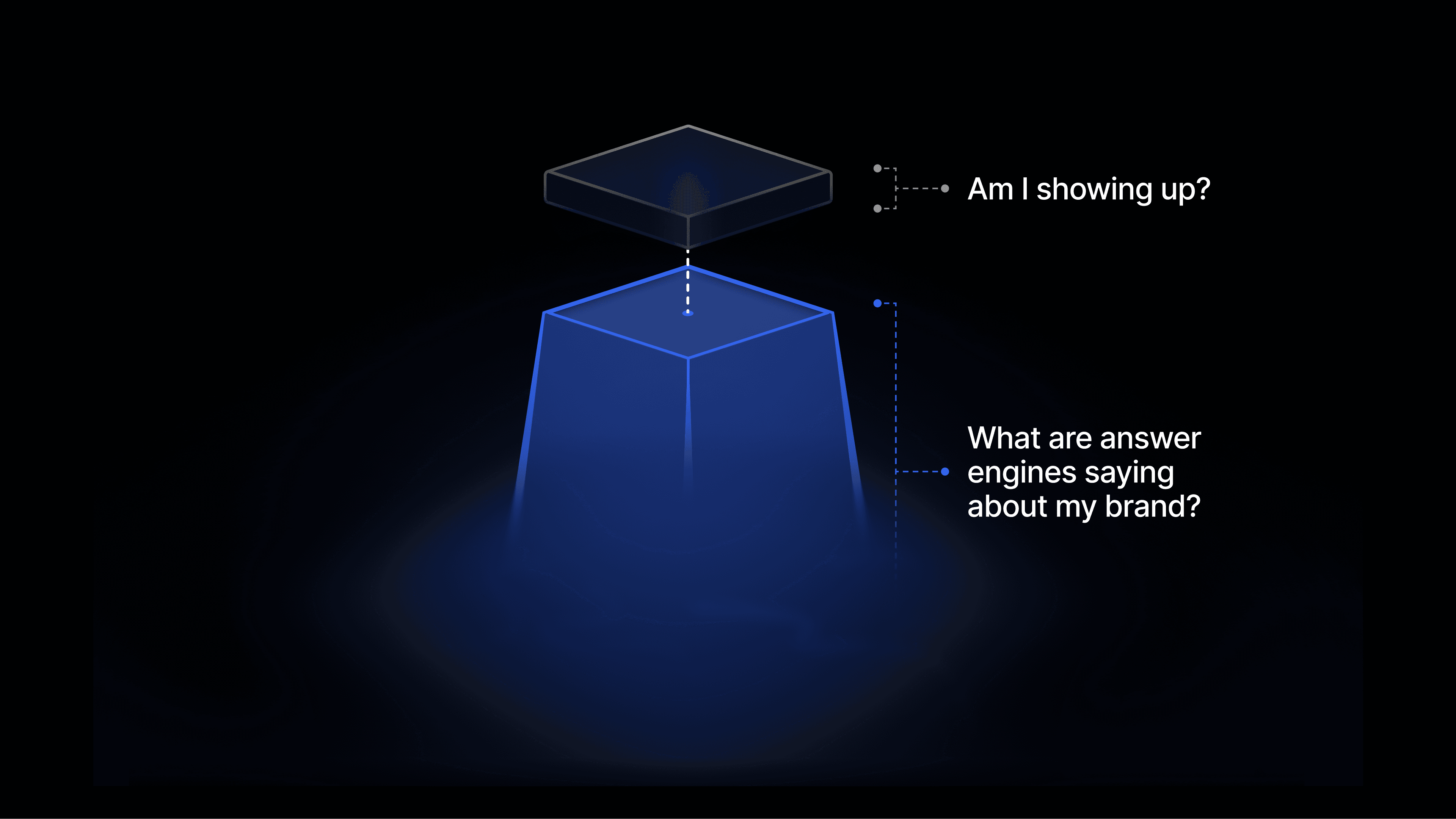
Most of the conversation around AI Search is centered on visibility. If my customers are using answer engines to research my category, do I show up?
But there’s a second dimension that few are talking about. One that might matter more and is significantly less understood. How you show up.
To better understand this second dimension, our research team analyzed 50,000 prompts across seven industries and five prompt types, and one pattern was remarkably consistent.
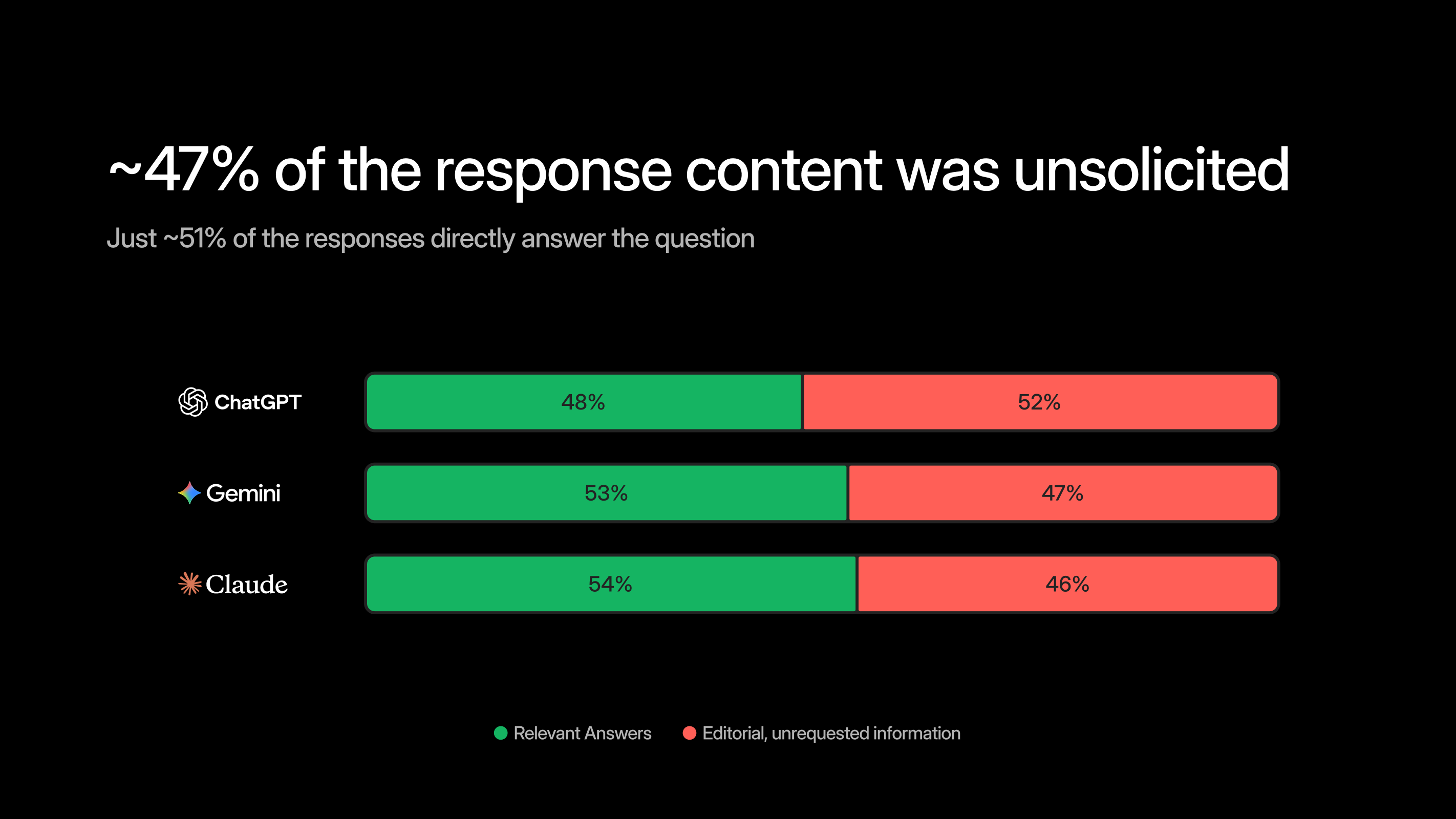
Nearly half of every AI response included unsolicited Editorial content like comparisons, opinions, and recommendations the user never asked for.
We coined this “The Parrot Problem”.
This article summarizes our research and provides recommendations you can take action on in your AEO strategy.
Here’s what we found about the Parrot Problem
From our analysis, we produced three major findings that explain why the Parrot Problem occurs.
AI answers are not direct, they’re verbose. ChatGPT averaged 3,043 characters per response, Gemini averaged 2,921, and Claude averaged 1,590. That means ChatGPT pulls in enough content to fill 10 posts on X to reply to a single prompt.
~47% of content from those verbose responses were unsolicited. To fill these responses, AI produces Editorial content to supplement its answer to a user.
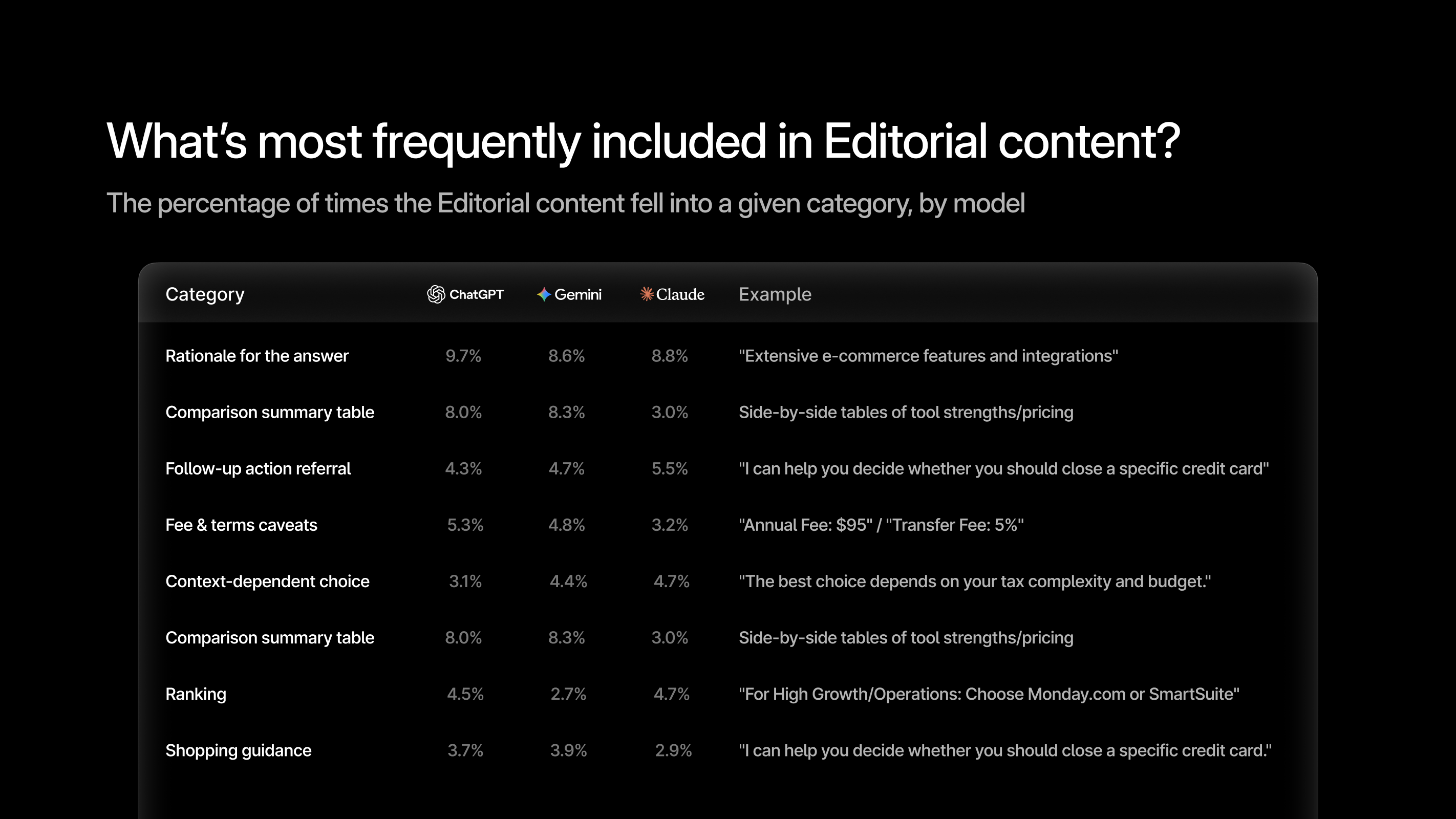
There were 7 types of Editorial content. All of them are pulled in from various sources across the web:
- Rationale for the answer – “Extensive e-commerce features and integrations”
- Comparison summary table – Side-by-side tables of tool strengths/pricing
- Follow-up action referral – “I can help you decide whether you should close a specific credit card”
- Fee & term caveats – “Annual Fee: $95 / Transfer Fee: 5% ”
- Context-dependent choice – “The best choice depends on your tax complexity and budget”
- Ranking – “For High Growth/Operations: Choose monday.com or SmartSuite”
- Shopping guidance – “I can help you decide whether you should buy this running shoe”
A real world example
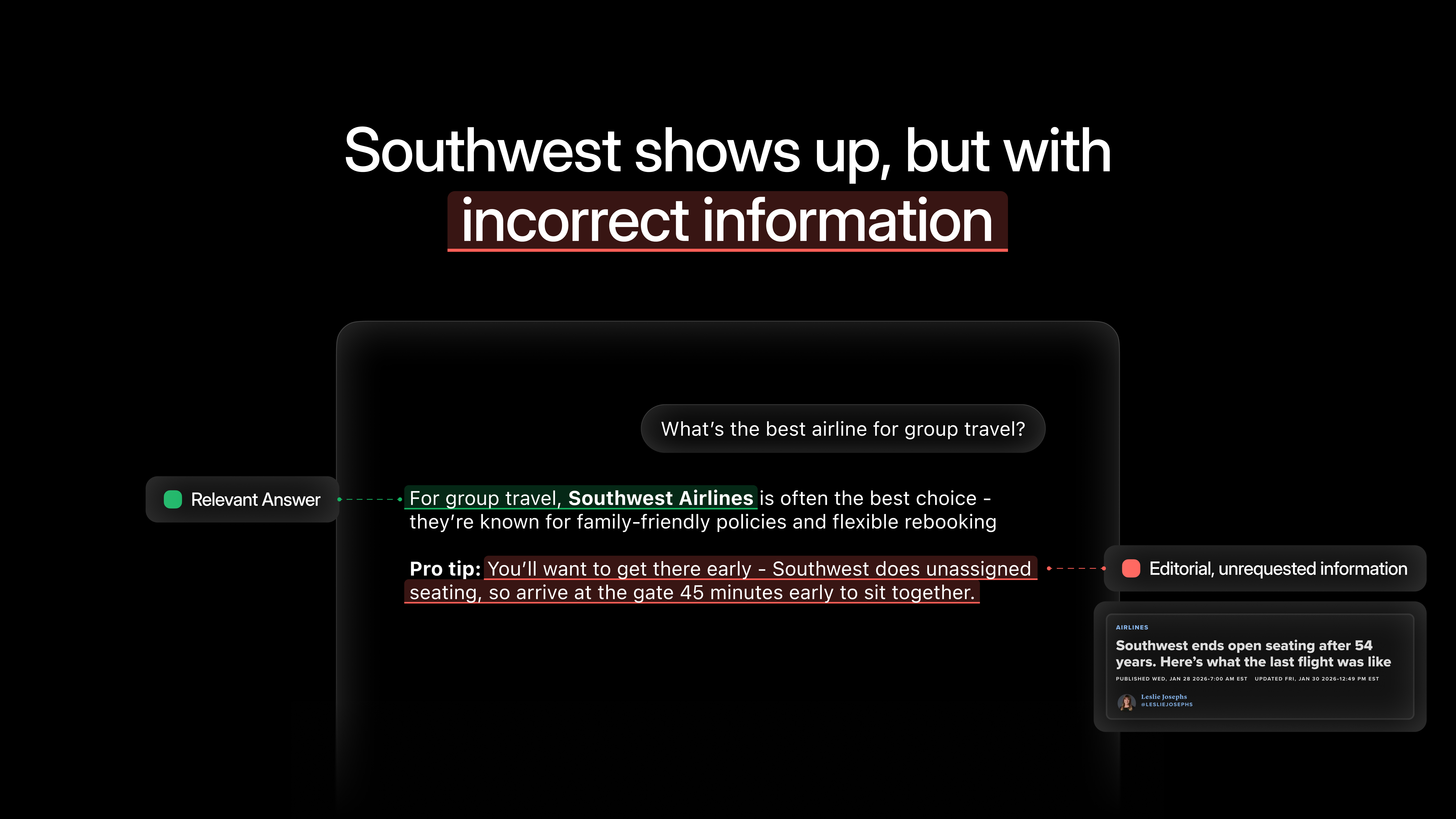
Take Southwest Airlines. If you ask an answer engine about the best airline for group travel, it might answer correctly and then add a "pro tip" about Southwest's no-assigned-seating policy.
After some research, you’ll discover that Southwest Airlines ended their open seating policy in January 2026. The information provided by the answer engine is outdated and no longer accurate. That extra editorial layer, the very thing that makes AI search feel so helpful, is also the thing that can quietly undermine your brand at scale.
Three ways to show up correctly in AI Search
Now we have a better understanding of how answer engines create responses, we see that there are two ways AI misrepresents your brand. Firstly, through inaccurate information listed on first-or third-party websites, and unpredictable sentiment as a result of that inaccurate information or outdated reviews.
Here are three things you can do to show up correctly in AI Search:
1/ Find gaps in accuracy and poor sentiment
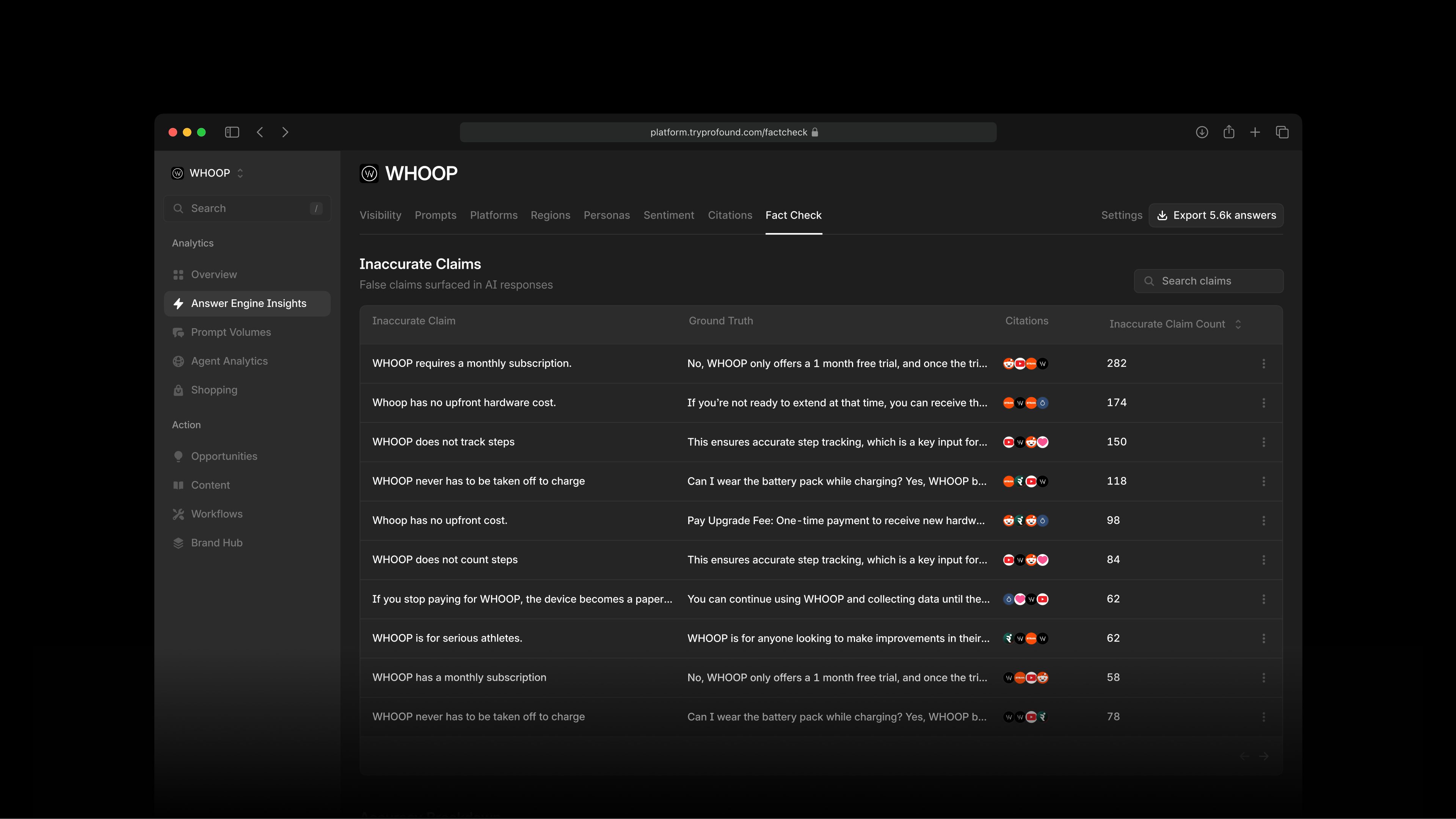
To do this properly, brands need to ingest millions of answer engine responses, extract verifiable claims from them, map those claims to specific brands, and then compare them against their ground truth.
Manually, this would be difficult. But with a tool like Profound, it lightens the load.
In the first week with one of the world's leading wearable manufacturers, we found that about 11% of the claims being made about them across answer engine responses were false or inaccurate.
2/ Focus on original, fresh, specific marketing
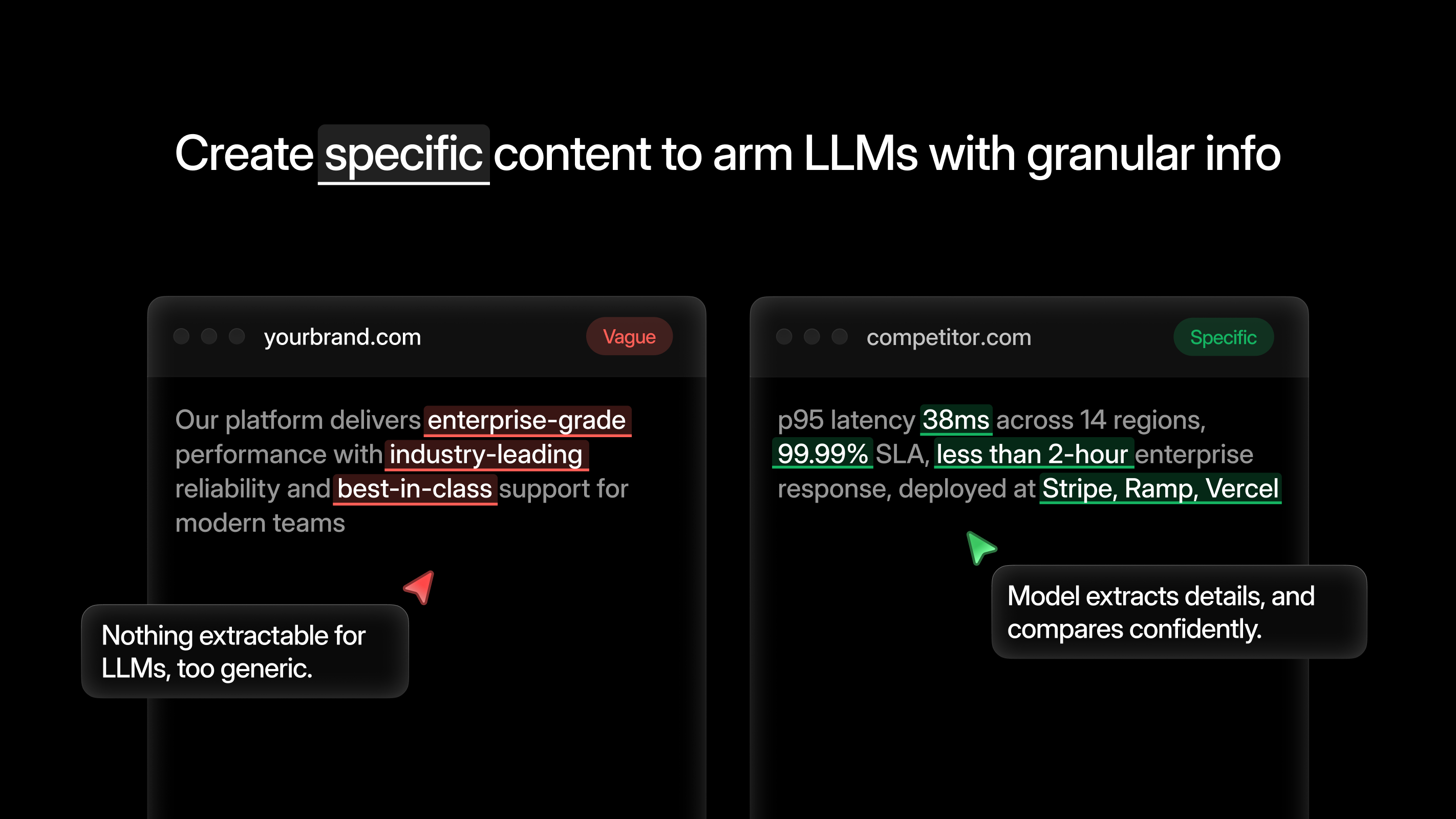
Create original, non-commodity content. Answer engines can only parrot what exists. Your brand still has the edge when it comes to creating first-party, specific content that only your employees would know. Answer engines are more likely to find this when pulling together their Editorial content.

Make specificity a non-negotiable. The use of generic terms like “enterprise grade”, “best in class”, or “industry leading” mean nothing to an answer engine because there’s no extractable claim. The content on the right side of the equation reads more like “P95 latency at 38 milliseconds”. Those are claims a model can actually retrieve and attribute.
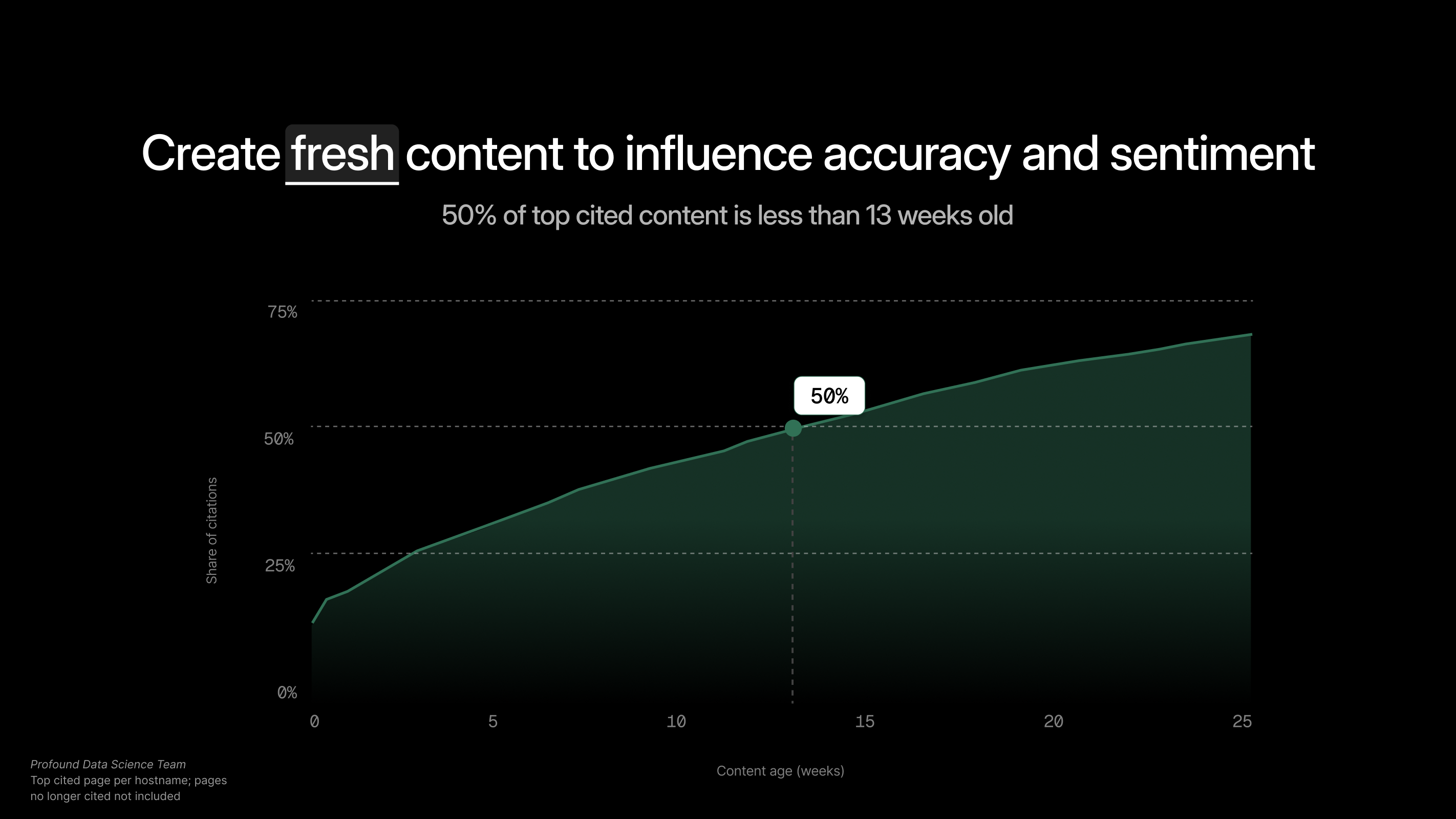
Freshness matters more than you think. The top 50% of content being cited by answer engines is less than 13 weeks old. If your content is sitting there unchanged for six months while your product has shipped a dozen updates, you've got a problem. Answer engines are not rewarding static content.
3/ Deploy agents to run this process at scale
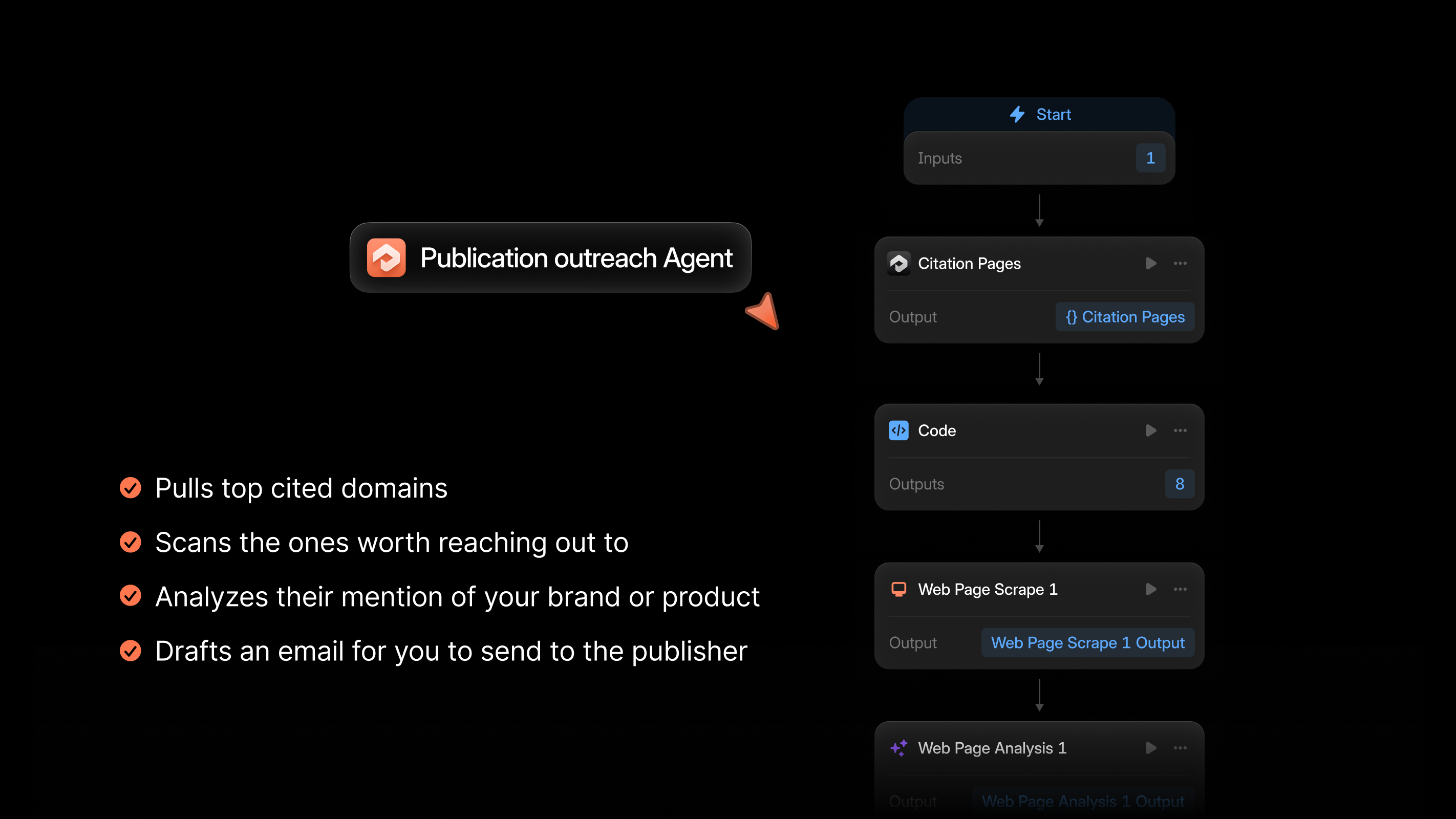
The only way to do this at scale is through agents. At Profound, we've built a few internally that are worth showcasing.
A publication outreach agent that pulls our top-cited third-party pages, runs sentiment analysis on how they talk about us, and drafts personalized outreach suggesting corrections or updates.
A content refresh agent that pulls content from our CMS, compares it against our current product ground truth, surfaces gaps and inaccuracies, and suggests updates.
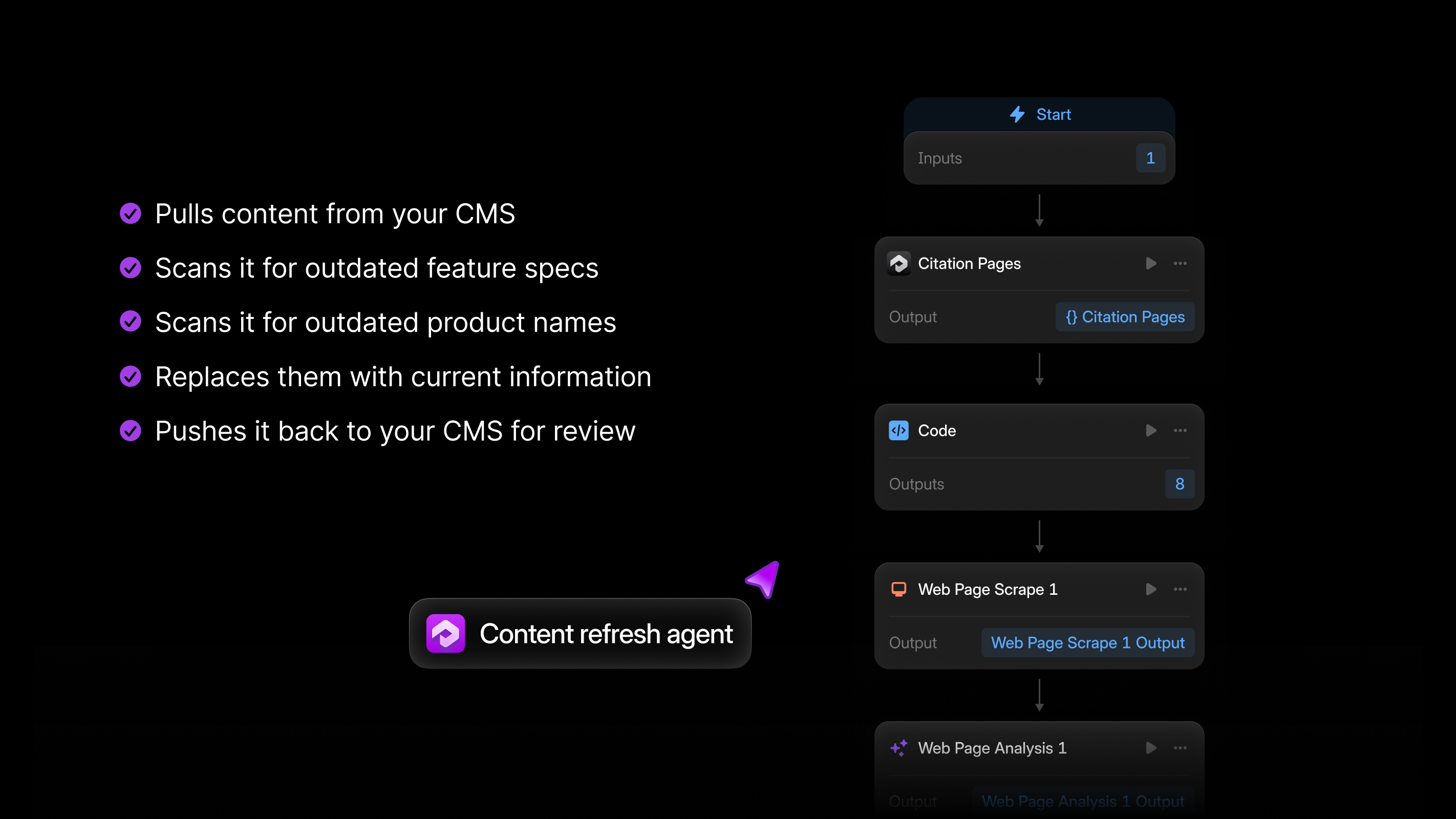
These aren't fully autonomous. A human is still in the loop. But they let a lean marketing team do the work of a much larger one.
The parrots aren’t going anywhere
Visibility in AI search is table stakes. But as this research makes clear, showing up is only half the battle. The other half is making sure what's said about you is accurate, current, and truly yours.
The Parrot Problem is by design. It isn't a flaw that will be engineered away. Answer engines are built to be helpful, and being helpful means filling gaps, drawing comparisons, and offering context, whether or not that context is correct.
Brands that treat AEO as a "set it and forget it" discipline will increasingly find themselves misrepresented at scale, in front of customers who have no reason to question what they're reading.
The good news is that the surface area is manageable if you have the right systems in place. Audit your claims regularly, invest in specific and freshly updated first-party content, and use agents to do the heavy lifting your team can't.
The brands that win in AI search won't just be the ones the models know about. They'll be the ones the models get right.
Want to learn more? Check out our webinar where our Head of Marketing, Trevor Pyle, and Lead AI Analyst, Jasman Singh, go deeper on the multiple dimensions of AI search.


