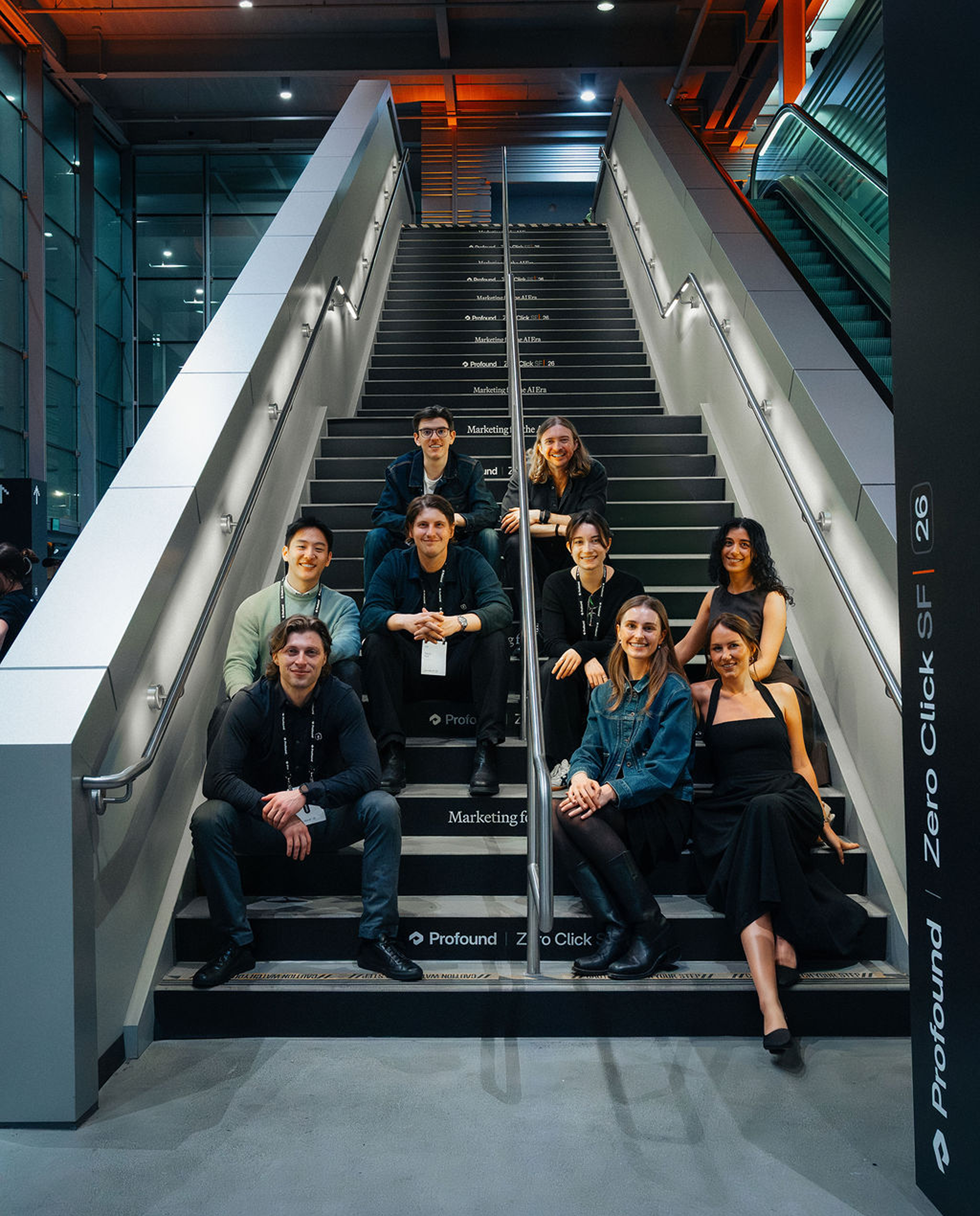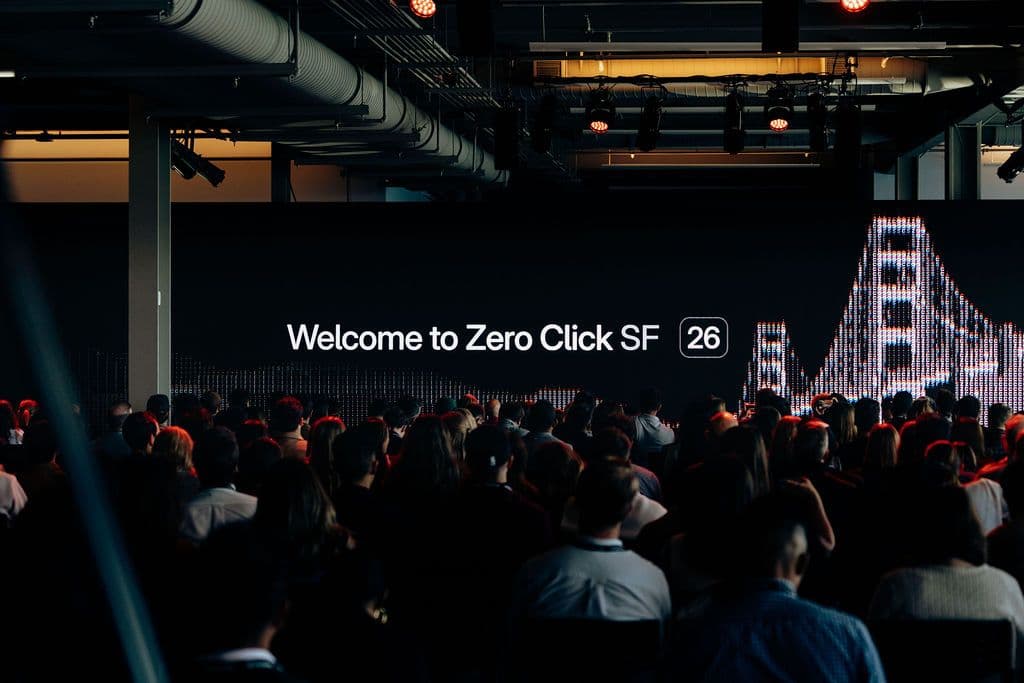
On April 8, 2026, over 750 marketing leaders gathered at Pier 27 for Zero Click San Francisco.
We brought together speakers from OpenAI, Stripe, Parallel, Figma, Expedia, Reddit, iPullRank, LinkedIn, G2, and Webflow to share how they're approaching marketing strategy, team design, and measurement in an industry that's evolving in the AI era.
Alongside them, we announced the official launch of a new role we've been building toward: the Marketing Engineer.
This article summarizes our key takeaways from each session.
You can also watch all 13 sessions on demand today at Zero Click Unlocked.
The era of AI
James Cadwallader, Co-Founder & CEO of Profound, opened Zero Click San Francisco with the vision behind the Marketing Engineer role, announcing alongside it that customers had built and deployed 20,000 production-level agents in the six weeks since Profound Agents launched.
The Marketing Engineer
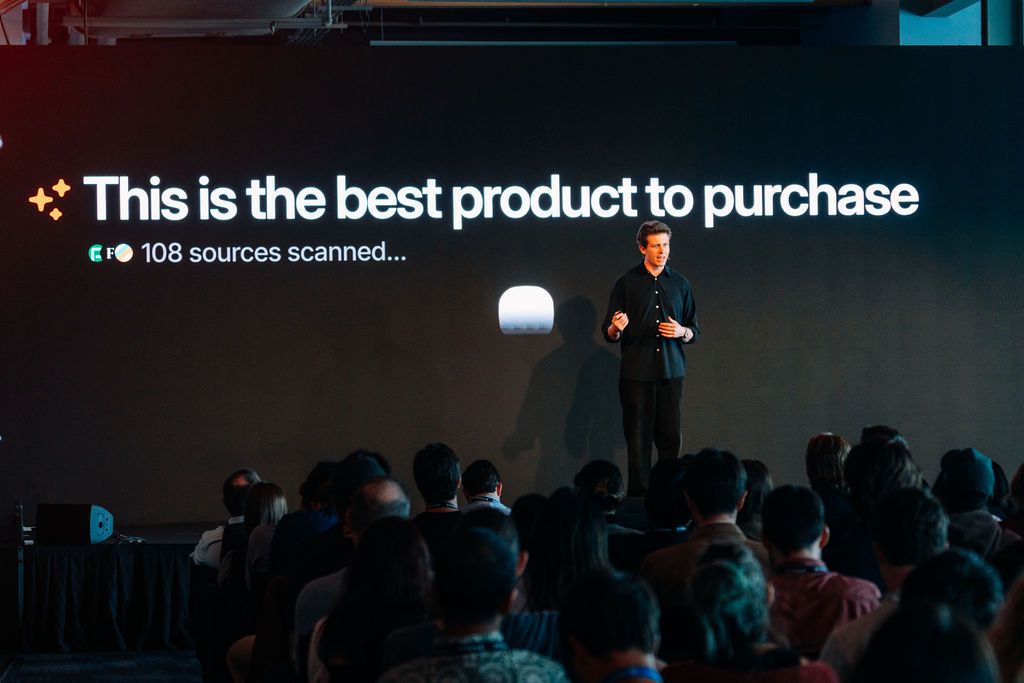
Josh Blyskal, Special Projects at Profound, followed James' introduction of the Marketing Engineer role at Zero Click San Francisco. He drew a direct line from Jim Simons building an engineering layer for finance to the moment marketing has been waiting 20 years to reach.
Key takeaways:
- Every major function, finance in 1988, data in 2014, go-to-market in 2021, solved the same problem the same way: by building an engineering layer so practitioners could stop doing mechanical work and get back to strategic work. Marketing hit that wall long ago but never built the layer, and agents are what finally make it possible
- A Marketing Engineer doesn't automate existing processes, they invent entirely new ones. The Competitor Monitoring Agent demoed on stage detected a 30% enterprise price increase at 2am, classified the opportunity, and staged a comparison blog, competitive landing page, sales brief, and social post before anyone on the team was awake
- Profound University launched as the first curriculum ever built for Marketing Engineering, with over six hours of courses, weekly cohorts, and certifications. The first cohort to certify sets the bar for the entire profession
- The role is already moving into the job market. Ramp posted a role for an Agentic Operator on their growth marketing team the day before the event, and hundreds of people were already getting certified within days of the program going live
The rise of the Marketing Engineer
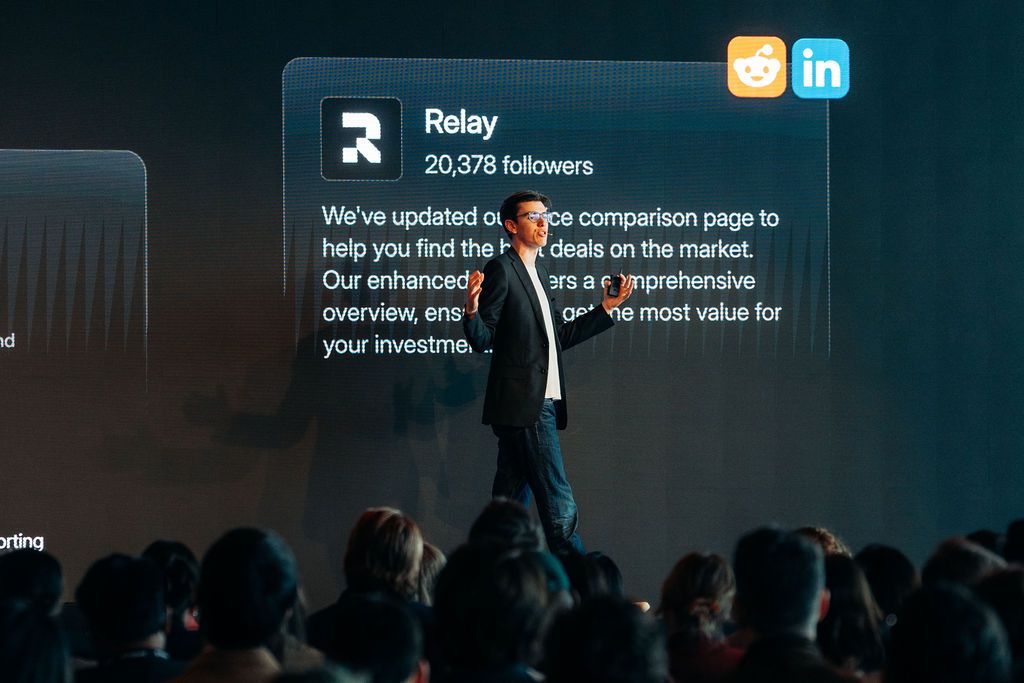
Mike King, Founder & CEO of iPullRank, argued that SEO is deprecated, not dead, but delivering diminishing returns. Echoing the themes laid out by James and Josh, he argued that the marketers who will win are those who develop an engineering mindset to understand how these systems actually work, not those who follow platform guidance at face value.
Key takeaways:
- Query fanout is the primary lever available to marketers right now. The synthetic sub-queries these systems run in the background determine content eligibility, and having the wrong format disqualifies content even when it ranks for the query
- Content versus keyword cosine similarity is currently the highest correlating factor with AI Search performance at 34.3% feature importance; information gain also shows strong positive correlation, while conceptual depth shows an inverse relationship between classic search and AI
- 2026 will be the year of hyper-personalization. Google has already announced personal intelligence features that use vector embeddings to filter content per user, and marketers who understand this at an engineering level will be able to get ahead of it
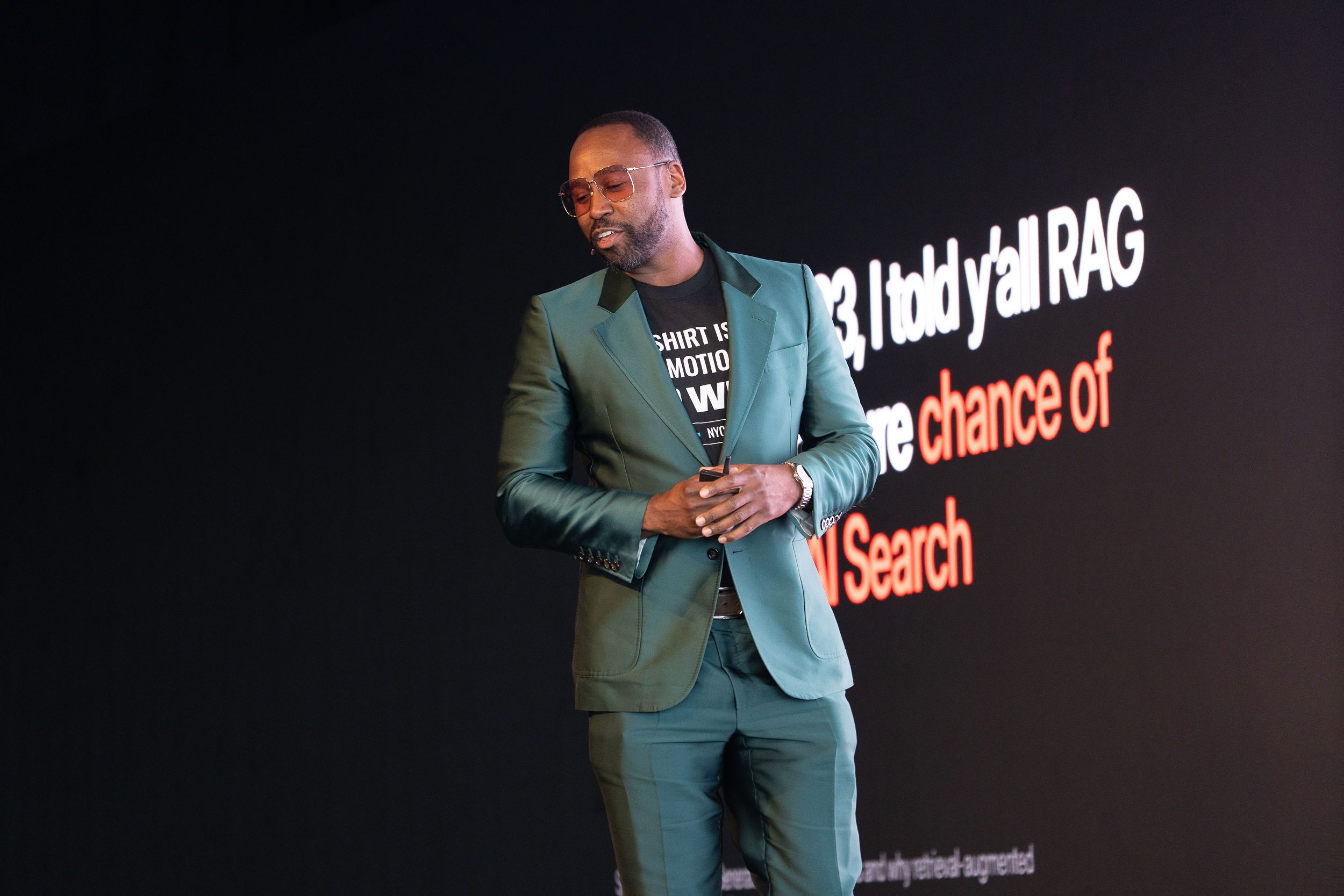
Navigating the future of search
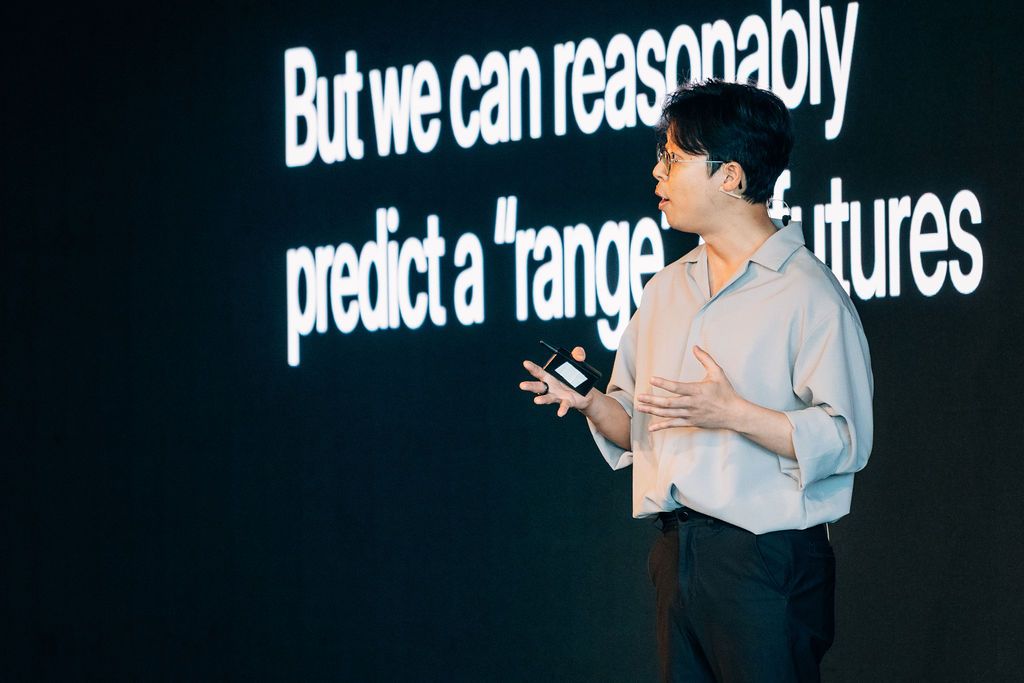
Daniel Shin Un Kang, Head of Organic & Agentic Search at Expedia Group, argued that marketers don't need to predict the exact future of AI. Instead, they need to predict a range of probable outcomes and start making asymmetric bets today, the same way venture capitalists do.
Key takeaways:
- There's a stable hypothesis marketers can build on regardless of how AI evolves. Agents are becoming gatekeepers who own execution while humans own intent. Agents are sufficiently different from humans, preferring low-latency structured data, showing more bias than expected, and making sporadic decisions. This means marketing now serves a dual audience of people and machines
- Marketing must become technical. Making your brand legible to agents requires experimenting with file types, indices, databases, and protocols. If agents can't read or understand you, you'll be evaluated on bad information.
- The right mental model for investing in AI Search is asymmetric bets. Budget for a 90% failure rate, ensure each bet is positioned for a 10 to 100x outcome, and treat every loss as learning that compounds into the next bet
- It's easy to be visible in AI Search; it's hard to be good. The goal is not to optimize a visibility score but to serve customers, and the fundamentals of understanding customer intent remain the foundation of any AI Search strategy.
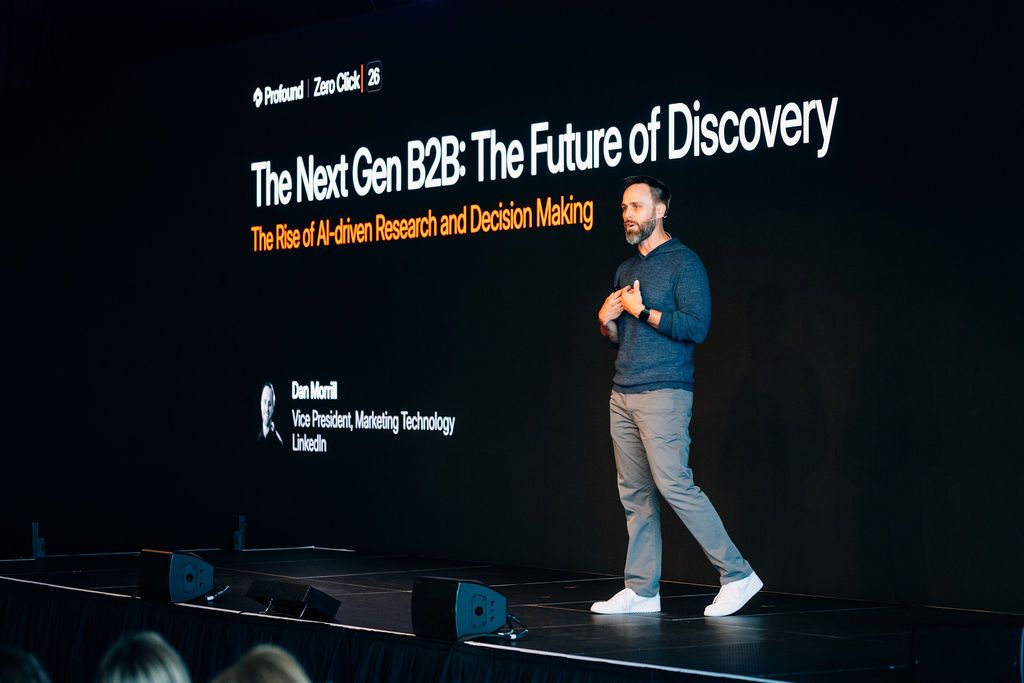
The next gen B2B: The future of discovery
Dan Morrill, Vice President of Marketing Technology at LinkedIn, shared the playbook LinkedIn built to win AI Search visibility as a B2B brand, and why LinkedIn has become the most cited domain for professional queries across all leading AI platforms.
Key takeaways:
- LinkedIn's traditional SEO traffic and MQLs are declining, but conversion rates have nearly doubled and deal sizes are growing. Buyers are arriving from AI already informed, aligned internally, and closer to a decision
- AI overviews now appear on nearly half of LinkedIn's tracked keywords, up from 7%, nearly a 7x increase year over year. LLM referral traffic more than doubled in the same period.
- 95% of cited LinkedIn content comes from original posts and articles, not reshares. Content that generates 10 or more genuine comments is significantly more likely to drive citations than content without engagement
- Winning AI visibility on LinkedIn requires three things working together: structured company page foundations written in natural language, original long-form content posted two to three times per week, and trusted employee and executive voices generating authentic professional dialogue
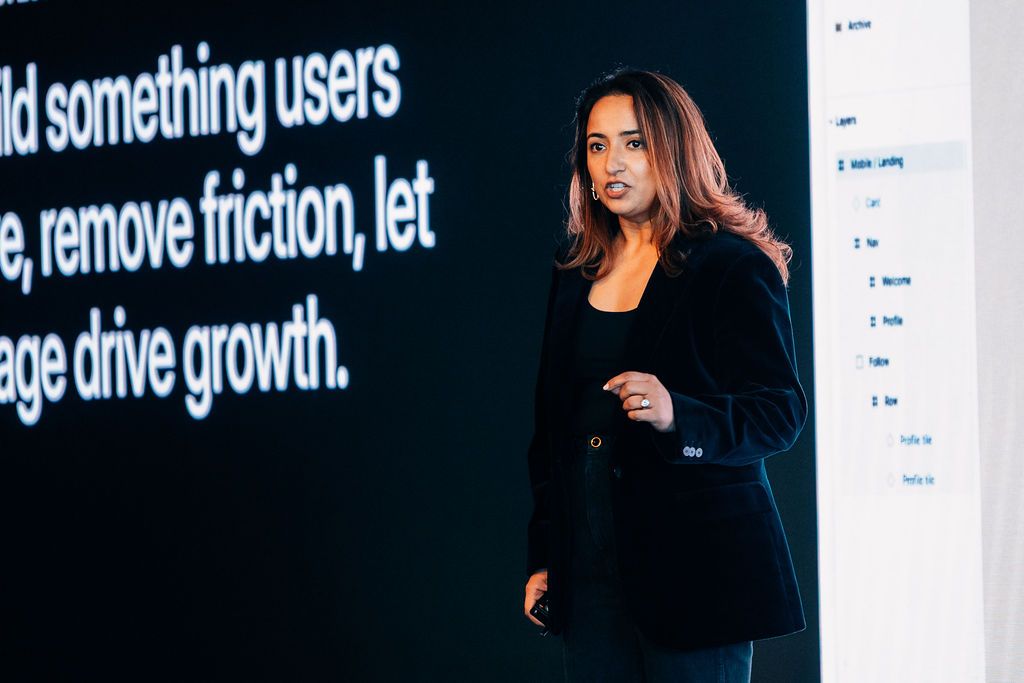
How PLG evolved in the age of AI Search
Reema Batta, Vice President of Growth Marketing (PLG & Sales Assist) at Figma, shared how Figma used AI prompt research to unlock entirely new audiences for the Figma Make launch, and shared why the consideration journey is now invisible for a growing share of buyers.
Key takeaways:
- When Figma analyzed prompt data for the Figma Make launch with Profound, they found their core designer audience was finding them through branded queries. But PMs, developers, founders, and marketers weren't searching for Figma at all, they were asking broad problem-level questions Figma Make is designed to solve
- Prompts varied dramatically by persona, designers, developers, and founders asked entirely different questions. This meant that a persona-specific content strategy was no longer optional in AI search
- The consideration funnel hasn't just compressed in AI Search, it's become invisible in certain instances. AI does the research before the user arrives, which means every query has the potential to be a complete customer funnel
- Figma's response to the Figma Make launch combined persona-targeted educational content, product features built to specific use cases, a global brand campaign, hands-on make-a-thons worldwide, and earned media investment, treating reputation as the primary discovery signal
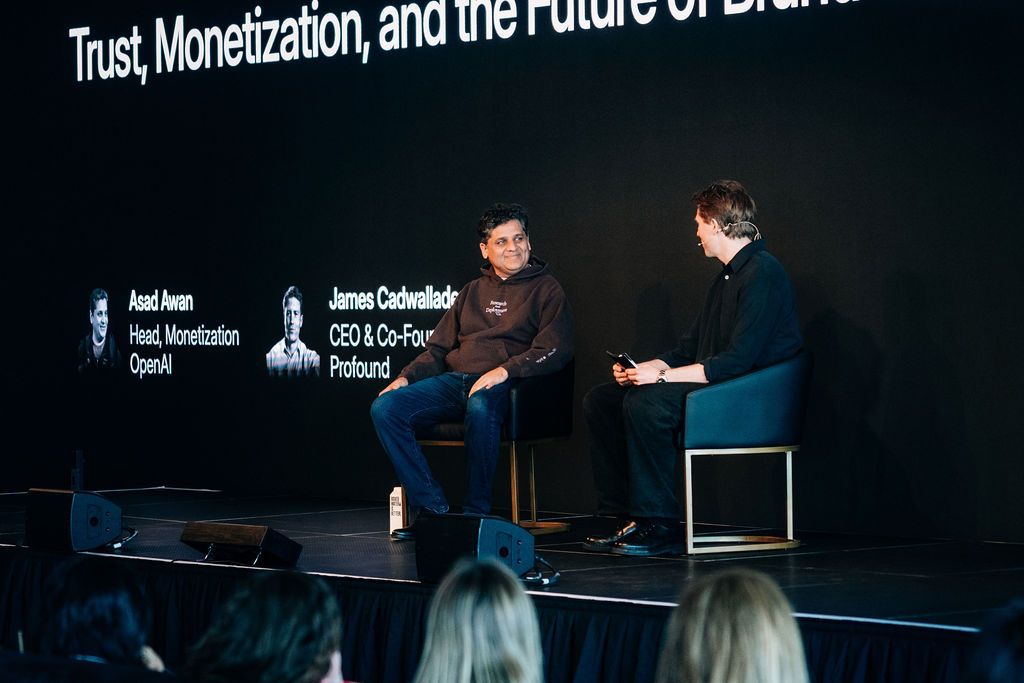
Trust, Monetization, and the Future of Brand Visibility
Asad Awan, Monetization at OpenAI, joined James Cadwallader for a fireside chat on the principles behind ChatGPT's Ads product, and why the conversational format makes it fundamentally different from search or social advertising.
Key takeaways:
- The ChatGPT Ads model is built on a core separation principle: the model cannot see or be trained on ads, the visual presentation keeps organic and paid clearly distinct, and user conversation data is never shared with advertisers
- OpenAI does not optimize for time spent or clicks. The goal of the organic product is to serve the user as the best personal super assistant, and ads are designed to complement that experience rather than interrupt it.
- Advertisers prompt the delivery stack the same way users prompt the model, describing their audience, brand voice, and objectives in natural language, rather than managing traditional keyword bids or campaign IDs
- The biggest misconception in the market is mapping ChatGPT Ads onto either a feed discovery model or a keyword search model, when the conversational format is a fundamentally different and more intimate user journey
Webflow's AI Search playbook
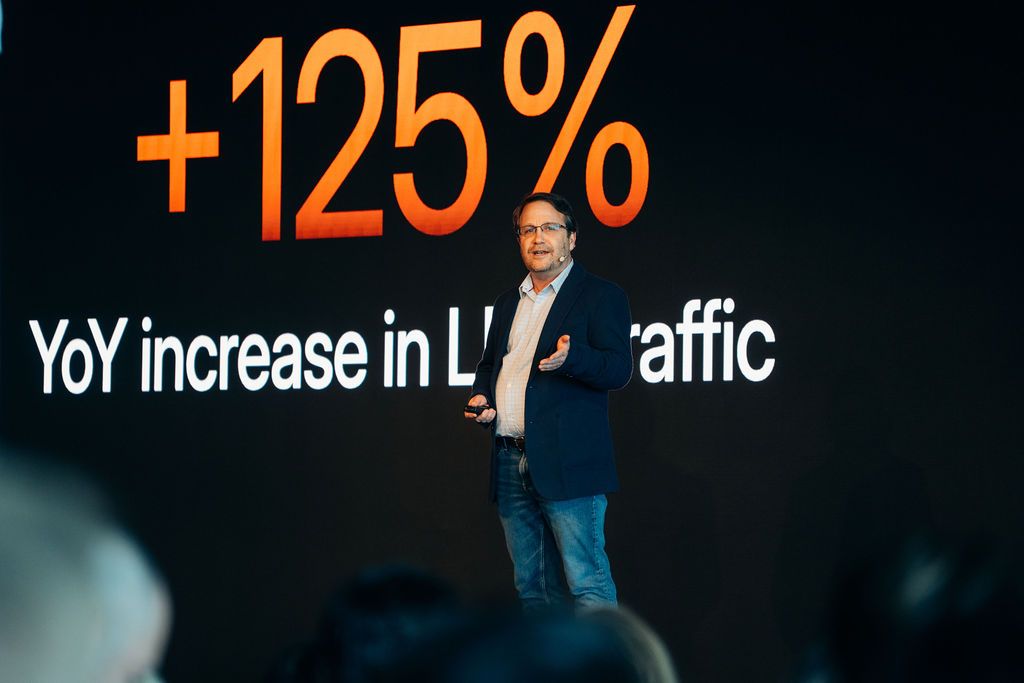
Dave Steer, Chief Marketing Officer at Webflow, argued that the bottleneck in AI search isn't technology, it's team structure, and that winning requires treating marketing as a team sport built around shared context, not siloed channels.
Key takeaways:
- Webflow saw a 125% increase in LLM traffic year over year, driven by a content playbook built on three pillars: agentic content refresh (5x more refreshes, 42% traffic increase), FAQ "answer primitives" paired with schema (24% increase in impressions, 300+ new citations), and webinar content repurposed by agents into citable assets
- Most marketing orgs are built as a "Frankenstack", separate teams, tools, and KPIs per channel, which blocks the shared context needed to build and scale AI agents across the marketing stack.
- The four human roles that survive the agentic era: the strategist who sets direction, the creator with taste and brand craft, the connector who builds relationships, and the orchestrator who builds the agent systems that multiply the entire team's output
- The Webflow and Profound integration allows marketers to pull a blog from their CMS, re-optimize it for AEO based on currently cited articles, and automatically stage it for Slack review, and then run the same agent across hundreds of blogs simultaneously with Profound Sheets
How to win Reddit
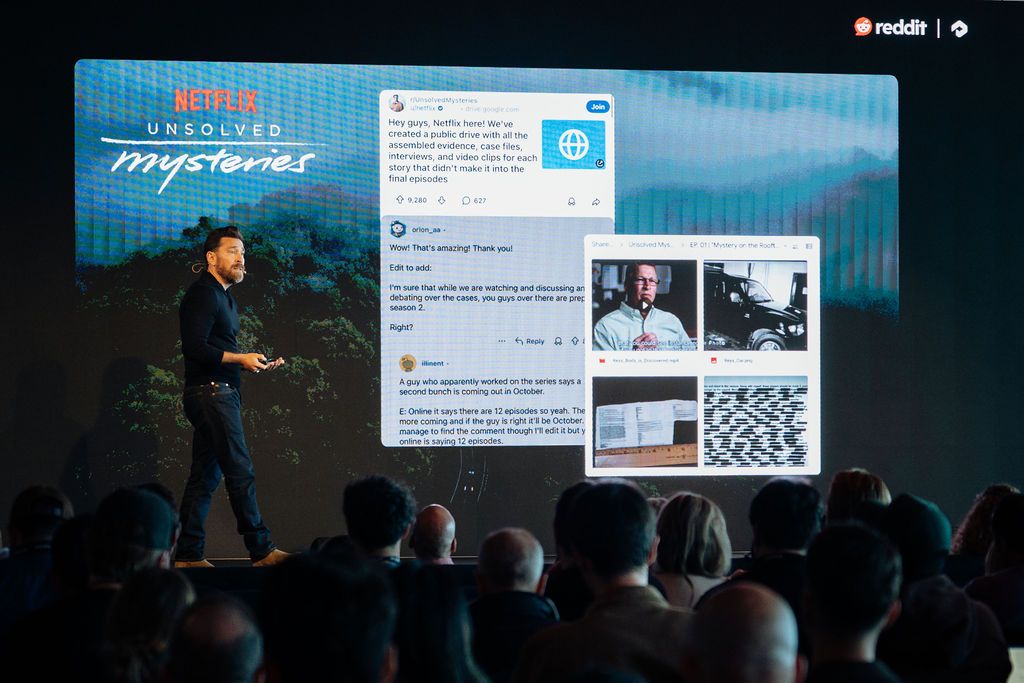
Rob Gaige, Global Head of Marketing Insights and Operations at Reddit, returned to the Zero Click stage with an updated playbook on how brands win citations on Reddit, including new data on posting frequency, subreddit targeting, and why the aperture brands need to cover is much wider than most assume.
Key takeaways:
- Reddit is not social media. Social was built around who you know, Reddit is built entirely around what you say, which means every brand post starts at zero regardless of follower count, and the goal is to be invited into the community, not to build a following
- Brands should not post more than three times per week. Beyond that, sentiment falls off a cliff; the average subreddit sees 80 to 100 posts per week, which means organic posting alone can never move the needle without making the community genuinely want to talk about the brand on their own
- Redditors expect brands to advertise; they don't expect organic participation, and when it does happen it needs to add real value, not just insert the brand into conversations
- Brands working with Profound to map citation impact now find they need to be present and relevant across approximately 350 subreddits, not just the three to five that seem most obvious, because the long tail of queries that influence purchase decisions is far wider than most brand teams assume
The web, rebuilt for AI
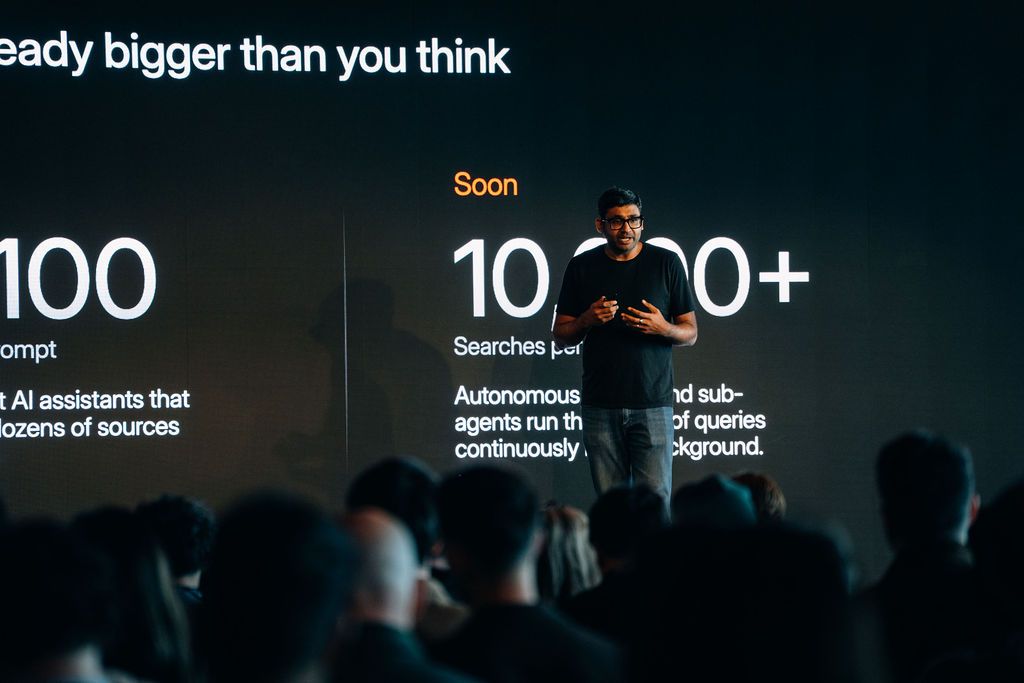
Parag Agrawal, Founder of Parallel, made the case that agents will use the web a thousand times more than humans, and that the brands and publishers who figure out how to become agent-native will define the next era of distribution.
Key takeaways:
- Agents ask questions very differently from humans. Where humans type three-word queries, agents write extremely descriptive, long-form queries, which changes what search engines optimize for and what content needs to answer
- The old web bargain, publishers create content, search engines index it, distribution follows, no longer works when agents are the primary users, and a new set of mechanics for how the web functions is still being figured out
- Agent-native content looks different from human-native content: less emphasis on UX, visuals, and narrative; more emphasis on structured, verifiable, authoritative information that agents can parse and cite
- Just as social media created an entirely new class of winners, X brands, Instagram influencers, those who didn't exist before the platform, the agent-native web will create net-new winners for the brands and publishers who move early
Weight for the age of answer engines
Tim Sanders, Chief Innovation Officer at G2, made the case that marketers need to develop their own system of "weights", internal priorities and signals, to compete in the age of answer engines, rather than optimizing for visibility metrics that don't connect to revenue.
Key takeaways:
- 54% of B2B software buyers now use chat as their number one tool for building a short list; a process that used to take days now happens in a single prompt, and 9 out of 10 buyers end up purchasing from that day-one short list
- G2 saw a 44% increase in citations after adding context summaries to product pages, and FAQ content built from verified reviewer verbatims improved both citation position and SEO rankings simultaneously
- Less than 3% of AI citations go to Tier 1 publications like the Wall Street Journal or Bloomberg. 97% flow to Tier 2 niche and regional publications, largely because Tier 1 blocks AI crawlers
- Winning the answer matters more than earning a citation. G2 research shows that branded citations drive a fraction of the click-through rate of actually being recommended, and over a third of B2B buyers now use deep research tools where the recommendation appears at the end of a multi-page report
The infrastructure behind agentic commerce
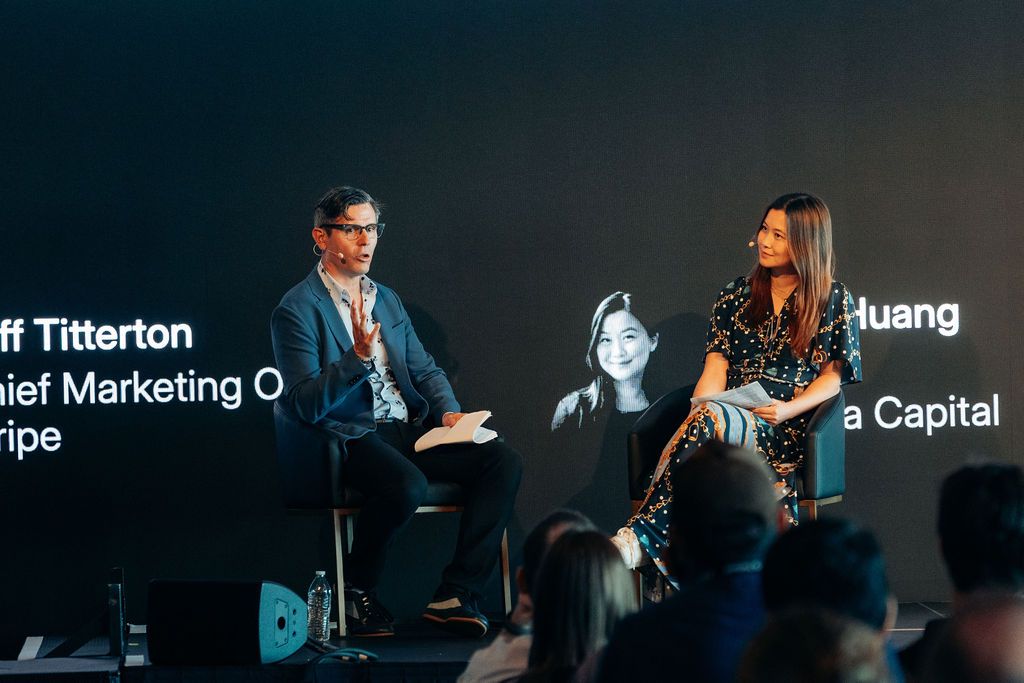
Jeff Titterton, Chief Marketing Officer at Stripe, sat down with Sonya Huang, Partner at Sequoia Capital to discuss how agentic commerce is re-shaping Stripe's funnel, why product data structure has become a marketing priority, and what it means to build trust in a world where agents are making purchase decisions on behalf of humans.
Key takeaways:
- Roughly 20% of Stripe's sign-ups already have some agentic component, pure agent, agent-assisted, or agent-researched, and agent traffic to Stripe's documentation is significantly higher than overall traffic ratios
- Answer engines have regressed some Stripe user behaviors by recommending outdated integration shapes sourced from authoritative-but-stale third-party content on Reddit and other sites, making AEO an off-site problem, not just an on-site one
- Subscription pricing is likely to break down in an agentic world. Subscriptions exist because humans hate renegotiating monthly, but agents are infinitely patient and will seek the best price every time, accelerating the shift toward usage-based and consumption-based models
- Stripe's Machine Payments Protocol enables agents to make purchases directly via secure token exchange without filling out web forms, and Stripe expects agent-to-business commerce to become mainstream within the current year
A conversation with Brian Halligan and James Cadwallader
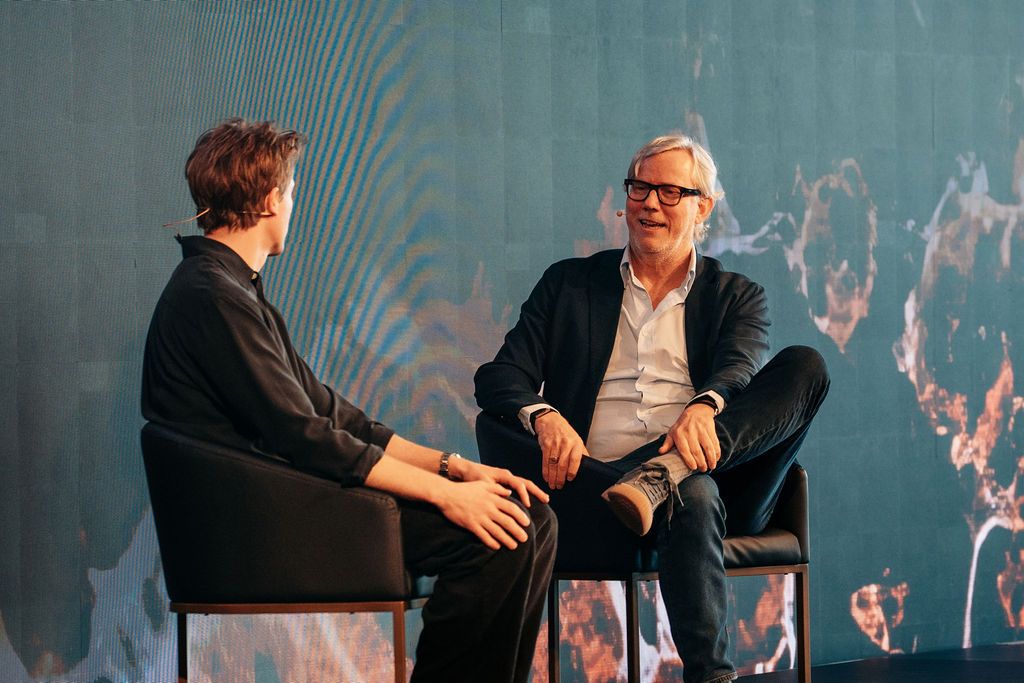
Brian Halligan, Co-Founder of HubSpot and Advisor at Sequoia Capital, sat down with James Cadwallader for an unscripted conversation about the parallels between the inbound marketing revolution of 2006 and the AI Search shift happening now.
Key takeaways:
- The moment feels like 2006 all over again — people changing how they shop, evaluate, and buy, creating a massive opportunity for marketers willing to adapt early, just as HubSpot's inbound marketing thesis captured the last platform shift
- The new limiting factor in marketing is creativity, not execution. James described being 100x more productive as a CEO not through any personal genius but because AI handles everything from call transcription to follow-up drafting, compressing 45-minute tasks to minutes
- The Marketing Engineer is not a coding wizard. Profound already offers text-to-agent and voice-to-agent building, meaning marketers can deploy agents in natural language without writing a line of code
- In five years, the marketing being done today will look like a cottage industry. James believes teams will be doing 100x to 1,000x more marketing with the same headcount, because agents are insatiable consumers of content and it falls on marketing to feed them
Closing remark
Thank you to every speaker, partner, and attendee who made Zero Click San Francisco possible. The quality of thinking in that room set a standard we intend to build on.
The Zero Click World Tour continues this fall with stops in London, Sydney, and Singapore. Request your spot and be on the lookout for updates on our Zero Click website.
We'll see you there