
Summary of takeaways
- Google's AI Mode saw an 8.4x surge in citation share (Apr 15–Jun 30), making google.com the #2 ranked domain, driven almost entirely by its own Business Profile and Product Knowledge Panel subpaths.
- Google cards now intermediate the brand-consumer relationship for local-intent verticals (hospitality, home services, restaurants, real estate, healthcare) and comparison-driven product queries, inserting itself as the touchpoint rather than passing traffic through to brand homepages.
- Winning the click-through now takes one more step: optimizing the Google-owned cards first. That means fixing profile completeness (stale photos, missing hours, incomplete fields) and actively managing the reviews that sit front and center, since they're what your next customer sees before deciding whether to continue to your site.
The citation share jump
Recent updates to Google’s AI Mode mark a structural shift in consumer discovery. From April 15th - June 30th, www.google.com aggressively increased(8.4x) in citation share making it the #2 ranked domain.
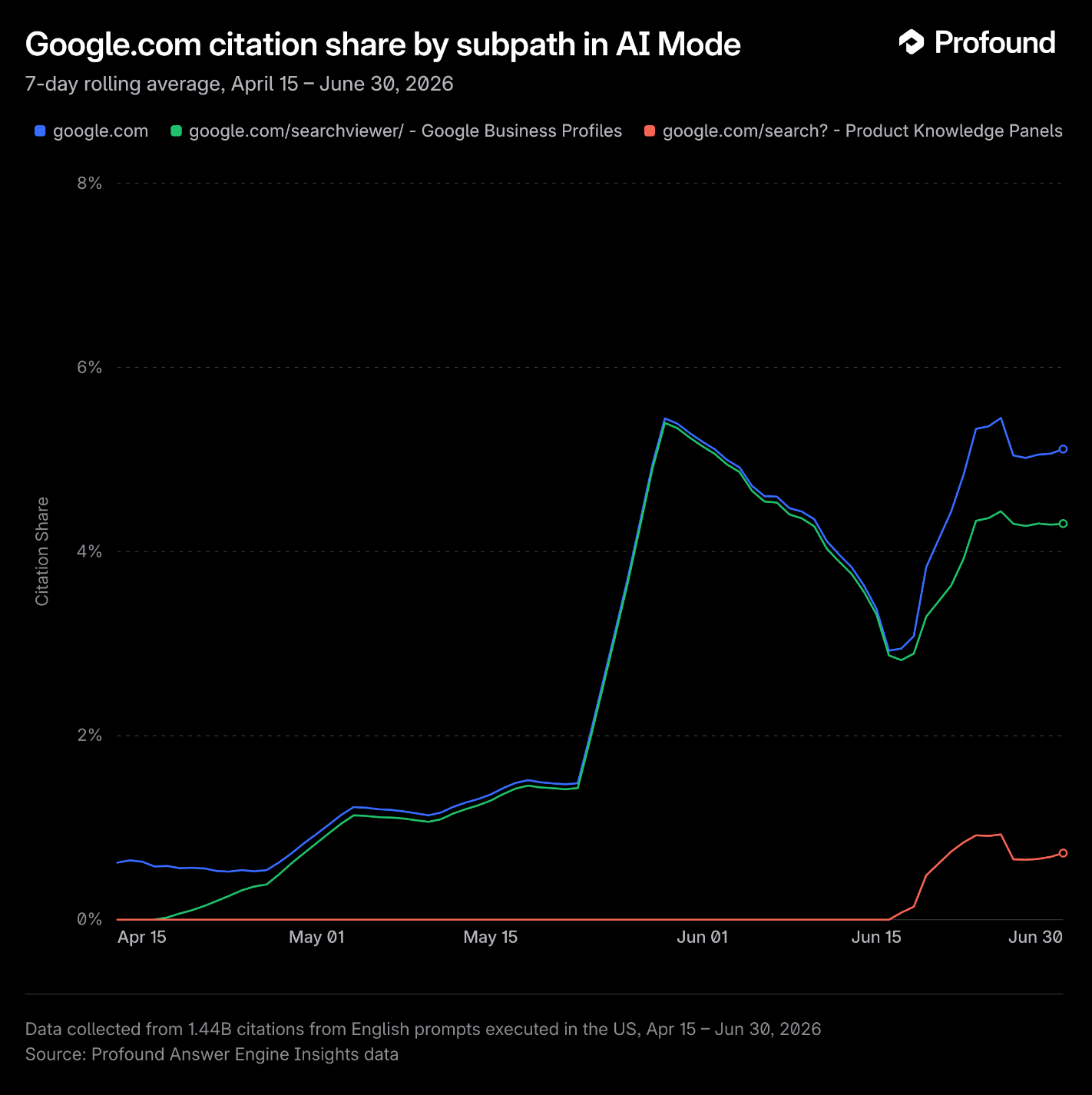
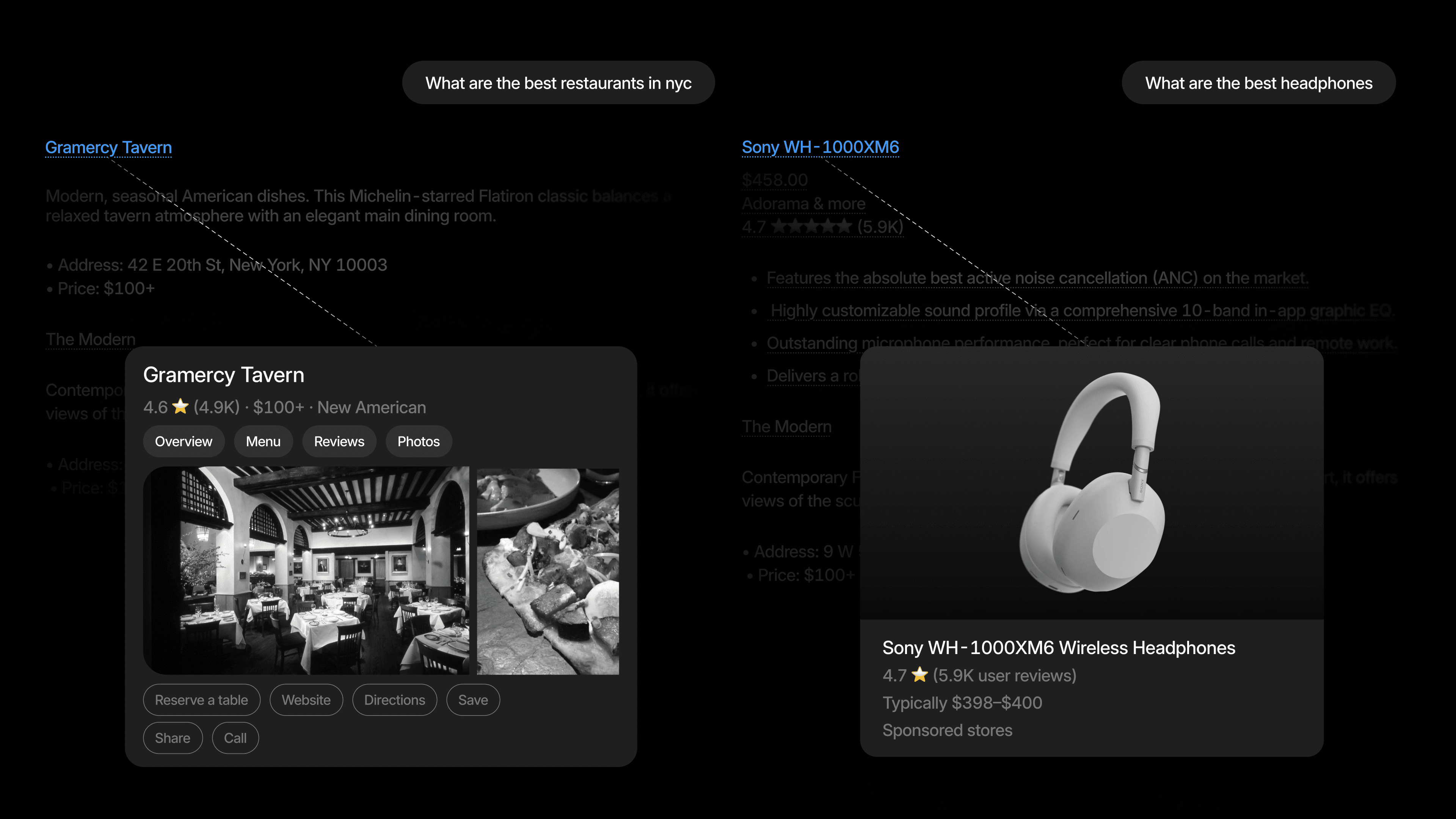
Google is prioritizing its own subpaths, specifically Google Business Profiles and Product Knowledge Panels (PKPs), to serve as inline, interactive "popup panels." This transition effectively positions Google-hosted assets as a brand's primary landing page, completely bypassing traditional organic click-throughs to corporate website homepages.
Industries Affected
1. Local-Intent Verticals (Google Business Profiles - ‘google.com/searchviewer/’)
An analysis of over 32 million google.com/searchviewer/ instances indicated that industries relying heavily on local intent to drive revenue are absorbing the majority of this change. The five most disrupted sectors include:
- Hospitality & Travel
- Home Services
- Restaurants & Dining
- Real Estate
- Healthcare
2. E-Commerce & Product Verticals (Product Knowledge Panels - ‘google.com/search?’)
For physical products, any query probing comparisons, compatibility, or specifications (e.g., "Best [Product] for [Use Case]") increasingly defaults to the PKP rather than a direct click to an e-commerce site. This architecture provides an early look at Google’s emergent UCP, signaling a rapid evolution toward a fully agentic, zero-click e-commerce interface.
Implications for Brands
When a user queries your industry or products in AI Mode, they are no longer being sent to your homepage. They are being shown a Google-hosted card containing your data.
To maintain visibility and conversion performance in this new ecosystem, organizations must prioritize:
- Profile Completeness: Because the AI-hosted popup panel is the user's primary touchpoint, incomplete fields, outdated operational data, or stale photography act as immediate user exit points. Consumers will quickly abandon a poorly maintained panel and pivot to a competitor's profile within the same AI response.
- Active Reputation Management: Unanswered reviews and low sentiment directly undermine the credibility of the surfaced panel. Furthermore, they sit front and center instead of curated testimonials that live on your domain.


