


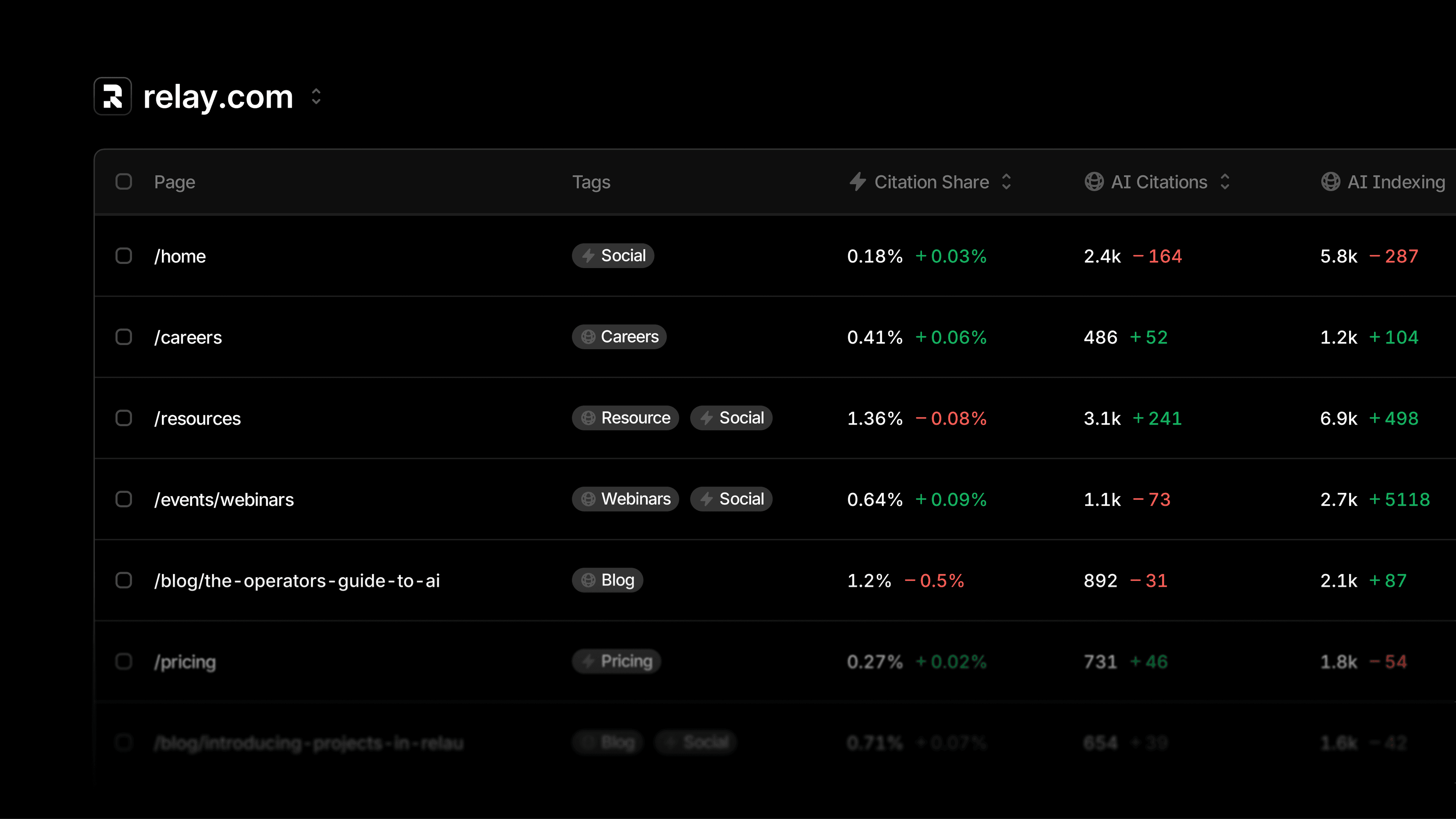
Your website is the most direct way your company can influence AI Search. Every blog post, product page, and article you publish is a chance to show up. And, rightfully so, your team obsesses over creating it, optimizing it, and tracking how it performs.
We built Pages to bring all of the data around your pages into one view. It's one command center for your content pulling citation data, bot activity, page health, and content quality into one singular view.
What's inside
Citation data pulls straight from your AI Search visibility data found in Answer Engine Insights. You can see citation share, AI citations, and citation rank for a page in one place.
Bot visits and benchmarks show you how AI crawlers are engaging with a page, and how that compares to your broader site. This is available to Agent Analytics customers. If you are a Profound customer who doesn't have Agent Analytics turned on yet, here's how to get set up.
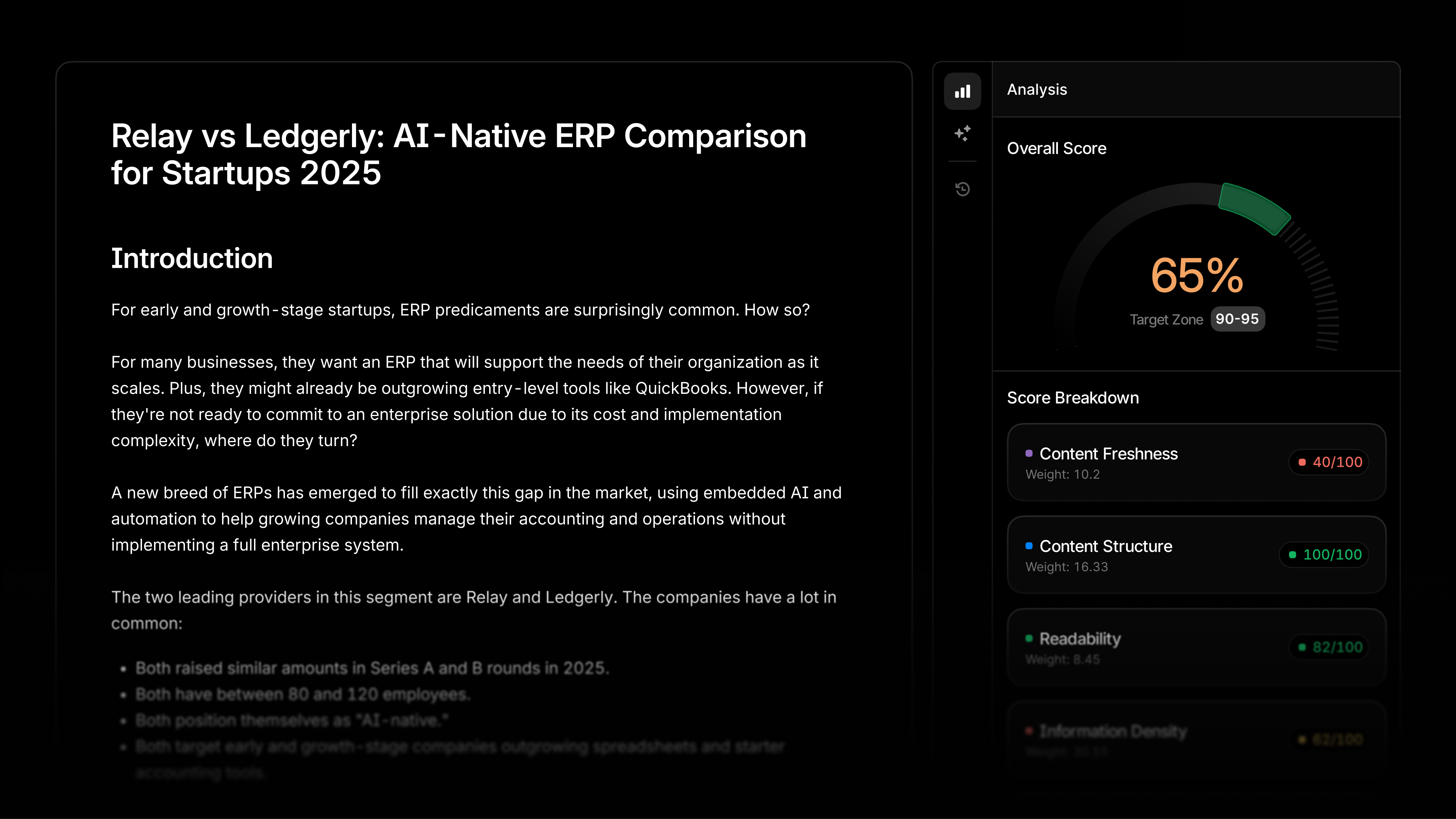
Content Optimizer lives as its own tab within every page. Powered by Profound's own machine learning model trained on millions of pages, the Optimizer tells you how a page is likely to perform in AI-generated results. It breaks down performance expectations by readability, content freshness, content structure, information density, machine readability, and answerability signals.
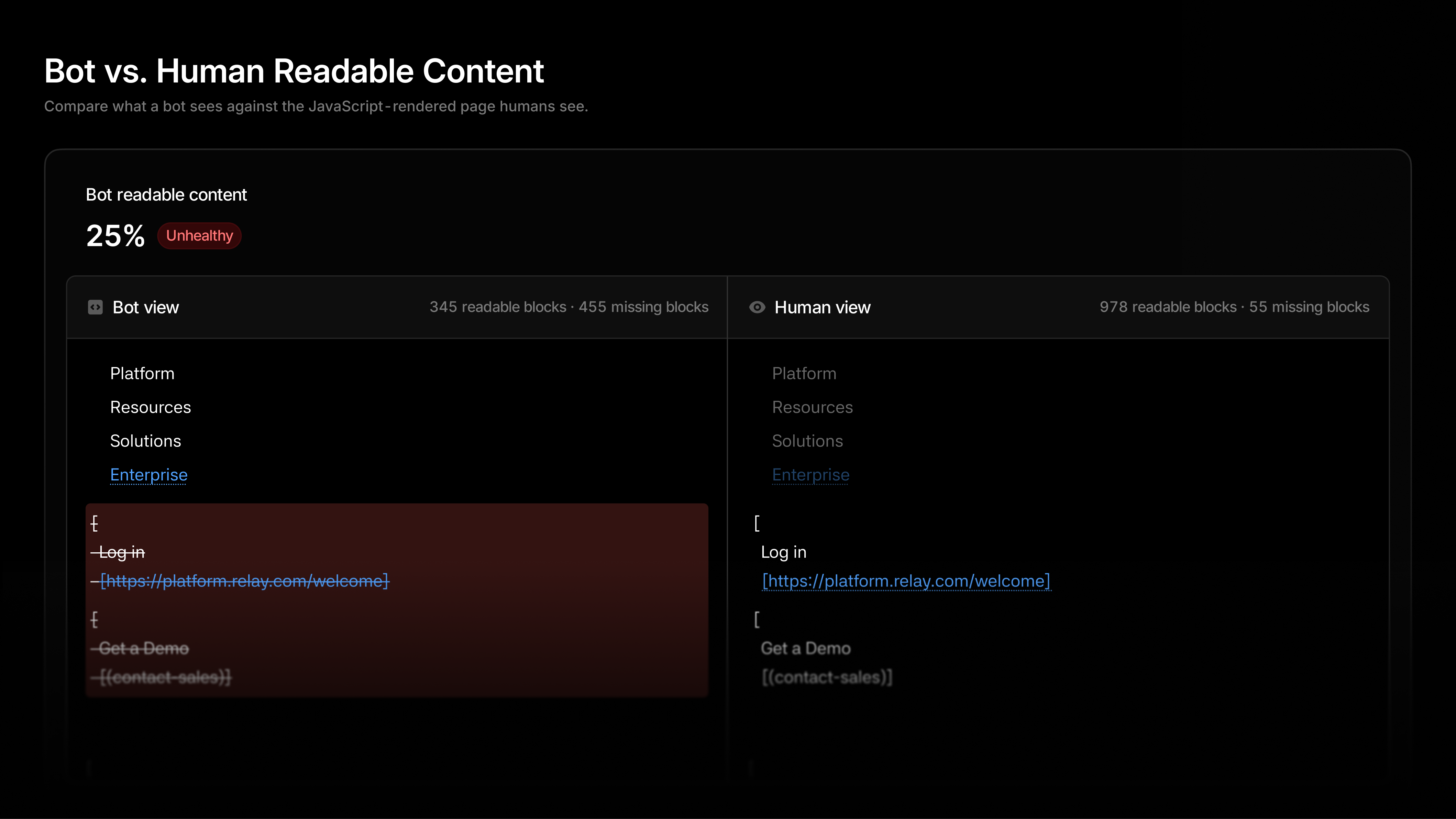
Bot View shows you what an AI bot actually sees when it crawls your pages. Bots often don’t see what you see: client-side rendered content, content injected after page load, or content that only appears after user interactions can all be missing from the initial HTML response. Bot View shows you when a bot is missing content on the page that you'd want it to see.
Page Speed Insights and IndexNow can both now be found on the Analytics tab of each page. PSI flags technical issues that might be limiting how a page performs, including First Contentful Paint, Largest Contentful Paint, Time to Interactive, Speed Index, Total Blocking Time, and Cumulative Layout Shift, each flagged as healthy, needs improvement, or poor. IndexNow is a protocol that lets you tell search engines directly when a URL has changed, instead of waiting for them to discover it on their own.
How to use Pages
Find content that's indexed but never cited
Filter for pages that surface as retrieval candidates in Answer Engine responses but convert to citations at a low rate. The content is being indexed, embedded, and retrieved, so the drop-off is happening at citation-selection rather than discoverability, which points to a content issue (structure, answerability, authority signals) rather than a visibility one.
Fix underperforming pages with Profound Agents
Run Content Optimizer on a page to see how it's scoring. If the score comes back weak, it's one click to put another Agent to work to make changes and ship.
Review important Pricing and Product pages
Use Bot View to compare what a page renders against what a crawler actually retrieves, surfacing gaps from client-side rendering, hidden elements, or buried structure. Any missing content gets flagged as a ready-to-go fix list for your web team.
Double down on what's already working
Track your top-performing content in Pages and keep building on what's already earning citations, instead of spreading effort evenly across everything you've published.
Get started
Pages is live for all Profound customers. If you're not yet a Profound customer, get a demo to see it in action.

