

Generic AI produces generic work.
It can draft a blog post, summarize a competitor, or turn a data pull into a report in seconds. What it cannot do on its own is know that your team never publishes listicles, that one competitor matters way more right now than the rest, or that the report this quarter should center around a key launch happening in October.
That gap shows up most clearly in the thing these tools will not do: tell you what to work on.
Almost every AI tool waits to be asked because they know they have no right to suggest ideas. The tools that do attempt to be proactive hit a different wall. Without knowing your business, a system can only surface opportunities broad enough to be safe:
- "Publish more content on this topic."
- "Improve your FAQ coverage."
- "Consider optimizing your product pages."
A generic recommendation is the most expensive kind of generic output, because it costs you the one thing proactivity was supposed to buy: attention pointed at the right thing.
Context Manager in Profound removes these constraints to enable true agentic marketing. It is the layer where your business knowledge lives, gets structured, gets remembered, and gets applied to the work your AI Marketer does for you.
The mental model
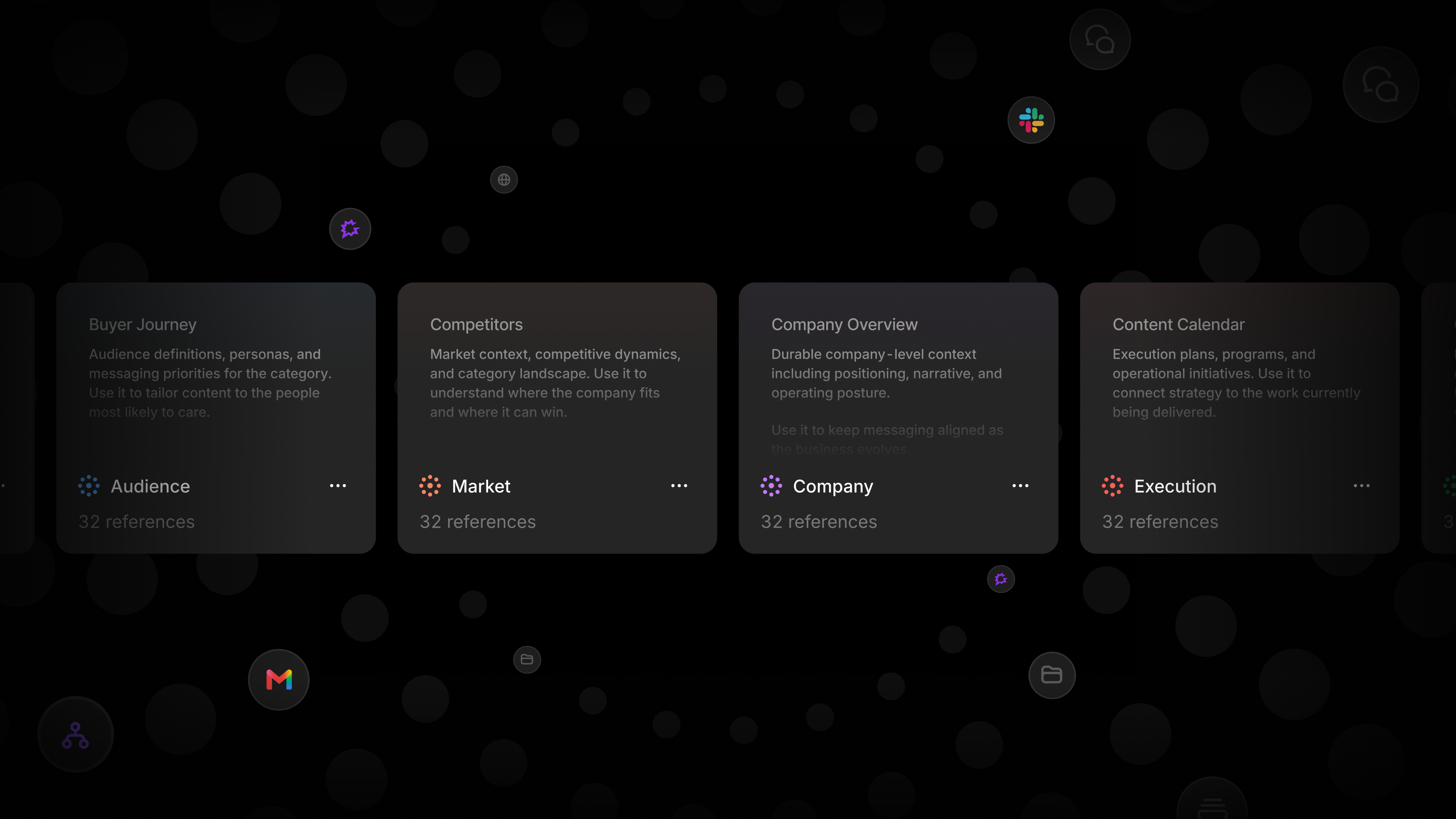
Context Manager is an organizational brain and operating memory for your AI Marketer. It holds the answers to the questions any new hire would need before they could do useful work:
- What does your company actually do?
- Which products and audiences matter most?
- What are your current priorities?
- What is your role and that of your colleagues?
- What is your preferred writing style and method of communication?
- What initiatives are coming up, for you and your broader team?
The goal is for your AI Marketer to operate like a teammate who is a marketing expert with the complete context of your brand.
Where the value comes from
Better prioritization
With Context Manager in place, your AI Marketer makes recommendations that connect:
- metric movements
- business priorities
- target audiences
- product launches
- competitive threats
- The specific ways your team executes
That is the difference between "visibility dropped on this topic" and "visibility dropped on a topic tied to the launch you are shipping in October, so prioritize optimizing this existing landing page, create a new buyer’s guide with these elements, and reach out to these individuals at these specific media outlets." Same data. A recommendation your team will actually accept.
Higher-quality outputs with less trial and error
Prioritizing the right work only helps if the work comes back usable. Context raises the floor on everything downstream:
- recommended projects become more tailored
- content is written how it should be on the first pass, and
- analysis focuses on what is most important
Your terminology, approved claims, tone, formats, and hard rules get applied by default without relying on employees to attach the right context files to each project or using up-to-date skills. This not only ensures brand quality and consistency, but it also saves your team hundreds hours in reduced manual intervention.
What makes up Context Manager
Context Manager is organized into four areas:
- Brand Context. What you sell, how you differentiate, your voice, your competitors, your audiences, and the constraints your content has to respect.
- Personal Context. How each team member works. Preferred report formats, level of detail, the metrics they check first, the priorities they are driving.
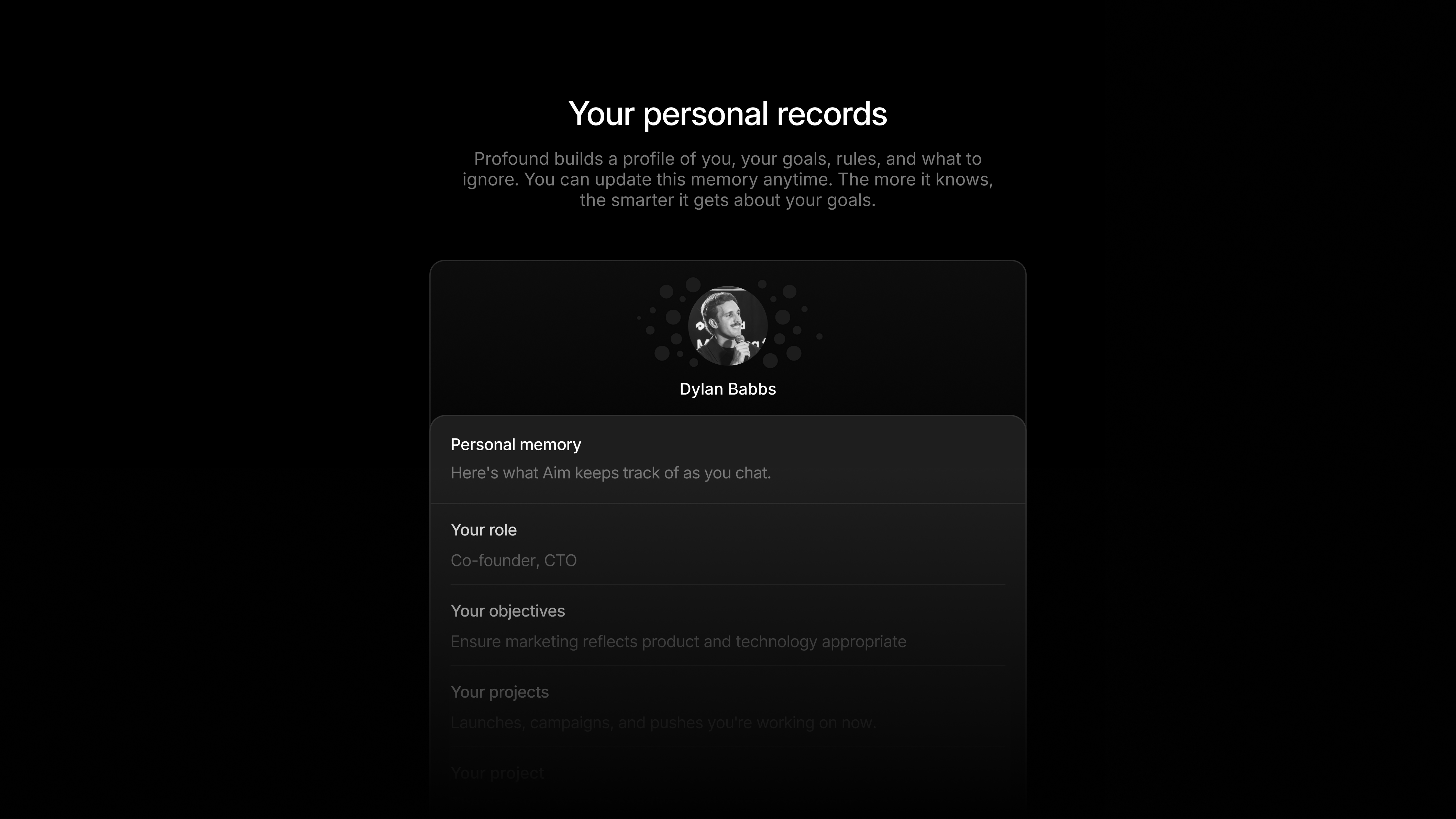
- Knowledge Base. Your source-of-truth material, and the primary way information enters the system to begin with. Updates here get synthesized into your brand context and get paired with synced data so that even if file uploads go stale, your brand context does not.
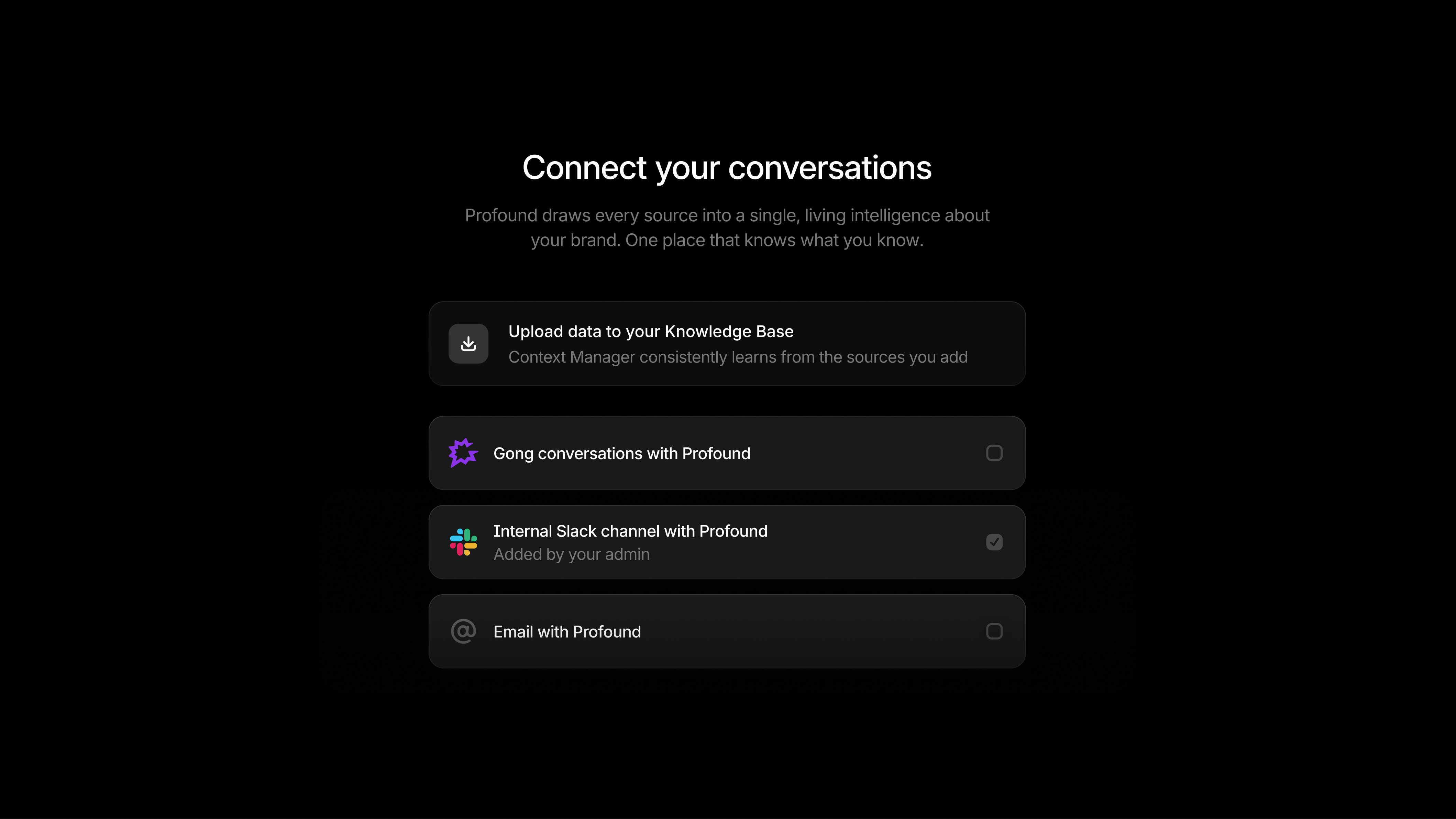
- Synced Data. Opt-in access to the conversations you already have with your Profound team, including calls recorded in Gong, shared Slack channels, and email threads. The context shared between you and your Profound account team in these conversations is no longer a notes doc that someone maintains off to the side, but a live source of context for your AI Marketer.
How raw material becomes usable context
While knowledge bases are extremely important as source-of-truth documentation, simply connecting AI to one does not inherently make it smarter. Past a certain volume it makes it worse, because retrieval returns a handful of passages that are technically relevant, but it can’t make the connections you’d expect a teammate to make without a more sophisticated solution in place.
Context Manager does not treat your material as a flat corpus to search. It runs a distillation pipeline:
- Extract. Pull durable facts out of documents, transcripts, and conversations. Discard the noise.
- Cluster. Group facts that reinforce each other into inferences, weighted by how authoritative the source is and how recent it is.
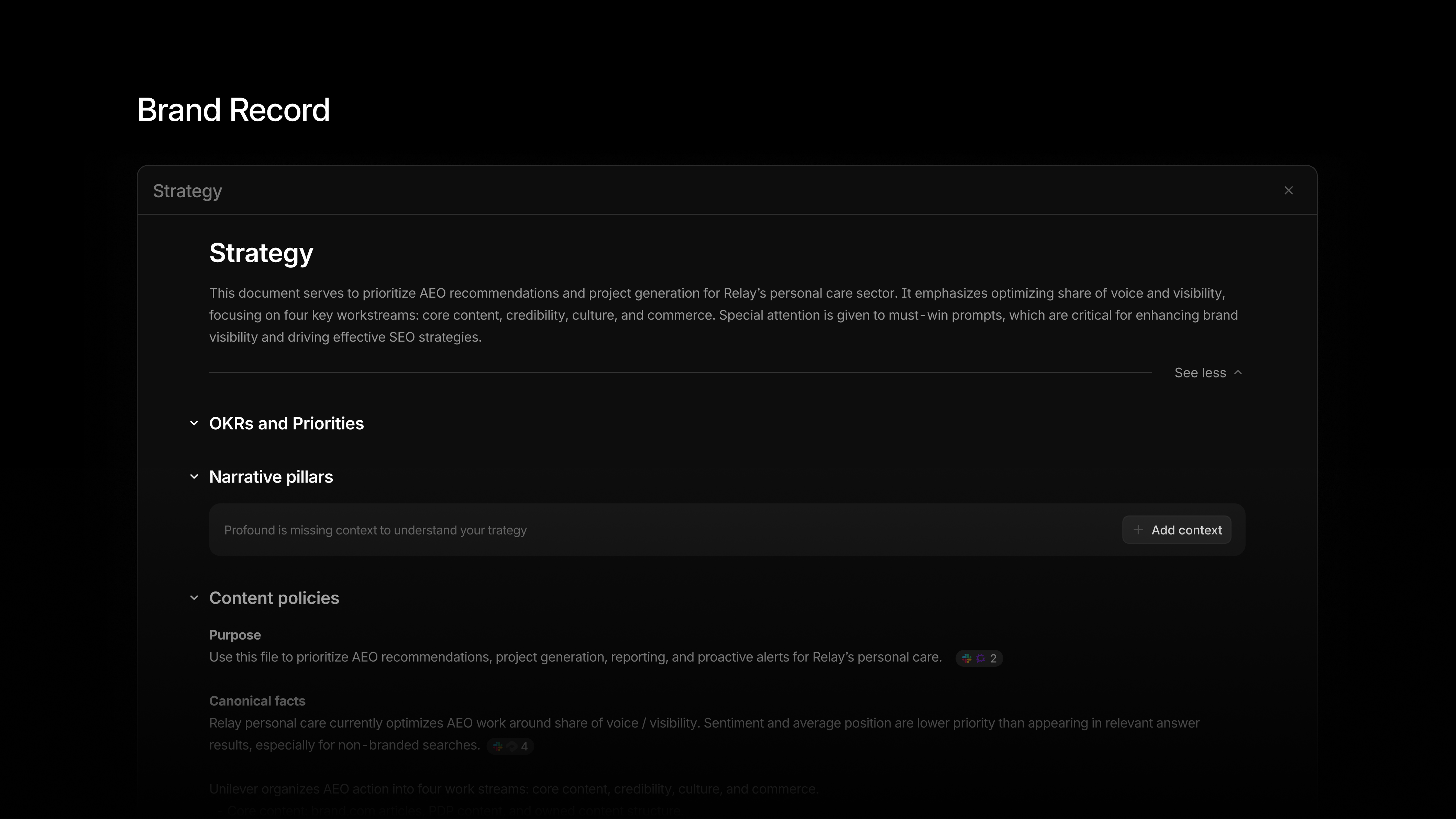
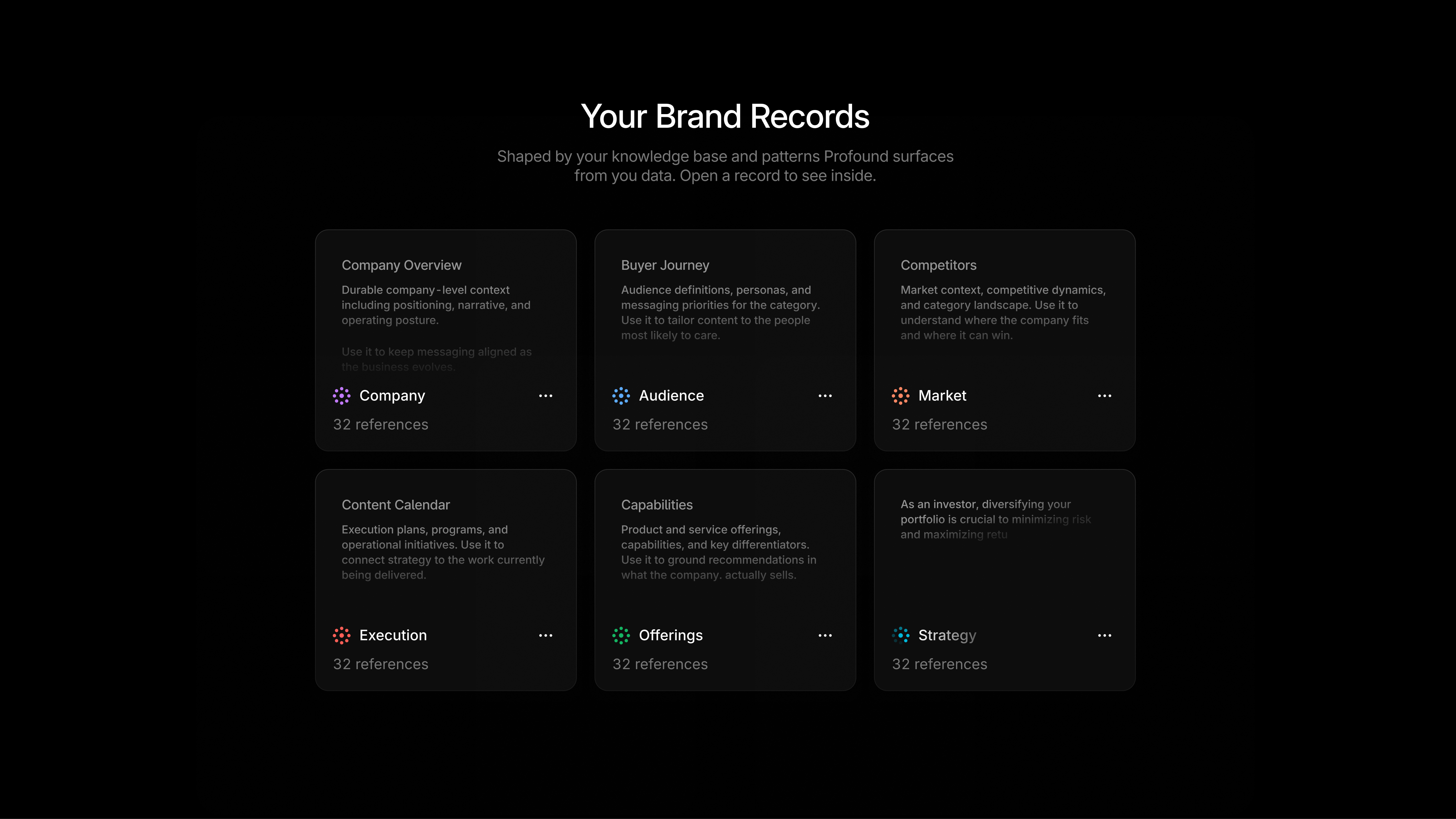
- Organize. File those inferences into six marketing-oriented Brand Records.
That structure is the point. Six defined Brand Records give your AI Marketer a more reliable framework for understanding your business than a single long prompt or folder of documents.
Your Knowledge Base stores the evidence. Context Manager turns it into an understanding of your company.
Every block of generated context in a Brand Record shows its source. You can see whether it came from a file you uploaded, a call, or a Slack conversation, and open it to inspect the source. You can then edit or update those source files to get pulled back into your Brand Records, as well as edit any section of the Brand Records directly.
Understand and fill the gaps in your context
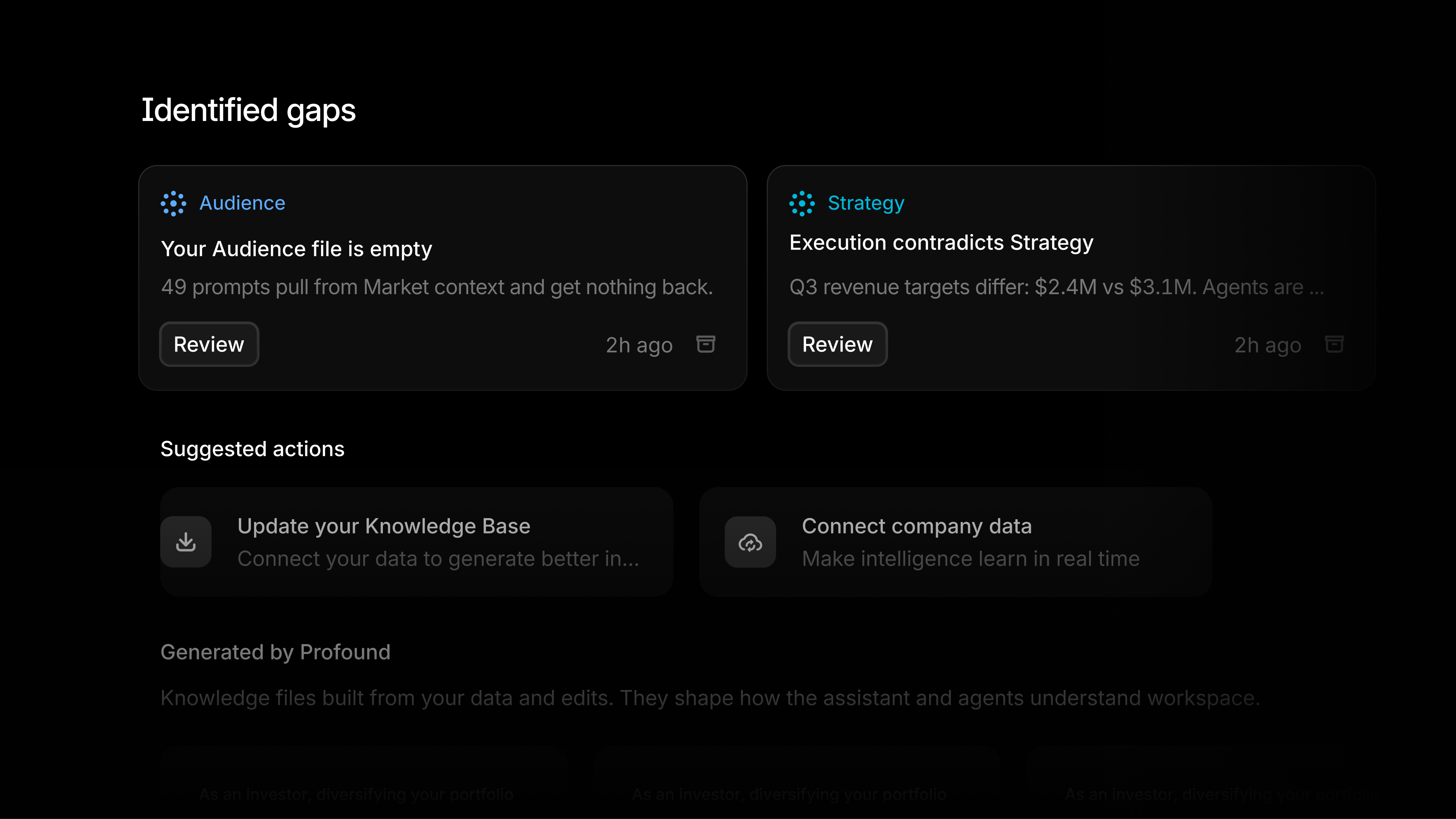
A context gap is a place where your AI Marketer has enough to be helpful but not enough to be specific.
- It knows your products but not your Q4 priorities.
- It knows your audience but not which segment is most valuable.
- It knows your brand voice but not which channels are in scope.
- It knows visibility dropped but not which initiative takes precedence.
When your AI Marketer finds a gap, it asks. It will surface a single question at the moment the missing information would change its answer, and you can answer it or skip it. Connect your AI Marketer to a shared Slack channel and it will raise the same kind of question in the thread. Either way, the answer flows back into your context.
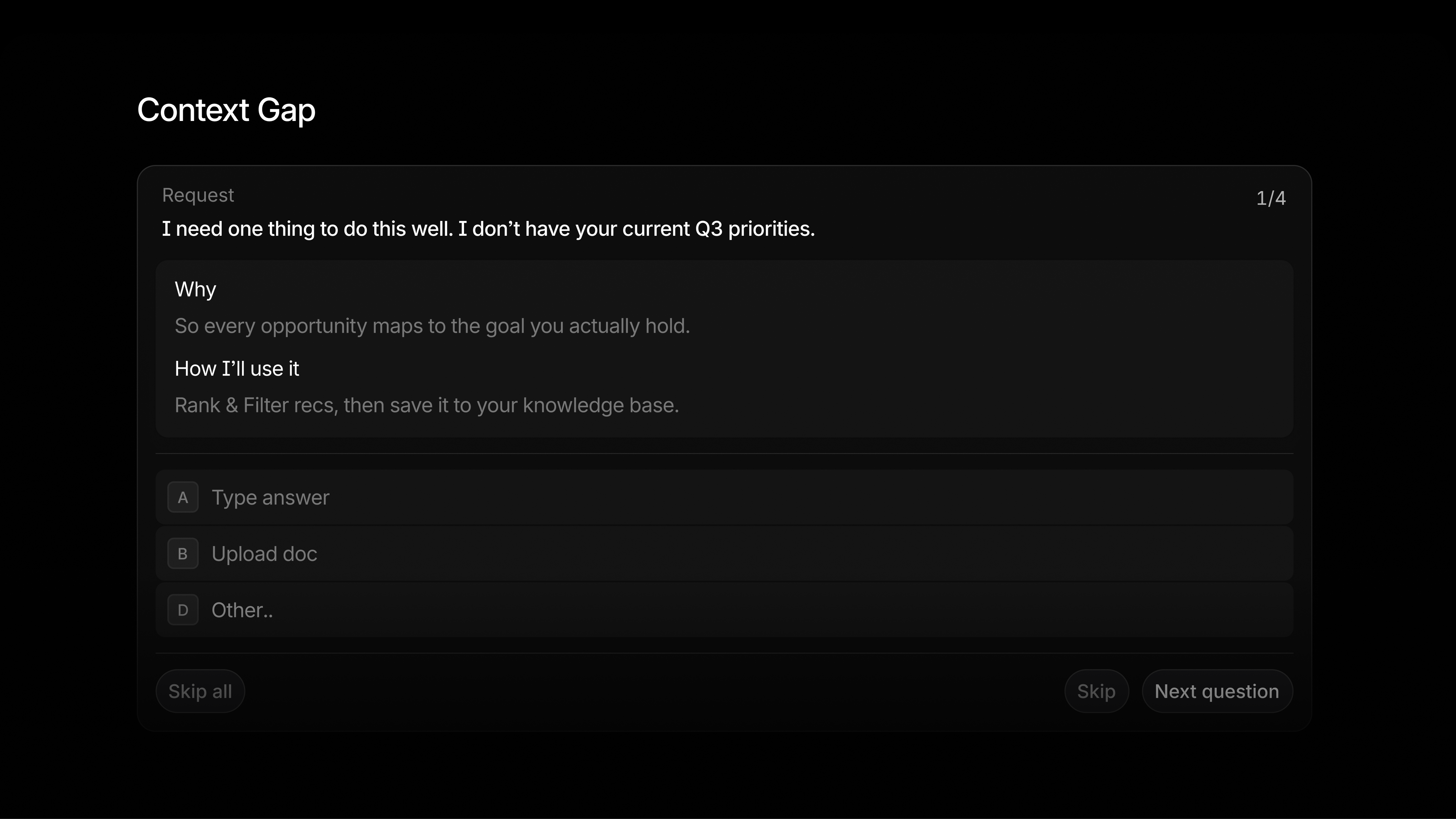
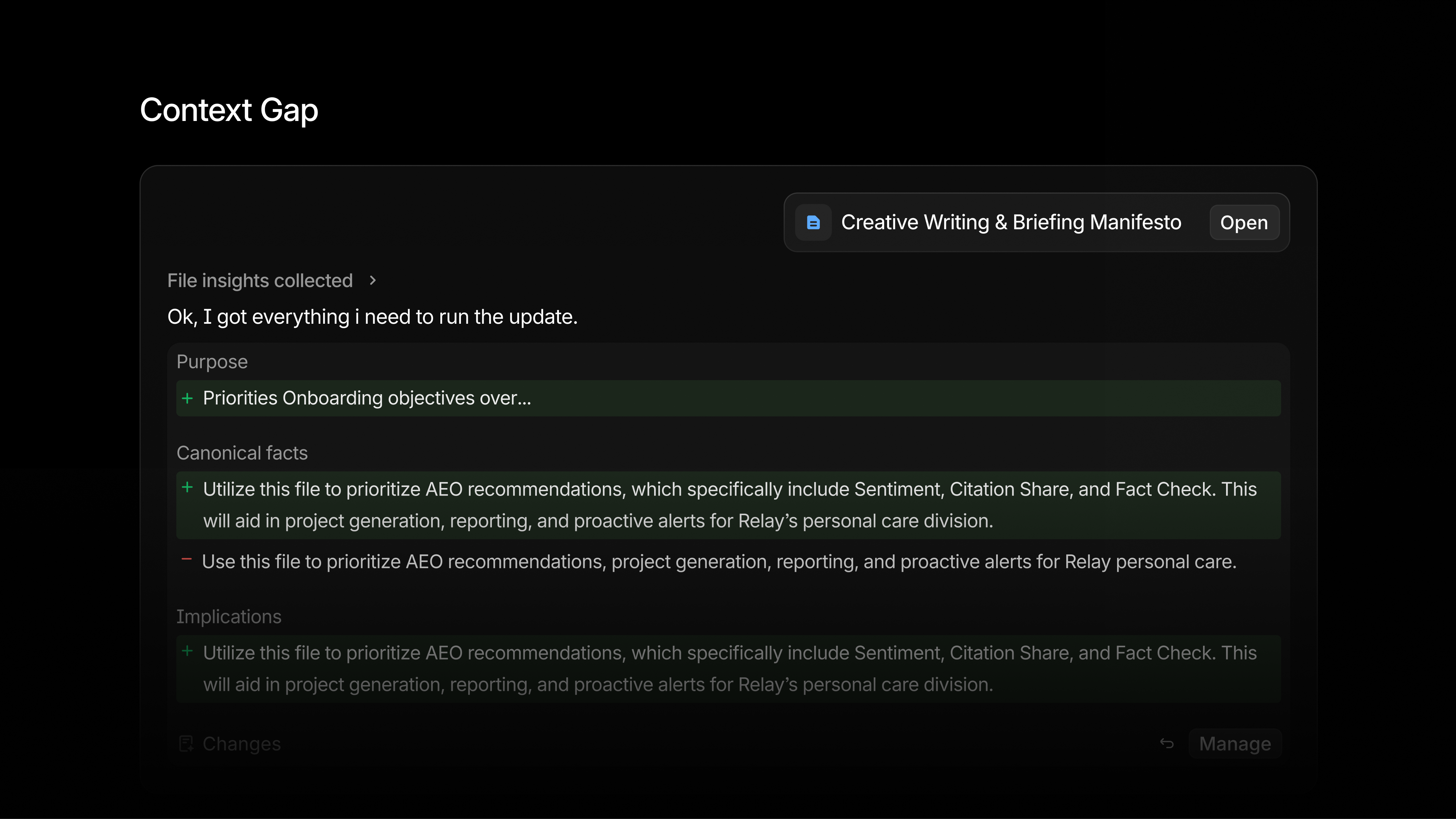
You should not have to maintain another surface to make your AI useful. Your AI Marketer asks when it matters, and the measure of success is better output, not file updated in your knowledge base.
Value compounds as Context Manager persists
Context is not a one-time onboarding form. Every corrected file, answered gap, connected conversation, and shift in priorities updates what your AI Marketer understands about you. It will even offer suggestions on what to remove so that stale or contradictory information doesn’t slow trust or momentum.
That understanding stays attached to the workspace rather than one expert's head or one call recording. A new teammate inherits it. A new Project starts from it. A new agent runs on it.
Get started
Context Manager is available today for Enterprise customers of Profound. Self-serve customers and others interested are encouraged to get a demo to see it in action.


