
On October 22, 2026, over 1,000 marketing leaders gathered at Magazine London for the fifth edition of Zero Click by Profound.
We brought together speakers from The Estée Lauder Companies, De Beers Group, Nestlé, Bank of Ireland, Anthropic, Barclays, LinkedIn, Greenpark, Accenture Song, On, and The AA to share how they're approaching marketing strategy, team design, and attribution in the AI era.
Alongside them, we announced AI Marketer in Microsoft Teams, Slack, and email, introduced Profound Slides, Creative Studio, and Profound Ads, as well as sharing new research on how AI agents shop.
This article summarises our key takeaways from each session.
You can also watch all sessions on demand at Zero Click Unlocked from October 30.
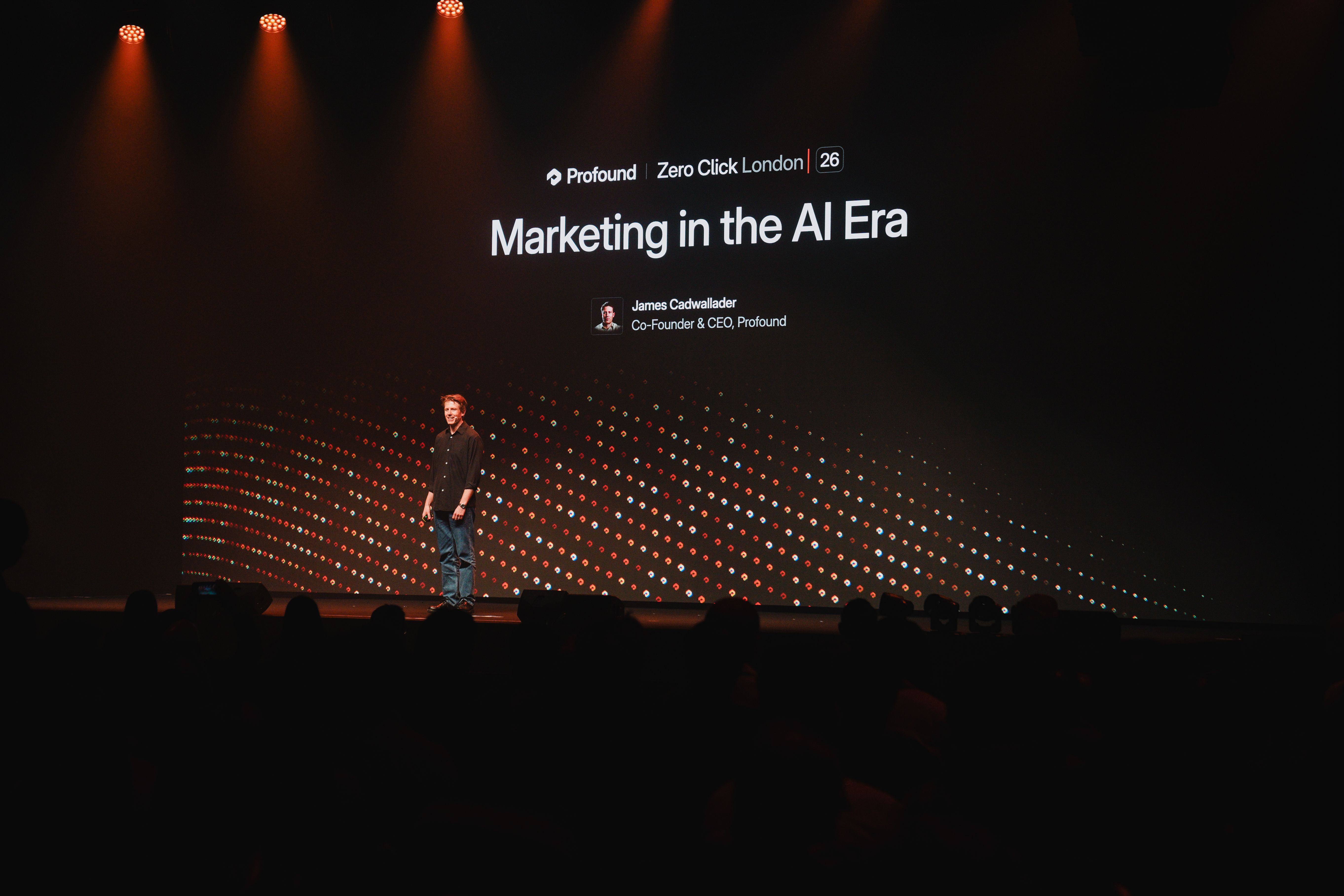
Marketing in the AI Era
James Cadwallader (Co-Founder & CEO at Profound) opened Zero Click London by describing how fast AI agents are becoming the second category of customer, and why context, not volume, separates strong AI-assisted marketing from slop.
Key takeaways:
- Profound launched twenty-four months ago with two predictions. One, AI agents become the new customer for every brand, and two, every marketer would use AI every day to do their work. James said both are playing out faster than expected, citing Claude adding a million users a day, ChatGPT crossing 1.2 billion weekly active users, and Meta's Muse agent reaching 5 million downloads two and a half times faster than ChatGPT did.
- Hundreds of thousands of sources influence how AI understands a single brand, and agents demand far more content than teams can produce by hand. James argued that the answer is to use AI to create marketing, with context as the safeguard: "AI doesn't create slop. Humans create slop with AI."
- Customers are seeing results with their AI Marketer. A global electronics brand updated thousands of product pages every week with an estimated 900 hours saved per month and a 78% increase in AI citations. A major CPG company cut a false narrative about one of its ingredients from 11% of responses to 1% in a couple of weeks. A top cloud vendor used their AI Marketer to turn hundreds of weekly sales calls into new talk tracks and saw win rates increase.
- James expects marketing organisations to split into human-centric creative work and agentic marketing. The second needs a new role, the Marketing Engineer, a person who is part builder and part marketer, and he named Google, Databricks, and Figma as companies that have hired or are hiring for it.
The Marketing Engineer
Nick Lafferty (Founding Marketing Engineer at Profound) formally introduced the Marketing Engineer to Europe. He showcased what the best ones are building, and how marketers can become one.
Key takeaways:
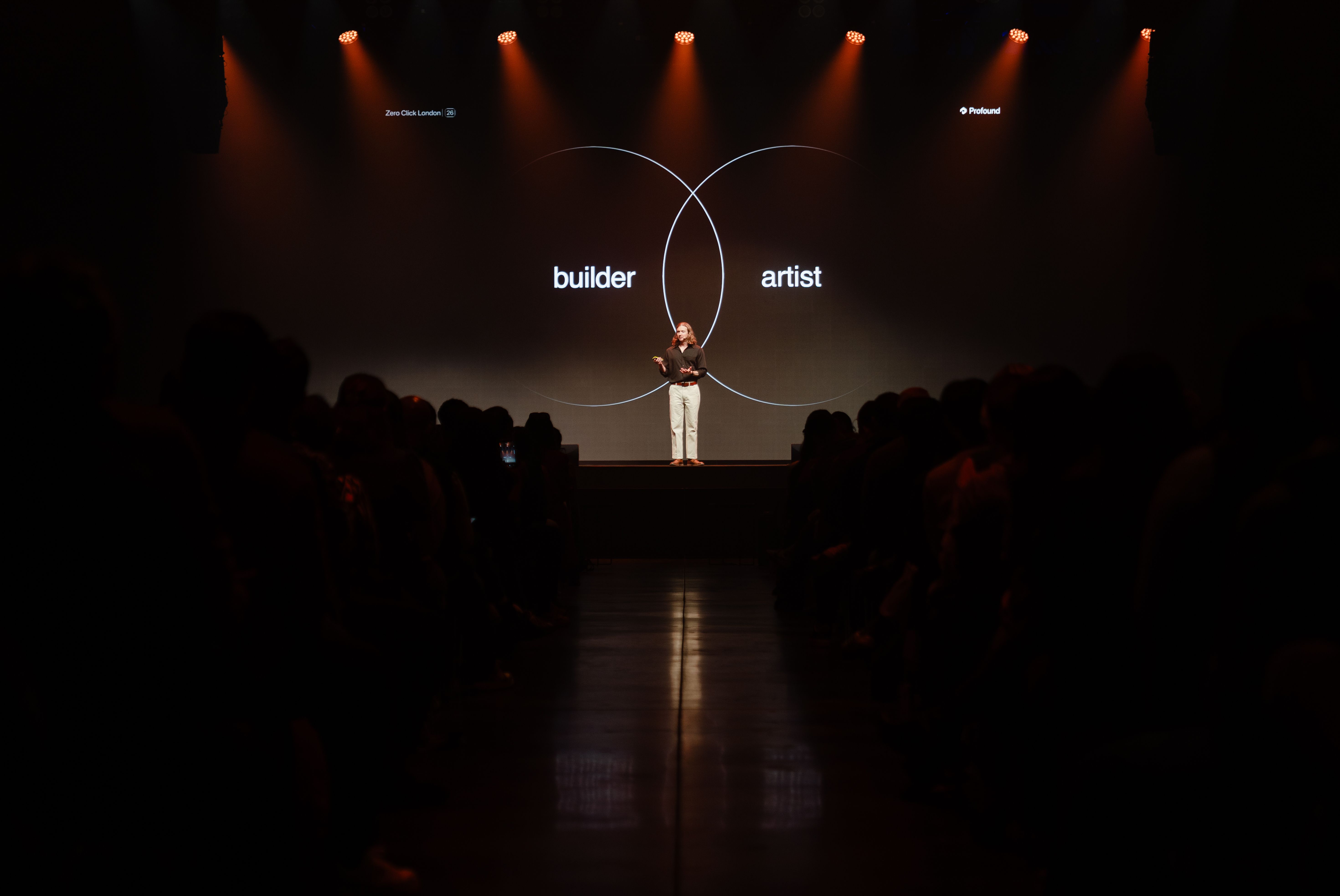
- A Marketing Engineer is part builder and part artist. The builder connects the right data and tools, and decides when a human needs to make a decision. The artist brings brand, audience, and judgement. Nick stressed that Marketing Engineers are marketers first.
- Featured builds from the Marketing Engineer Podcast. Aaron Lu, a Marketing Engineer at Notion, built a creative duplicator that copies one ad creative across Meta, Google, and LinkedIn in multiple languages and locales, saving about 32 hours a month. Austin Lau, the first growth marketer at Anthropic, connected Claude to his ad platforms to replace a weekly spend spreadsheet with a budget tracker that updates automatically.
- Nick shared a five-step Marketing Engineer Framework: prompting, a repeatable workflow, a first agent, multiple agents that orchestrate each other, and proactive agents. He advised moving a task one step up the curve at a time rather than jumping to step five immediately.
- Demand for the role is growing. Over 200 people applied for Cohort Zero, a Marketing Engineer training held in London the day before, and over 100 attended. Nick named Airbus, Figma, Intel, and Samsung as companies hiring Marketing Engineers, and shared the Marketing Engineer Job Board which connects companies with Marketing Engineers in the Profound Community.
A Diamond in the Machine: How De Beers Won the AI Answer
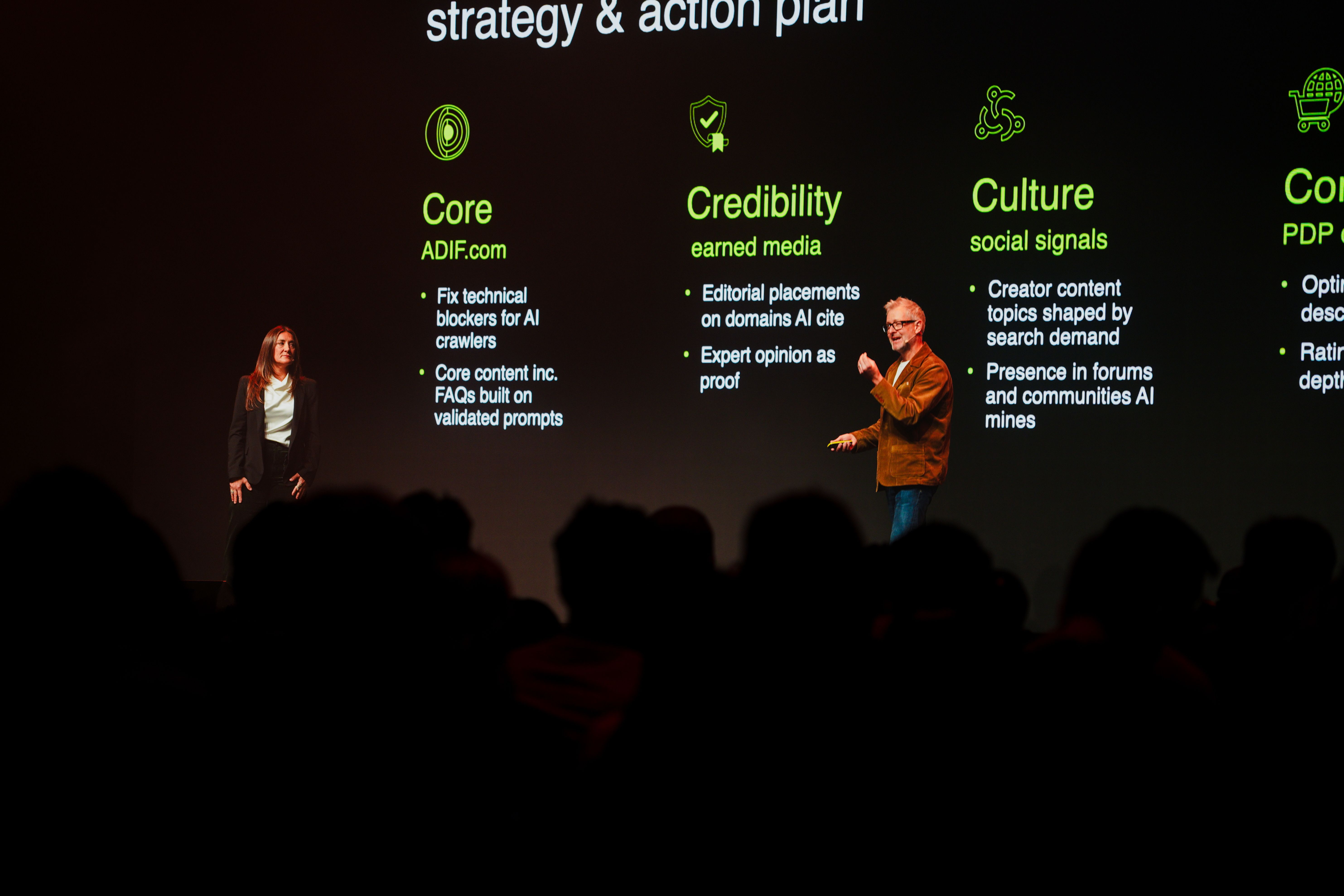
Beatrice Boue (Vice President, Digital Marketing & Media at De Beers Group) and Ian Colvin (Chief Strategy Officer at Greenpark) shared how a new De Beers diamond site reached the top three cited domains in the US natural diamond category.
Key takeaways:
- De Beers' top priority for the natural diamond industry was helping consumers understand the difference between natural and lab-grown diamonds, after a decade without category marketing. Greenpark's analysis found an AI Search universe of 160 million searches a year, with existing content fuelled by incorrect and outdated information.
- Greenpark ran an AI visibility audit powered by Profound data. They analysed half a million AI responses across 1,000 prompts, narrowed to 110 priority topics where synthetic diamond competitors were cited and natural diamonds were not. Its "Four Cs" framework scored brand performance by channel and covered the brand site, earned media, social and creator signals, and retail partners' product page titles and descriptions.
- Profound helped the team in three ways: pinpointing exact claims and sources that were wrong, surfacing topics where competitors were cited and natural diamonds were not, and tracking citation decay so declining articles could be updated before they dropped out of answers. The team described the loop as watch, refresh, repeat.
- In under 12 months, De Beers became the 3rd most cited domain out of 6,600 (top 1%) across Answer Engine platforms, with 66% of pages cited. It got there with 180 articles, against competing sites with over 4,000.
Visibility We Can Build, Recommendation We Must Earn
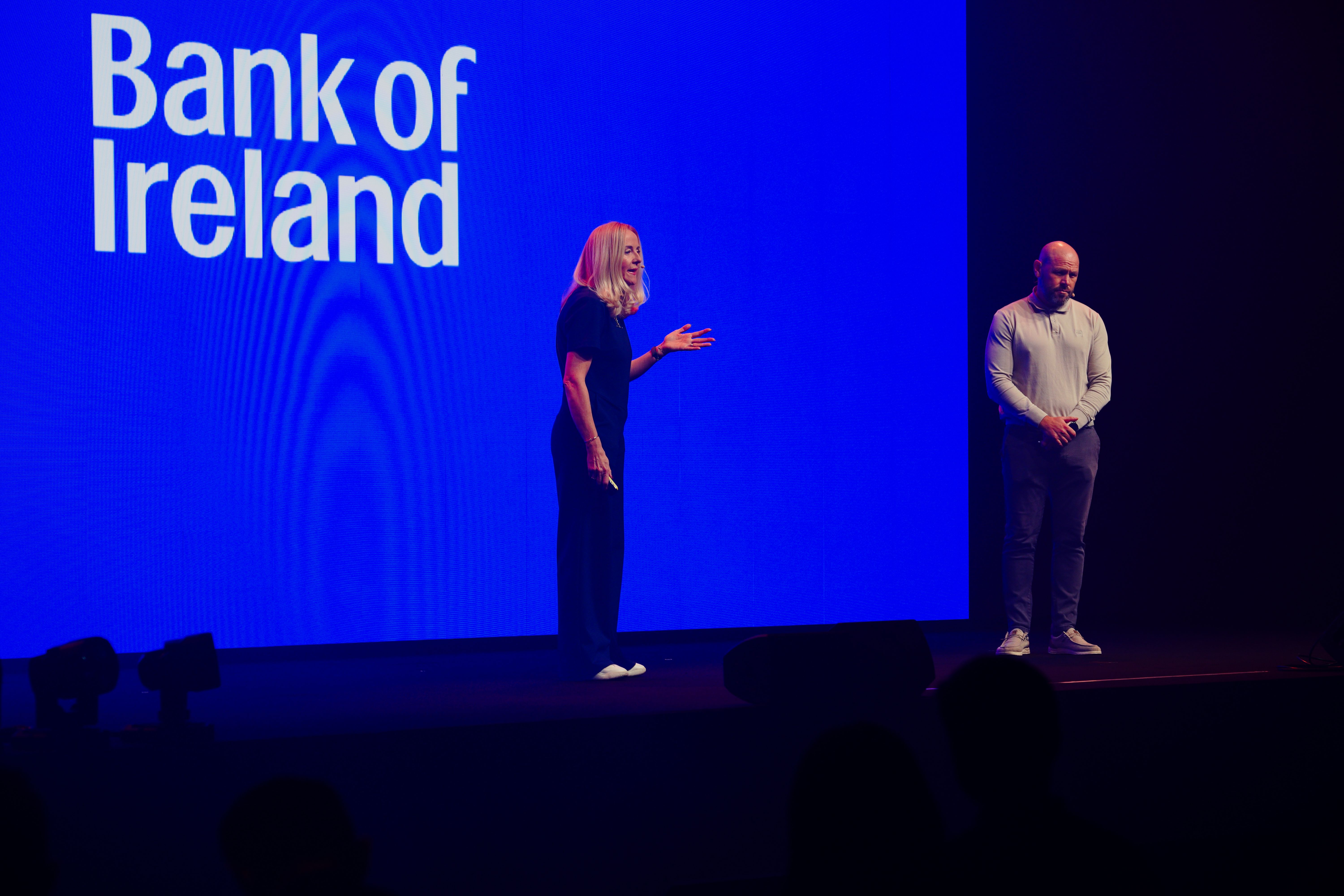
Laura Lynch (Group Chief Marketing Officer at Bank of Ireland) and Francis Cooney (Performance Marketing Lead at Bank of Ireland) described how a mismatch in their Q1 data after a brand refresh led them to AI Search, and how they brought the whole bank along.
Key takeaways:
- Bank of Ireland entered 2026 with its biggest brand investment in years. “Right with you,” their new brand promise, featuring a new visual identity and integrated campaign.
- In Q1 reviews, the team had a surprising finding: there was a 35% decrease in organic search traffic alongside a 40% increase in conversion rate. This told the team that customers were making up their minds somewhere else: inside Answer Engines.
- Using Profound to monitor AI visibility, the team built pages for a gateway product aimed at people starting third-level education. In the first six weeks from September into October, organic search traffic rose 231% year on year.
- Bank of Ireland then set up six work streams (visibility, ranking, sentiment, citations, content readiness, and CX signals), each supported by an agent. A Master Stakeholder Agent then consolidates them into a prioritised roadmap for every product owner.
- AI Visibility is now a board level priority. Factors outside of marketing such as experience, service, onboarding, and fees all decide who gets chosen in Answer Engines. For 2027, the team is adding a Discovery Score to its board packs alongside traditional metrics like Brand Consideration, Relationship NPS, and Customer Effort Score.
Your Next Buyer Isn't Reading Your Website
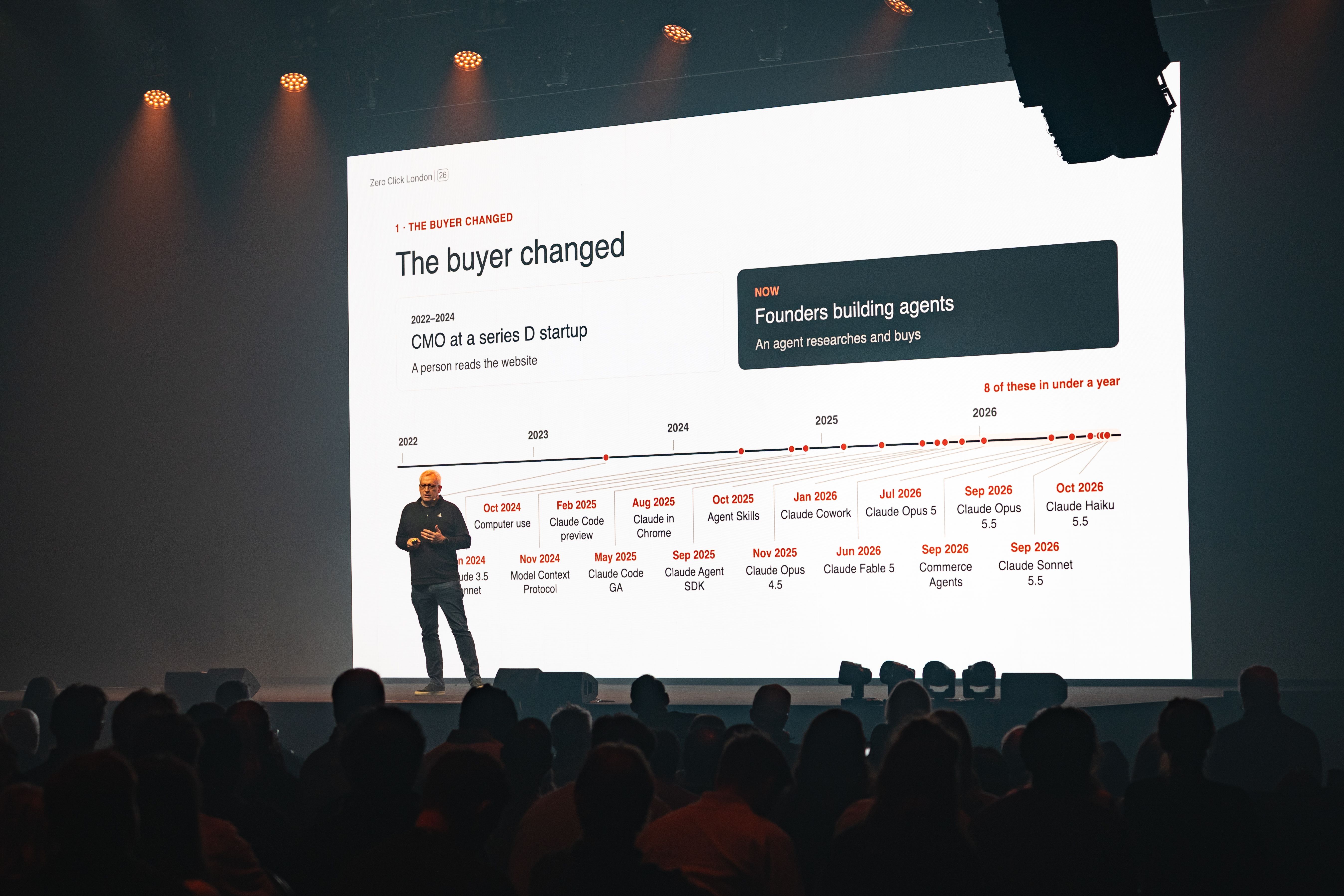
Ian Massingham (Head of Applied AI, EMEA at Anthropic) explained how AI agents read the web and what that means for the content brands publish.
Key takeaways:
- Customers are handing more of their decisions to AI agents, and those agents read the web meticulously. They do not see visual design, and they pull hyper-specific attributes and facts from sources. Information that is not made available to them transparently is effectively invisible.
- Ian said reliability beats cleverness when marketing to agents. Vague or conflicting claims tend to be dropped from the reasoning loop, and content that appears hidden or contains prompt injection attempts can lead to down-ranking.
- Agents also stay within limits. They do not initiate contact with a brand by email, and they generally cannot reason through complex forms. Information that is not simple and obvious is not available to them.
- Ian described the agentic loop as a mental model: a model at the centre with instructions, tools, memory, and guardrails. His main takeaway was that agents want content that is current, "boringly specific," and far more plentiful than brands produce today.
The Genesis of Agentic Attention
Dr. Jennifer Zou (Economist at Profound) and Josh Blyskal (Researcher at Profound) presented new research drawing on tens of millions of citations, thousands of network logs, and hundreds of browsing sessions.
Key takeaways:
- Jennifer's team tracked hundreds of users across three months of ChatGPT conversations and browsing. One in five conversations had commercial intent, and commercial conversation volume grew 120% between June last year and this year. 60% of people start a shopping conversation with no brand in mind, and one in three shopping responses contains at least one brand recommendation.
- The median journey from an AI conversation to a transaction lasted five days, compared with up to a week for a high-intent Google search, and more than one in five journeys that start with an AI conversation end in a purchase. People are nine times more likely to navigate on their own to a cited brand's site than to click a link in ChatGPT, so AI influence shows up as search or direct traffic. Nearly 30% of purchases attributed to search were preceded by a relevant AI conversation in the prior month.
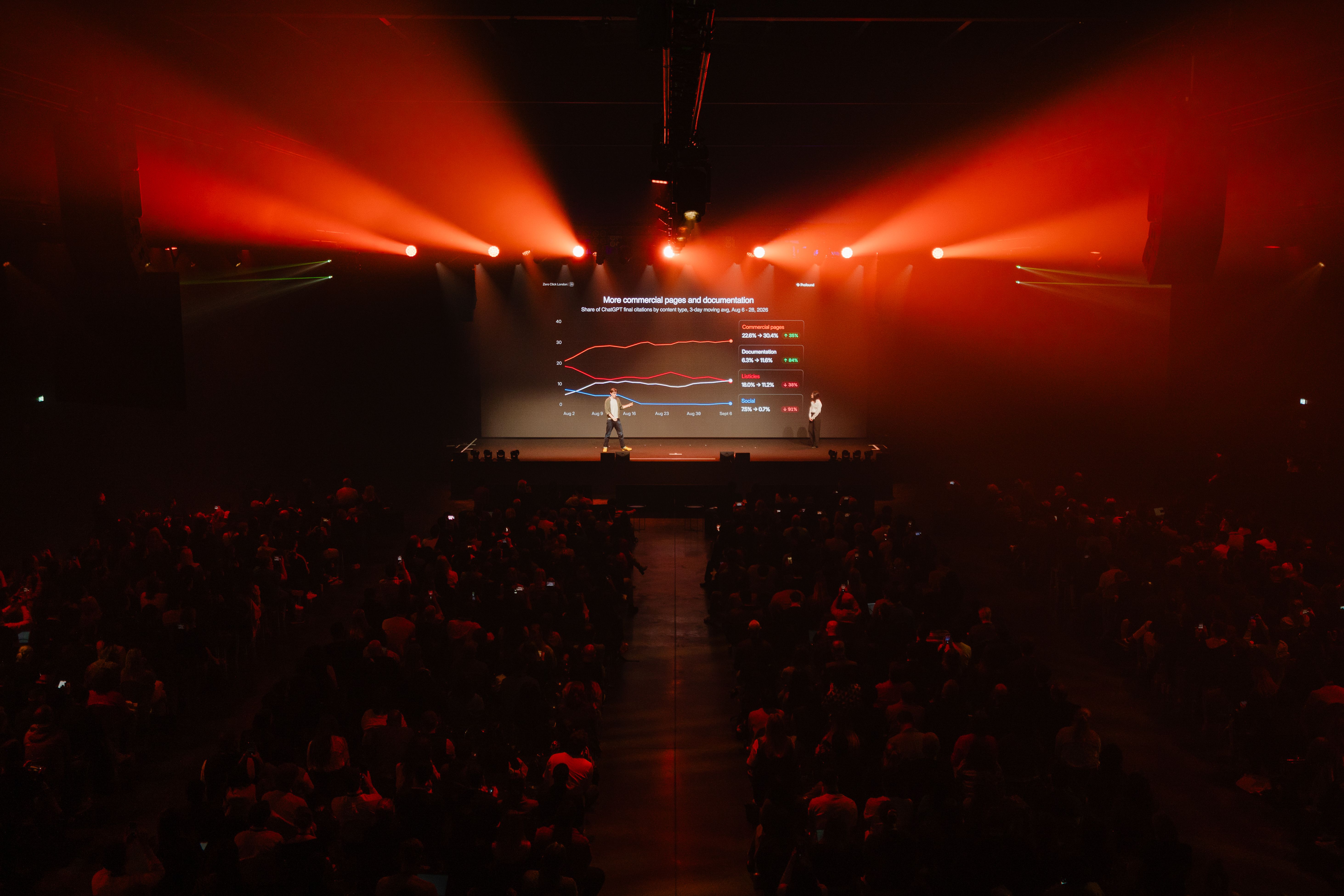
- Josh showed that ChatGPT changed in early August. It doubled its query fanout while the number of citations stayed flat. Commercial pages rose 35%, documentation and product facts rose 81%, listicles fell 38%, and social fell 91%. ChatGPT cites first-party content more than any other Answer Engine, at 51%. Josh recommended publishing durable, authoritative facts about products and services, and said Claude cites evaluative comparison content more than any other answer engine.
- Jennifer also covered Muse, Meta's personal agent. Its shopping behaviour is set in a markdown skill file and a task brief written before any search, which can predefine product size, material, and even brands. On average, 60 options from 30 retailers came from Meta's internal catalogue. Its browser appears in traffic logs like a human visitor, and Jennifer announced that Profound will soon show how agents interact with a site in Agent Analytics.
From Insight to Action
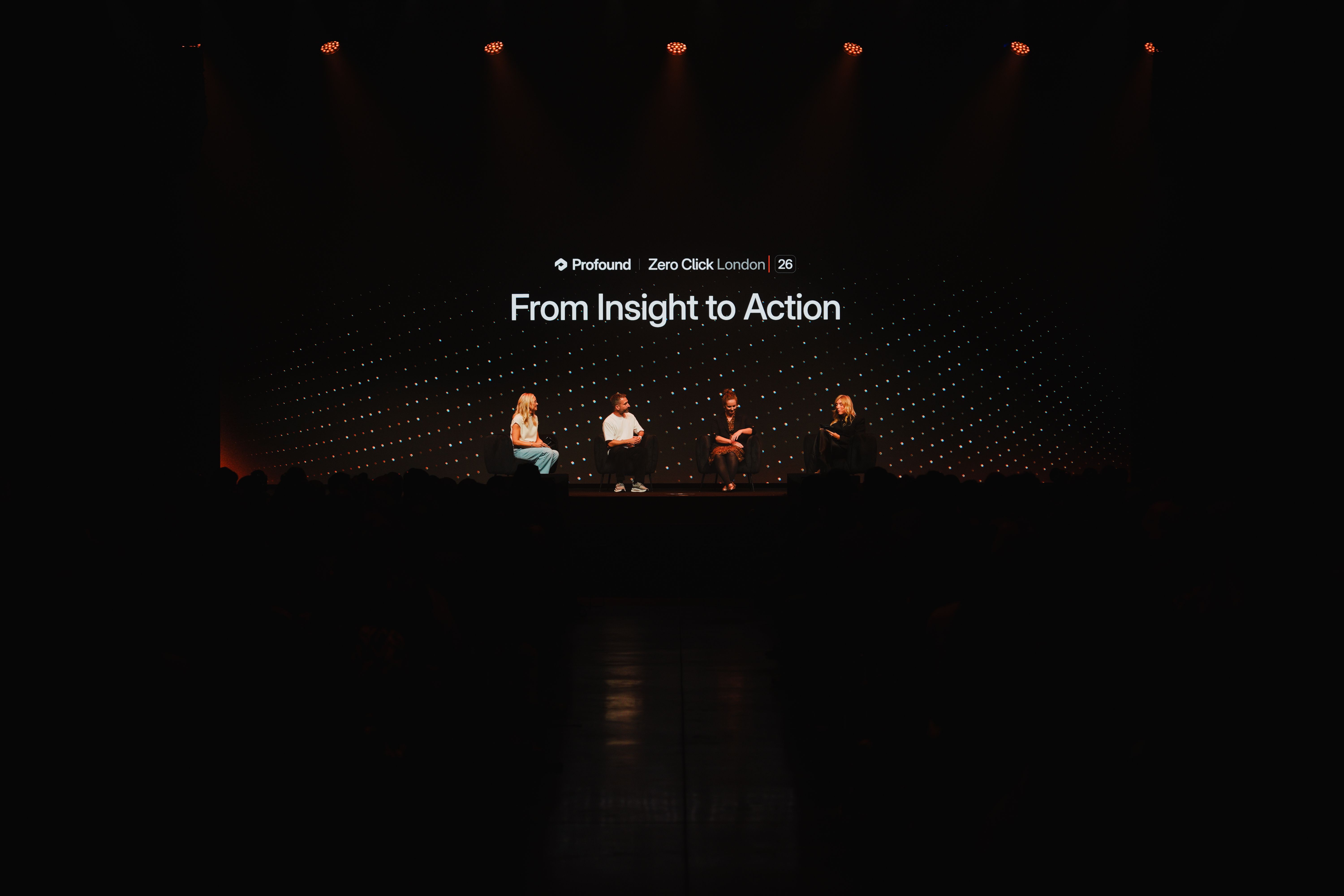
Abigail Tucker (Director, EMEA at Profound) moderated a panel with Liz Stephenson (Head of Content and Search at Barclays), Max Woelfle (Organic Growth Lead at On), and Emma Gibbins (Group Digital Marketing Director at The AA) on turning AEO insights into action.
Key takeaways:
- All three panelists described AEO as a business-wide effort. On renamed its SEO team to organic growth, made the case for a company-wide program in 2025, and in 2026 began working with product, web, and earned channel teams. Barclays brought PR, product, SEO, and content together to act on opportunities.
- Liz said that stronger visibility at Barclays does not always translate into being the cited source. The team does not respond to every gap. It weighs the demand behind a question, its importance to Barclays, and whether it can influence the outcome. The biggest visibility gap is not always the biggest opportunity. Emma reports citations, preference, and visibility to AA leaders, and Liz tracks a closed loop from a change to its impact and the quality of the traffic it brings.
- AI insights are reaching product and service teams. Max described On's Cloud Monster Void shoe, which AI Search surfaced as a running shoe because of third-party sites. This finding led the team to build an agent that validated product names before launch. Emma said insights on how The AA's service levels and callout times are discussed in search go back to the wider business, and citation data shapes the AA's affiliate and publisher activity.
- Panelists saw agents as the route to repeatable work. Liz pointed to prioritised recommendations and an always-on capability while keeping human judgment, especially in financial services. Max said On is building automation that passes the citations that matter in each of its 50-plus markets to local PR teams. Their advice: design the operating model to act on the strategy, think about how you would do a task with a month to spare and build an agent to do it that way, and bring people in beyond the SEO or research team.
Desiderium Non Sufficit: The Creative Signals That Make B2B Brands Easier to Buy
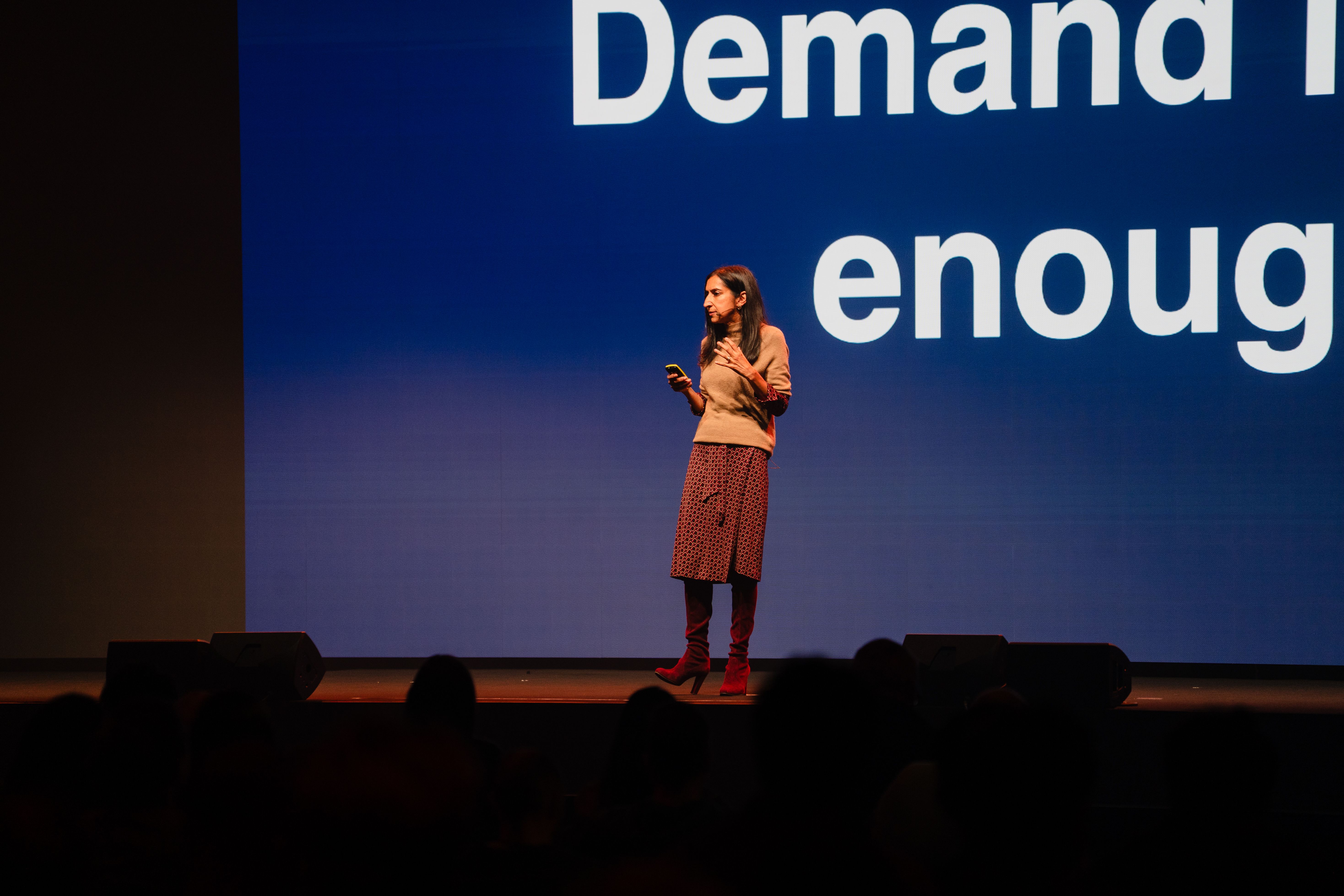
Mimi Turner (Head of Marketplace Innovation at LinkedIn) argued that demand is not enough in B2B, and shared research on the creative signals that give buying groups the confidence to choose a brand.
Key takeaways:
- B2B marketers ask a demand question, how to make people want something. Buyers ask a risk question, how to make the decision safe for their organisation. Mimi said demand gets a brand discovered and shortlisted, but being viable also requires winning the internal buying group.
- Marketers and buyers underinvest in confidence-building signals because they do not recognise them. Mimi said legal, finance, procurement, and business experts hold about 50% of decision influence and are rarely targeted. Four of the five decision drivers from shortlist to purchase are organisational and relational.
- In analysis run with Profound's team, reputation ranked as a top three decision factor behind price and fit. Mimi said it appears to become the dominant driver at the shortlisting stage, when price and fit are already settled.
- She named three levers that make a brand viable: recommendations, relationships, and relatability. The team manually tagged 700 B2B campaigns against seven signals. Marketers used few of them, and campaigns with three or more of the signals delivered significantly better brand, revenue, and ROI results.
When Transformations Don't Add Up
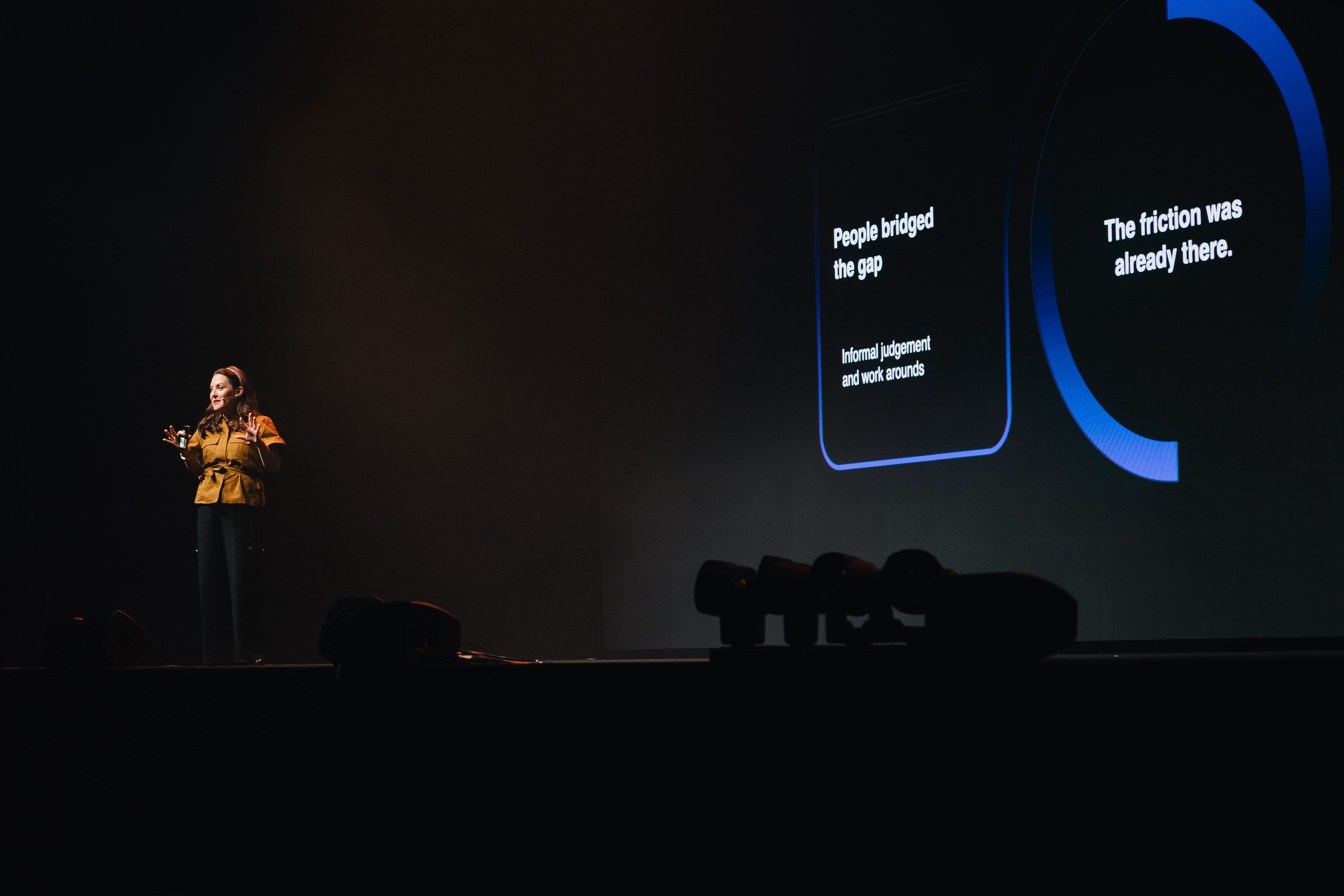
Kristen Kelly (Global Head of Media at Accenture Song) explained why well-funded AI transformation programs often fail to add up to growth, and what marketing leaders can do about it.
Key takeaways:
- Kristen cited research that split enterprises into 46% experimenters, 43% serious transformers, and 11% learning organisations that connect AI to technology, talent, and the operating system. She said 81% of employees feel more productive but only 23% of enterprises can measure an outcome.
- Accenture's framing is relevance and readiness. Relevance without readiness produces beautiful things nobody sees, and readiness without relevance produces an efficient machine for things nobody wants. Kristen said agents expose an organisation's hidden operating model: when nobody owns a handoff, the work stops. "AI is not going to remove your organisational complexity; it's going to remove your ability to hide it."
- Her first two recommendations: start with a scene, meaning the few workflows where intelligence is stuck and unsticking it would materially affect growth (for a CPG client, getting from consumer insight to activation faster than four weeks); and define authority, making explicit what evidence a decision needs, what threshold lets an agent act, and when a human must judge and who.
- Her third: build the learning system. A centre of excellence should document learning, including cases where humans and AI disagree. Each deployment has a commercial return and a transformation return, and scale means less repeated learning so the next team starts stronger than the last.
Building the Program: How Nestlé Took On AI Search at Global Scale
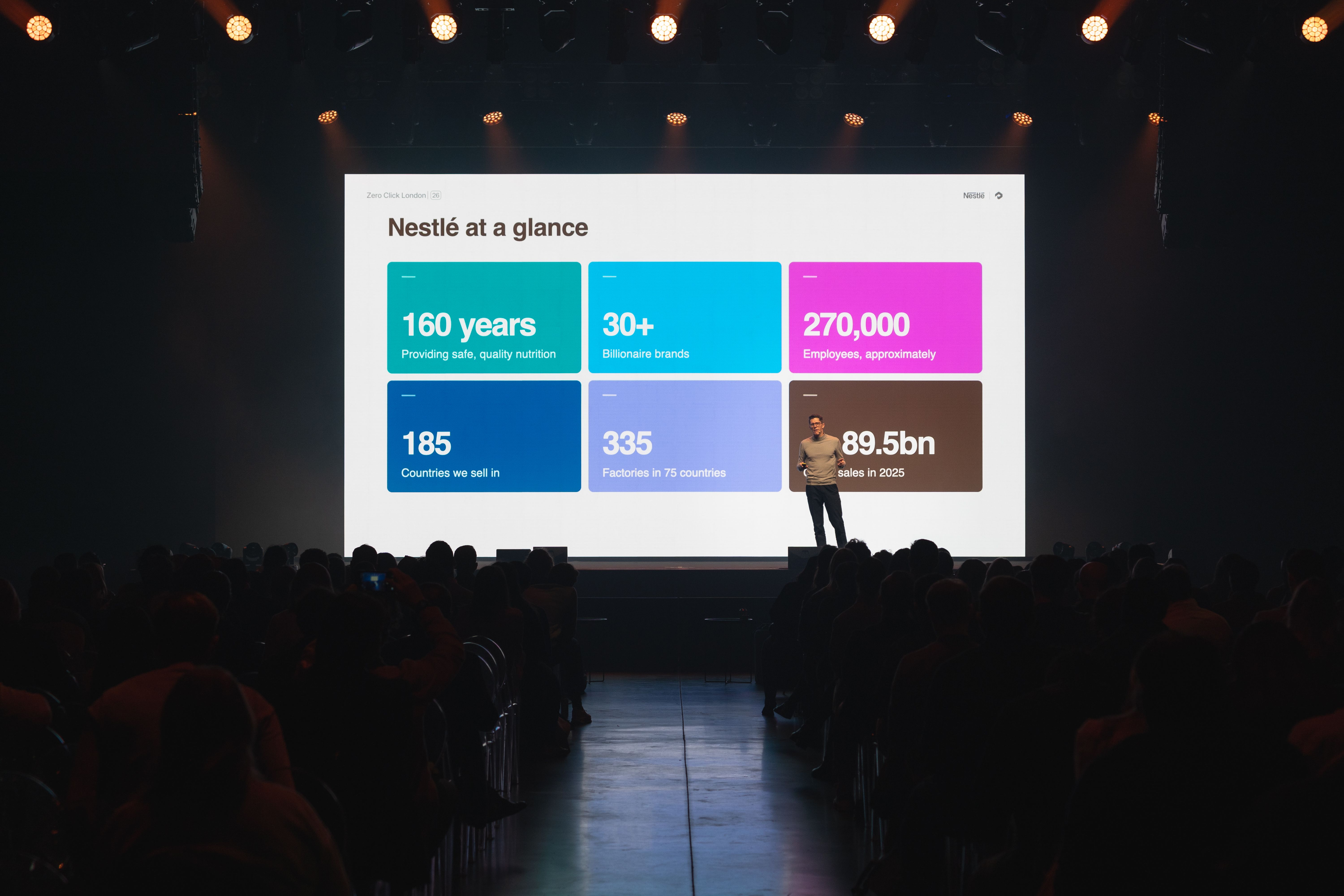
Florian Jacquier (Global Head of Digital Marketing, Data & Technology at Nestlé) described how Nestlé moved from scattered pilots to a coordinated AI Search program, and what the team is working to solve next.
Key takeaways:
- Nestlé began 2026 with roughly 120 pilots across markets and functions with seven to eight technology vendors running in parallel. None went anywhere, because there was no system to act on what the pilots found. Florian asked the board for two to three months and a few people to bring them together.
- The program rests on a simple three Cs framework: context, content, and credibility. Context means defining the prompt universe for each category, so share of voice is measured the same way everywhere. Florian said teams had been claiming anything from 10% to 60% share using different tools and different category definitions.
- Nestlé made four interventions: one tool, so everyone looks at the same data; two KPIs per category, "are we visible" and "are we recommended"; a content workflow where agents sit on top of content intelligence, product information, and digital asset management; and one accountable AI lead globally, in each key market, and in each key category, alongside the right platform partners.
- Florian described a demo in which a technologist chained agents in minutes. One pulled data from the product information database, another wrote a pet care web article, another checked regulatory guidelines, and the article was published through a CMS integration. It prompted questions about governance and approval. He said making this work across about a million SKUs requires trusted product data and claims, making Nestlé's research visible to AI platforms, and a rethink of legal review. Open questions remain on people, process, and technology.
Shaping the Shift: Prestige Beauty in the Era of AI-Native Discovery
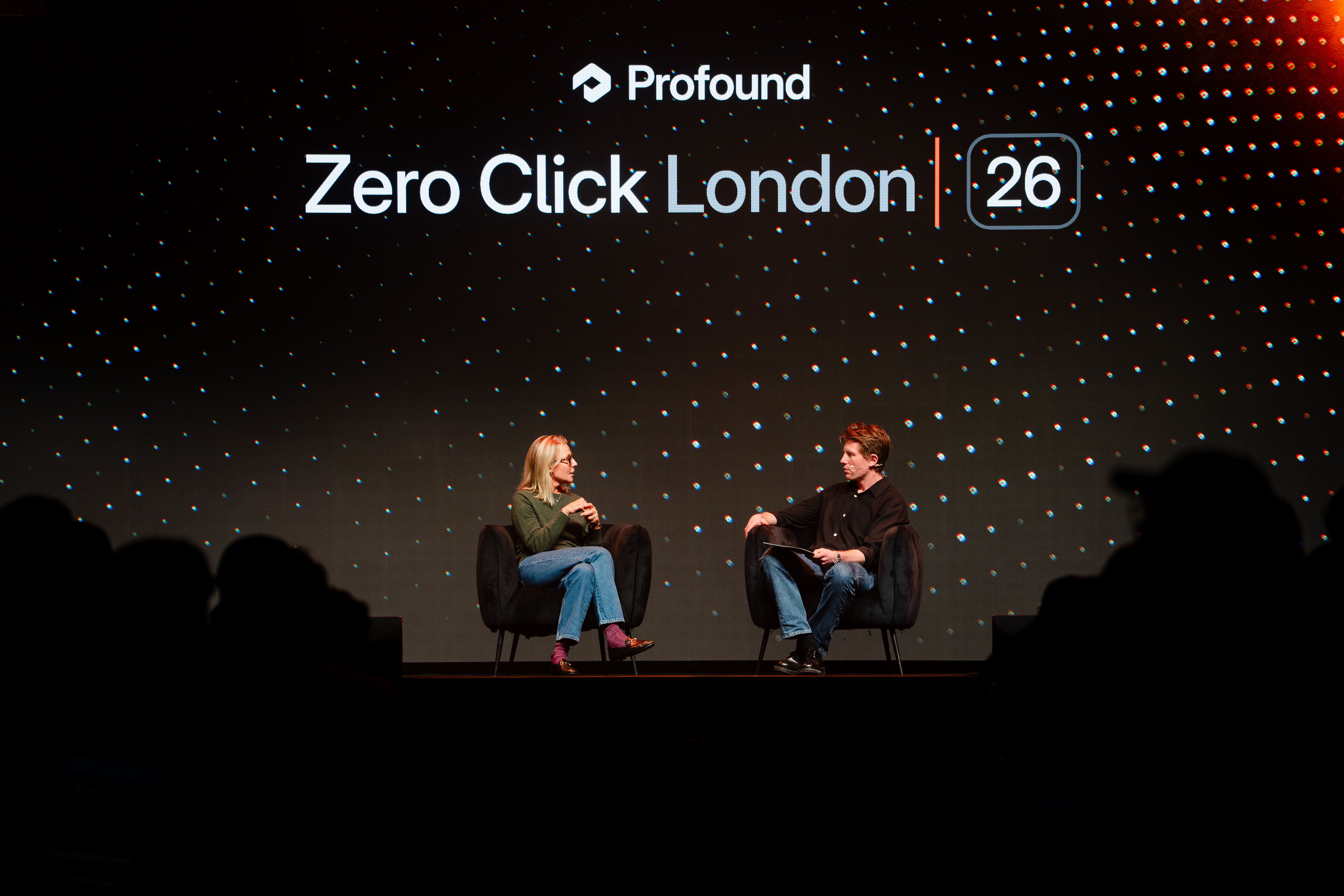
Aude Gandon (Chief Digital & Marketing Officer at The Estée Lauder Companies) joined James Cadwallader (Co-Founder & CEO at Profound) for a conversation on how beauty discovery is shifting to AI agents.
Key takeaways:
- Aude said beauty has always been one of the most searched categories in the world, driven by a constant quest for the next product. Consumers now ask an AI agent a question such as the best anti-aging cream, then move to ingredients and routines before ending up with around eight product recommendations. That means routines and ingredient compatibility matter as much as individual products.
- Agents read ingredients and claims that used to sit on the back of packaging, which is becoming a point of differentiation. The Estée Lauder Companies is working to make content "agent ready" and "agent readable," with input from doctors. Aude said AI discoverability has come up with investor analysts, and a brand that is not agent ready risks missing sales.
- Aude shared how she used the personal agent Instinct to send her daughter flowers for her birthday while she was in a meeting. It offered bouquet options and florists, placed the order, and sent confirmations. She said these agents are the worst they will ever be, and as they improve, they will give brands a chance to build hyper-personalised relationships with consumers.
- Her advice to marketing leaders was to master the fundamentals of data and consumer understanding, be where consumers are, and choose the right partners because no company can do this alone. The company ran a pilot with three brands, two markets, and six months, and Aude said it learned everything it needed within four months. Pilots need clear KPIs and should scale quickly.
Closing remarks
Thank you to every speaker, partner, and attendee who made Zero Click London possible. The quality of thinking in that room set a standard we intend to build on.
You can watch the sessions on demand at Zero Click London Unlocked.

