
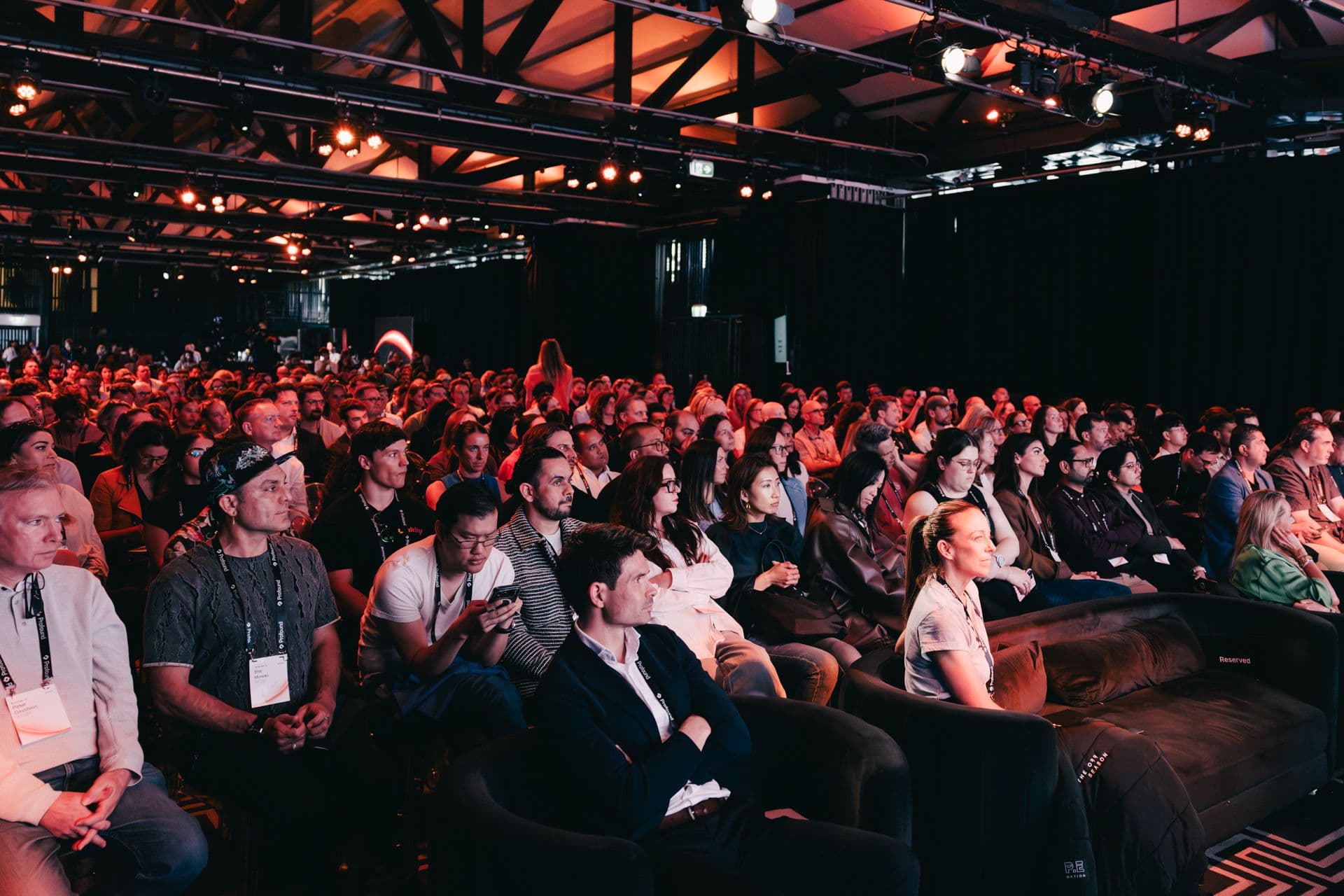
On the 27th of October, 450+ marketing leaders gathered at Jones Bay Wharf for Zero Click Sydney 2026.
We brought together speakers from Rippling, Reddit, Virgin Australia, Atlassian, TBWA, ahm Health Insurance, and Princess Polly to share how they're approaching marketing strategy, team design, and measurement in the AI era.
Alongside them, our team presented never-before-seen research on agentic attention, introduced the Marketing Engineer role, and shared how we think about marketing to always-on agents. This article summarizes our key takeaways from each session.
Marketing in the AI era
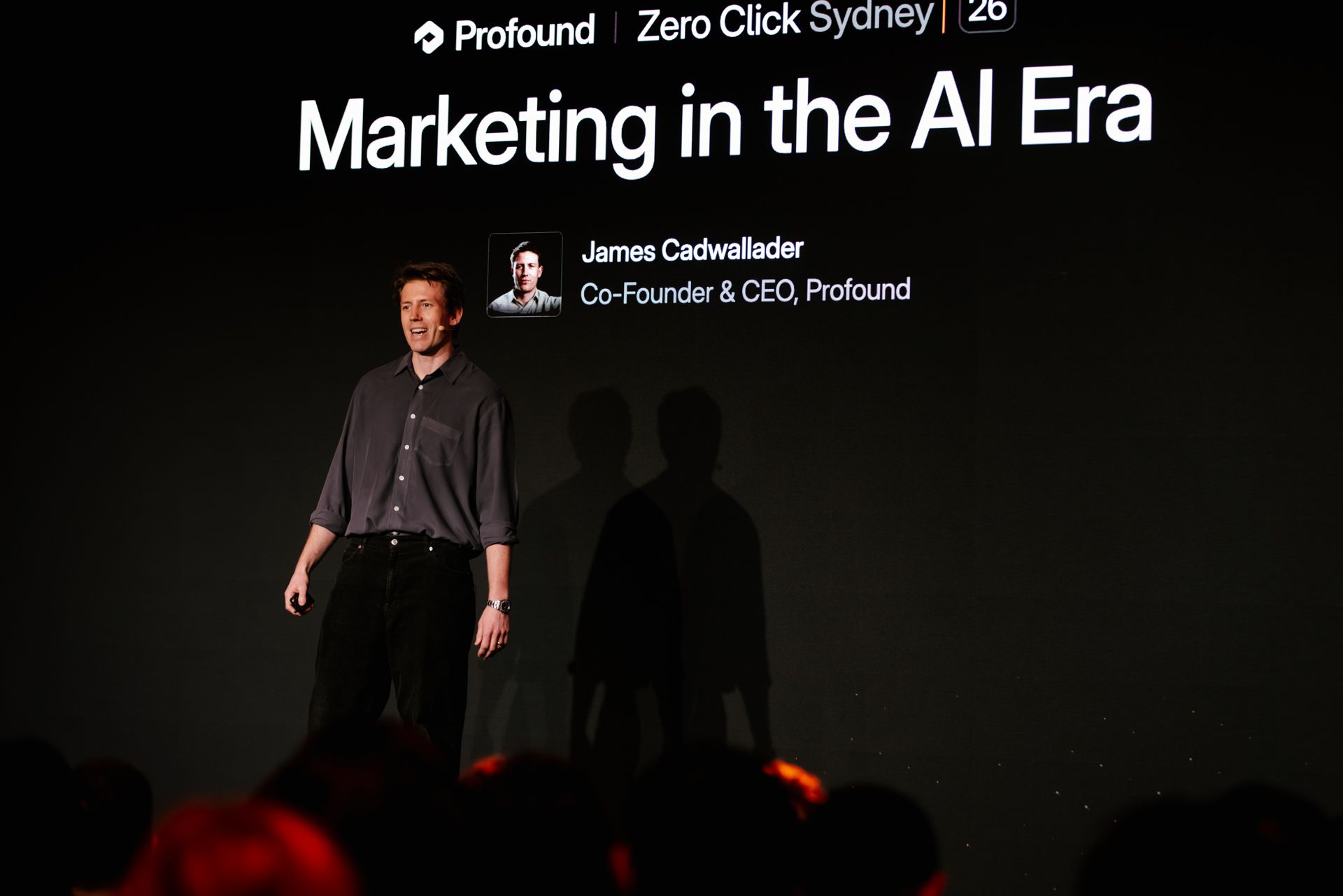
James Cadwallader (Co-Founder and CEO of Profound) opened the day by arguing that the shift to the agentic internet is real and accelerating, and that context is what separates strong AI-assisted marketing from slop.
Key takeaways:
- The platform shift to agentic commerce is accelerating. James cited ChatGPT crossing 1.2 billion weekly active users, Meta's Muse personal agent reaching 5 million downloads 2.5 times faster than ChatGPT did, and Gartner's prediction that one in five online purchases will be made by an agent by 2030.
- His central argument on quality: "slop is a skill issue," and context is the antidote. He compared briefing an agent to onboarding a new hire, who needs brand voice, dos and don'ts, and governance.
- He shared three customer examples from Aim, our AI Marketer: a global electronics brand updating thousands of product pages weekly and seeing a 78% increase in citations to those pages, a CPG company that cut an ingredient inaccuracy from 11% of responses to 1%, and a product marketer at a software company saving about 12 hours a week by turning sales call objections into talk tracks.
- James predicted marketing will split between extremely human-centric work (events, influencers, billboards) and agentic marketing, with the two connected. He said he expects few marketers to be replaced as marketing is a least verifiable domain for AI.
The Marketing Engineer
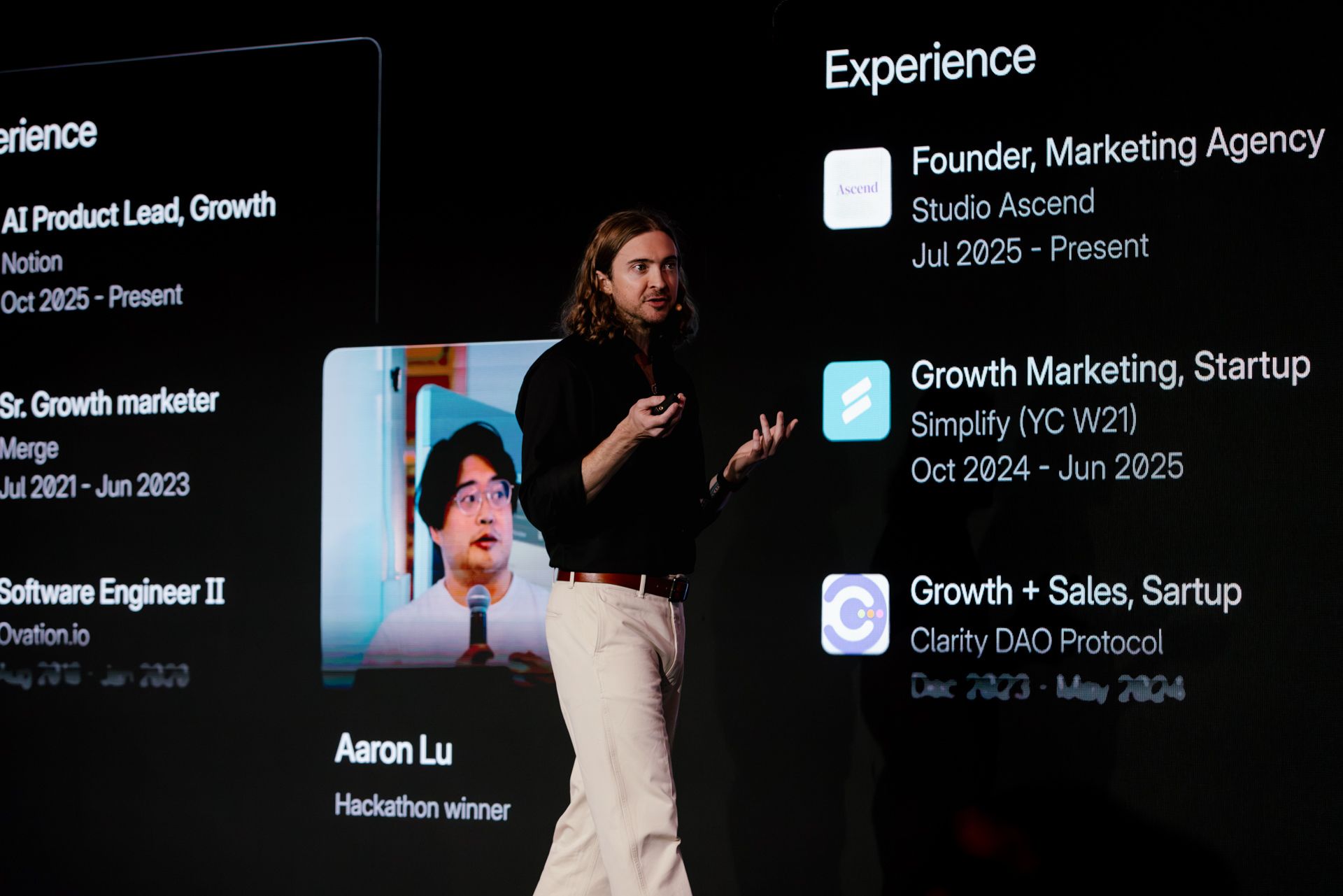
Nick Lafferty (Founding Marketing Engineer at Profound) defined the Marketing Engineer as a marketer first who layers on the ability to build systems, and shared what leading practitioners are building.
Key takeaways:
- Nick described the role as part artist (brand, audience, and taste from earned marketing experience) and part builder (workflows and systems that remove manual, tedious work). He said these people sit in the middle, working across AEO, demand, growth, product, SEO, brand, and PR.
- Aaron Lu, a Marketing Engineer at Notion, built a system that duplicates ad creative across languages, regions, and channels (Google Ads, LinkedIn, Meta) and bulk updates the copy. Nick said it saves him eight hours a week. Aaron also built an agent that monitors budgets and an orchestrator agent that reviews other agents' output.
- Austin Lao, the first growth marketer at Anthropic, built a system that pulls ad spend from Reddit, LinkedIn, Google, and Meta into Claude and compares it against budget by channel, replacing a manual weekly export.
- Nick's advice: start with the part of your job you dislike most, make sure it is manual, repetitive, and easy to verify, give the system context, and tell it what good looks like. He laid out a maturity curve from prompting, to workflows, to a first agent, to multiple agents, to proactive agents.
- Nick said about 100 Marketing Engineers attended Cohort Zero in London for agent-building training, and he invited attendees to get in touch about running one in Sydney. He closed with a call to start with one person, one workflow, and the right context.
Discovery, rewired
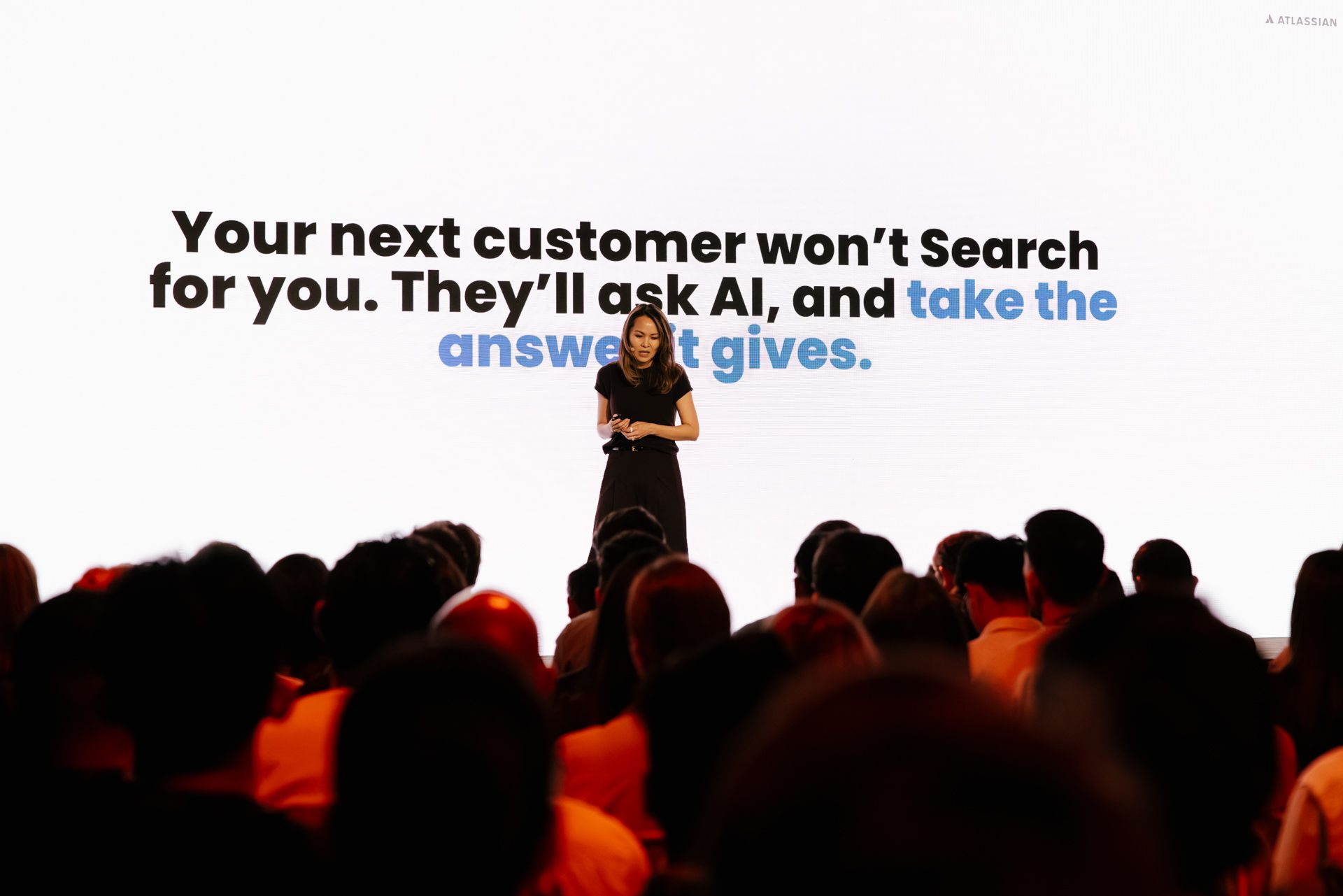
Angela Feng (VP, Global Head of Performance Marketing at Atlassian) shared what worked and didn't as the company adapted its marketing to AI discovery.
Key takeaways:
- Angela said high visibility does not mean winning. A model can reference a brand without citing or recommending it. Atlassian looks at visibility, citation, and recommendation together inside Profound.
- Her three moves: start with the answer (TL;DR summaries at the top of priority pages), structure content for machines with schema and clear hierarchy, and write to the customer's job to be done. She said writing for humans and writing for AI are equally important, and that brand equity off your own domain matters.
- Atlassian replaced roughly 100 pre-built nurture tracks with a system of four agents (decision, content, QA, and feedback loop) powered by first-party data. Angela reported a 15% purchase lift.
- The hardest parts were not the AI. They were the foundation (a source of truth, data structure, CMS) and adoption, where Atlassian got strict about strategic inputs and kept human judgment where it matters most.
- Angela's two moments that matter: be the answer, and be worth a visit.
The genesis of agentic attention
Josh Blyskal (Researcher at Profound) presented what he called some of the first research on personal agents, drawing on tens of millions of citations, network logs, and hundreds of thousands of real browsing sessions.
Key takeaways:
- 19.9% of questions in Profound's commercial question database are about buying or procuring something. Commercial questions grew 119% year over year, compared with 63% for informational and 37% for generative.
- 60% of people arrive at AI models undecided, and only 19% name a specific brand or product. One in three conversation turns includes an unprompted commercial recommendation, the average response mentions about 3.7 brands, and 16% of responses crown a winner.
- Prompts with words like "affordable" and "cheap" were the most common additions in discovery and evaluation, by roughly a factor of three. People used adjectives rather than numbers by a factor of four.
- The average consumer journey from AI Search was under six days. Josh compared a 21% purchase conversion chance after an AI conversation with 17% for Google search, 23.5% for a Nike visit, and 24% for Amazon.
- For people who purchased within seven days, 13.5% had a relevant AI conversation that went unattributed. Over 30 days, that rose to one in three. Josh said Google was the most common destination after an AI conversation by an order of magnitude.
- Between August 8 and August 14, ChatGPT roughly doubled how much it searched while citation counts stayed flat. Commercial pages in citations rose 35%, documentation pages rose 38%, listicles fell 38%, and social fell 91%. Josh said first-party content accounted for 51% of ChatGPT citations. By contrast, Claude cited 35% listicles, 12% comparisons, and 11% news and editorial.
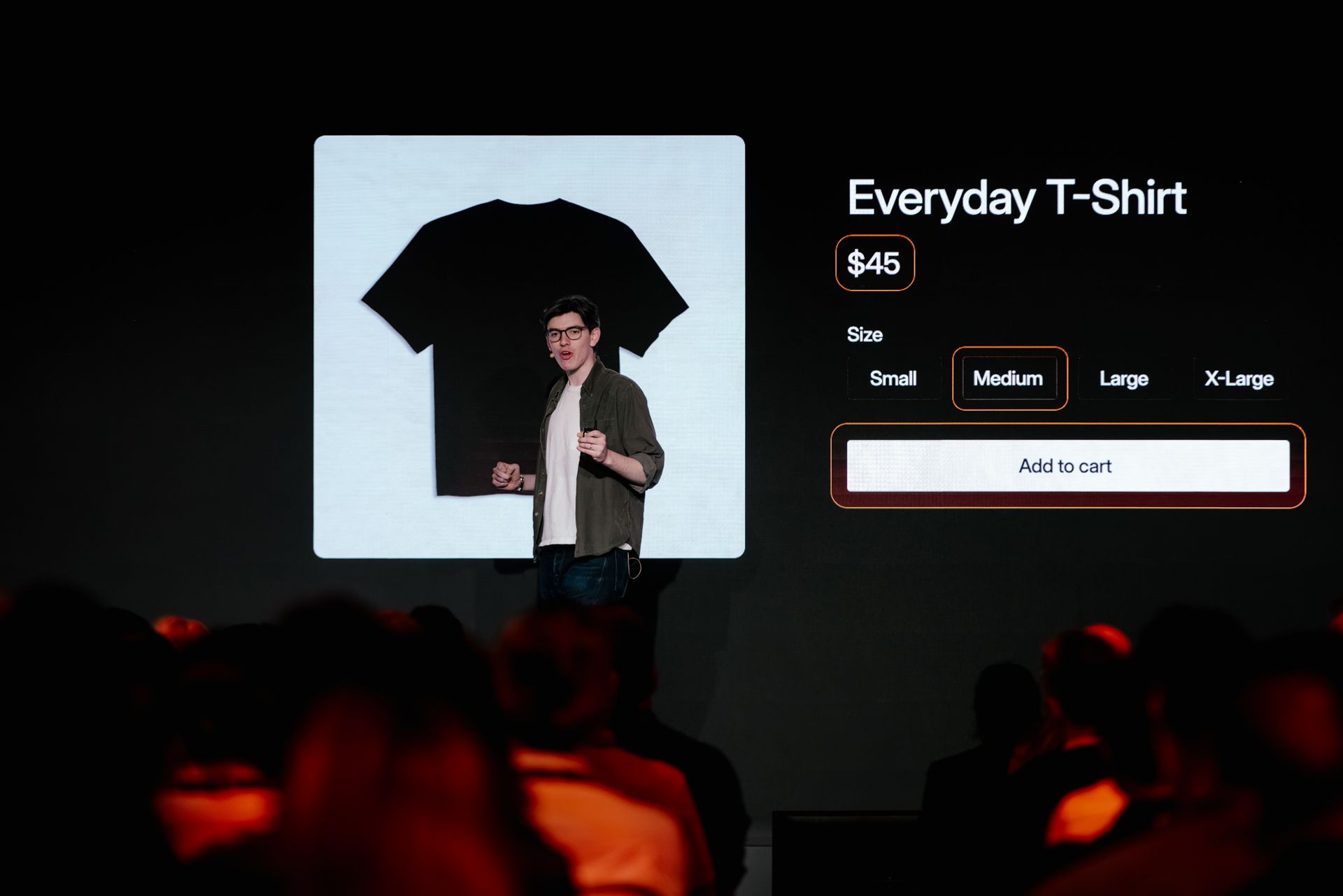
- In Meta's Muse, Josh showed that the shopping skill and task narrowed sizes, product types, and even brands before the browser searched. His recommendations were to publish product facts and limitations, keep price and stock current, test your brand with personal agents like Muse and Instinct, and be legible to agents.
Lessons from the front lines of AI Search
Destiny Flaherty (Head of SEO at Princess Polly) described how the global e-commerce brand went from limited AI visibility to leading its key categories.
Key takeaways:
- Destiny said attributed revenue from AI Search at Princess Polly grew 257%, and that she believes AI is under-attributed by up to 10 times. She said the brand's non-branded search terms grew 40% year over year.
- Her strategy starts with prompts backed by data at scale, tracked per country, because the same prompt returns different answers in the US, UK, and Australia. She distinguished accuracy (one person's prompt) from precision (consistent presence across prompts many people use).
- She said query fanouts are useful for content strategy. For a prompt like a "black midi dress for a winter wedding in Melbourne under $150", fanouts added qualifiers such as the year and "best reviewed." Princess Polly incorporates these into content and product feed attributes.
- Visibility takes a search-everywhere mindset across PR, reviews, customer service, YouTube, Pinterest, and Reddit. Destiny cited "relevance engineering" and said SEO teams can't do this alone.
- On technical foundations, she suggested disabling JavaScript in a browser to see what some bots see, and enriching product feeds and structured data. For attribution, Princess Polly looks at GA4, AI visibility tracking, direct traffic, citations, mentions, and branded search together.
When AI becomes the aggregator: How ahm Health Insurance is adapting to the new customer journey
Kiefer Casamore (Executive General Manager at TBWA) and Bianca Shah (Head of Marketing at ahm Health Insurance) covered how a health insurance brand approaches AI-shaped customer journeys.
Key takeaways:
- They said Answer Engines bring health insurance into conversations earlier, such as when someone asks about a condition, so information about the brand has to be current, clear, and easy to interpret. They said visitors arriving from Answer Engines are highly engaged and well informed.
- Clear positioning means answering basic questions directly: who the brand is for, what it is good at, why to consider it, and what evidence supports that. They recommended putting the answer up front, using customer language, and staying consistent across the website, comparison sites, and news.
- Using TBWA's category entry points, they suggested asking which real-life situations bring people into the category and picking the one or two moments to own, because in AI "the battle isn't for the keyword, it's for the situation."
- Earned media and awards matter: in a competitor analysis with Profound, they found HCF was outpacing ahm Health Insurance on trust and value largely through an award strategy. Ahm Health Insurance has since begun a more intentional awards approach and is seeing early green shoots.
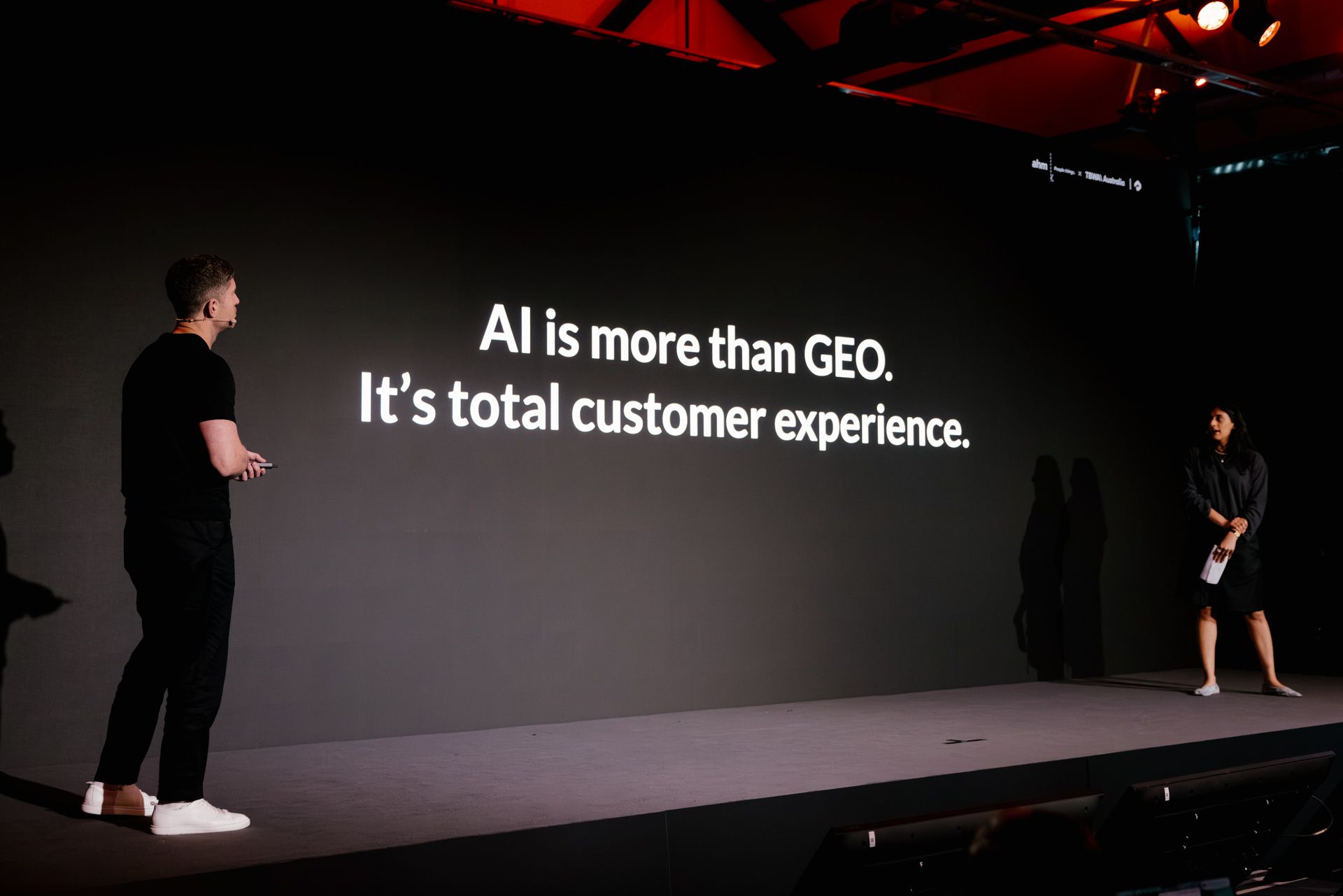
- They cautioned that anyone claiming to know how to game ChatGPT or Claude is likely selling snake oil, and said results from editorial vary. Their closing point was that AI is more than GEO. It is a part of the total customer experience.
How to win on Reddit
Hayley Saddleton (Country Lead, Business Marketing ANZ at Reddit) argued that brands should aim for something bigger than being cited by Answer Engines, and framed Reddit as a dinner party where the brand is a guest.
Key takeaways:
- Hayley said many Australian shoppers verify AI recommendations on Reddit, which she called the validation economy. She said around 12 million people use Reddit in Australia weekly, and cited Reddit CEO Steve Huffman saying about 40% of conversations on the platform are commercial.
- Rule one: do your homework. Philadelphia Cream Cheese responded to the "Chive Lord" meme with a well-made ad instead of copying the meme, and the community responded well.
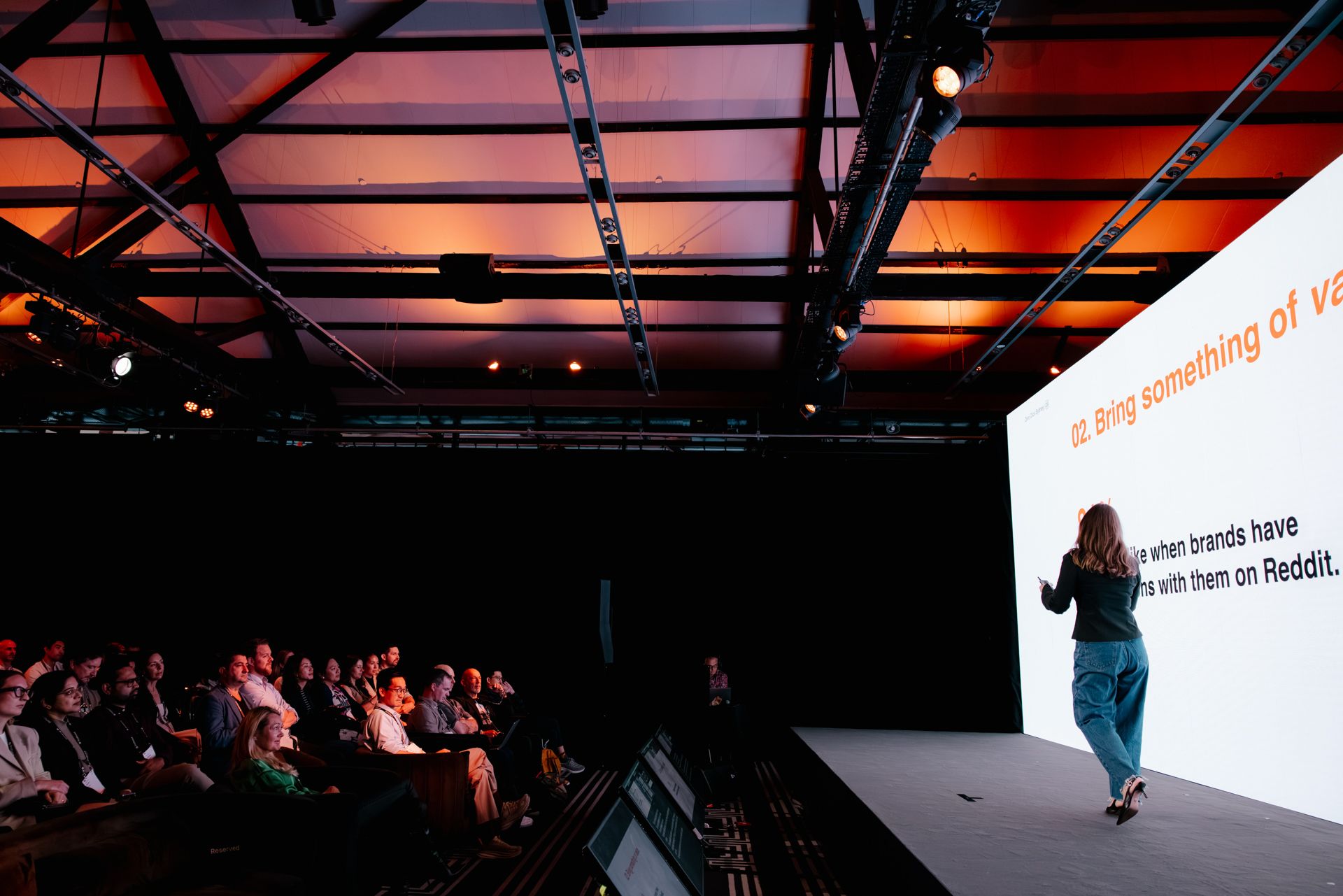
- Rule two: bring something of value. Barkeeper's Friend heard Reddit complaints about its lid, explained the pricing reason, then made a lid, launched it with Reddit communities first, and took it global.
- Rule three: make others feel special. Nike gave space to runners to tell their stories instead of lecturing on running.
- Rule four: don't set the menu. Dove invested in paid advertising that embraced both good and bad comments about a product.
- Rule five: make a connection. Hayley shared United Airlines employees donating 18,000 Pokemon cards to a boy who had lost his binder. Her closing point was that the aim is to create an experience worth talking about, not to use Reddit to hack Answer Engines.
Don't tank your site chasing ChatGPT
Luciano Viterale (Head of Growth, APAC at Rippling) shared how to pursue AI Search visibility without putting existing Google traffic at risk.
Key takeaways:
- In Rippling's 90-day view, less than 2% of users came from ChatGPT. Luciano said attribution is imperfect, but those visitors were highly active and booked demos.
- He described a test by a peer group in which AI content on test domains was cited in ChatGPT but was de-indexed from Google about six weeks later. He advised against running that trade-off on a main company site, and recommended starting with a small batch, recording baselines, and agreeing on rollback criteria.
- The foundations still matter: crawlable sites, content that matches intent, internal linking, and fresh content. Luciano said citations usually come from the first third of a page, so pages should lead with the answer.
- He described an always-on earned media motion: find cited pages that don't include you, offer editors a reason to add you, and expect about a 50% hit rate. After inclusion, appearing in AI answers took one to two months, and sometimes never happened.
- Citing Profound data, Luciano noted that the median page's citation share fell to half its peak in 11 days, and that content cited in five or more engines lasted longer than content present in one.
How Virgin Australia is building its AI Search strategy
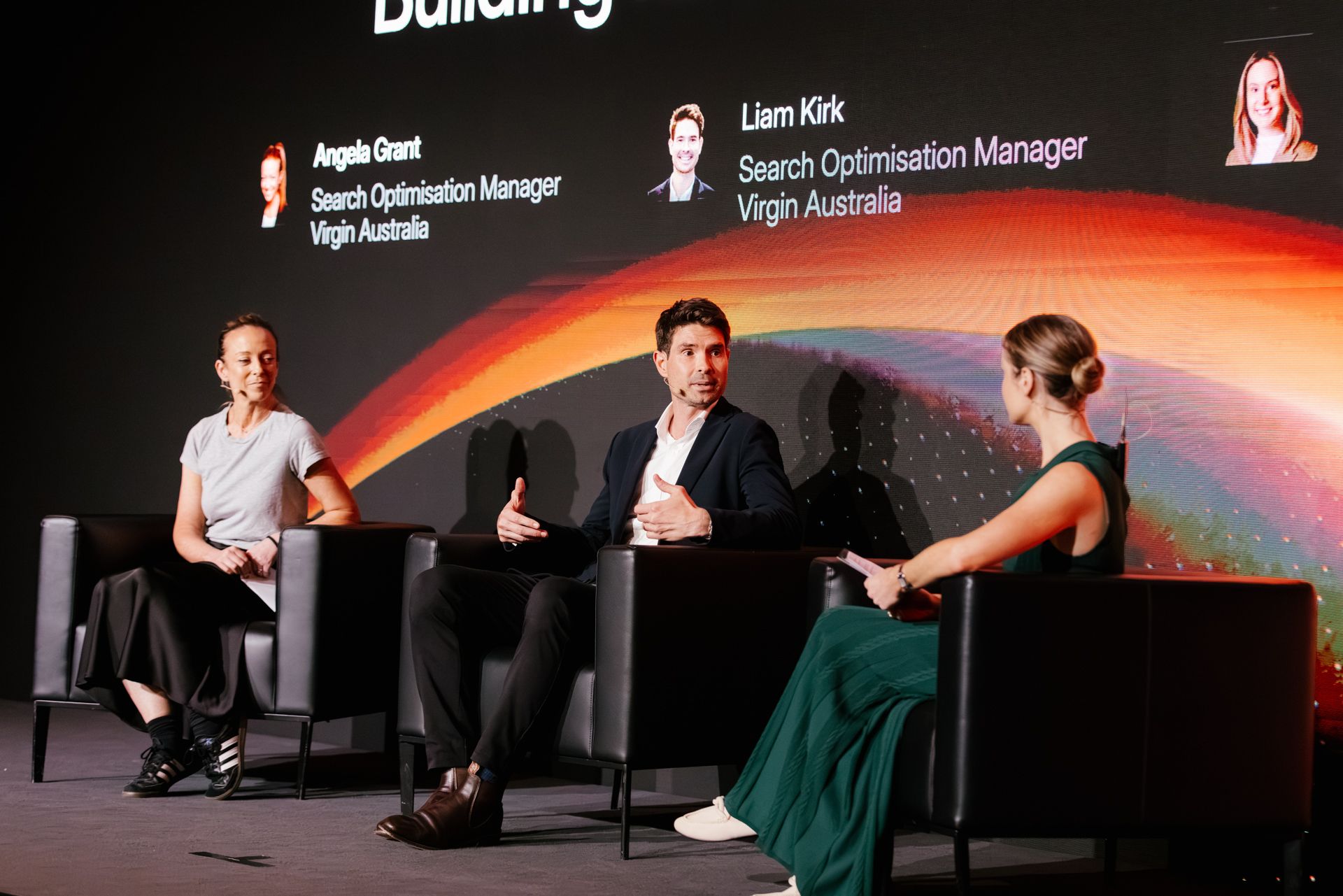
Joanie Sanders (Head of Agency Partnerships at Profound) moderated a conversation with Liam Kirk (Search Optimisation Manager at Virgin Australia) and Angela Grant (Head, Group Paid Media and Social Media at Virgin Australia).
Key takeaways:
- Virgin Australia started with measurement and set a different goal for each intent bucket: strong citation for commercial (flights), factual accuracy for day-of-travel information, and recommendation for loyalty. Liam said Virgin Australia's visibility on domestic flights is on par with its main competitor and its citation share is market leading, while loyalty is an area for improvement.
- Data showed that existing partnerships mattered more than some off-platform channels the team had prioritized. The team has shifted investment toward long-form content and away from some bottom-of-funnel affiliate work. Angela said earned coverage appears in AI answers quickly but also drops quickly, which calls for evergreen content like comparison guides and reviews.
- Virgin Australia sends a monthly report to its executive team covering visibility, share of voice, citations, sentiment, and human referral traffic, and is ingesting Profound metrics into its marketing mix modeling.
- On accuracy, Liam described an alert that a site impersonating Virgin Australia and sharing baggage information was being cited. When a domestic competitor changed its cabin baggage policy and Virgin Australia had no news coverage on its own policy, AI pulled less positive and less accurate content from forums and social channels.
- Looking ahead, they said that priorities are measurement maturity, optimising content workflows with real user data, and restructuring work across marketing, product, and customer care teams. Angela stressed that content must still be created for humans, since what helps machine legibility differs from what connects with people.
Closing remarks
Thank you to every speaker, partner, and attendee who made Zero Click Sydney 2026 possible. The day gave marketing leaders a shared view of how AI is changing discovery, buying, and the work of marketing teams.
You can watch the sessions on demand at Zero Click Sydney Unlocked.


