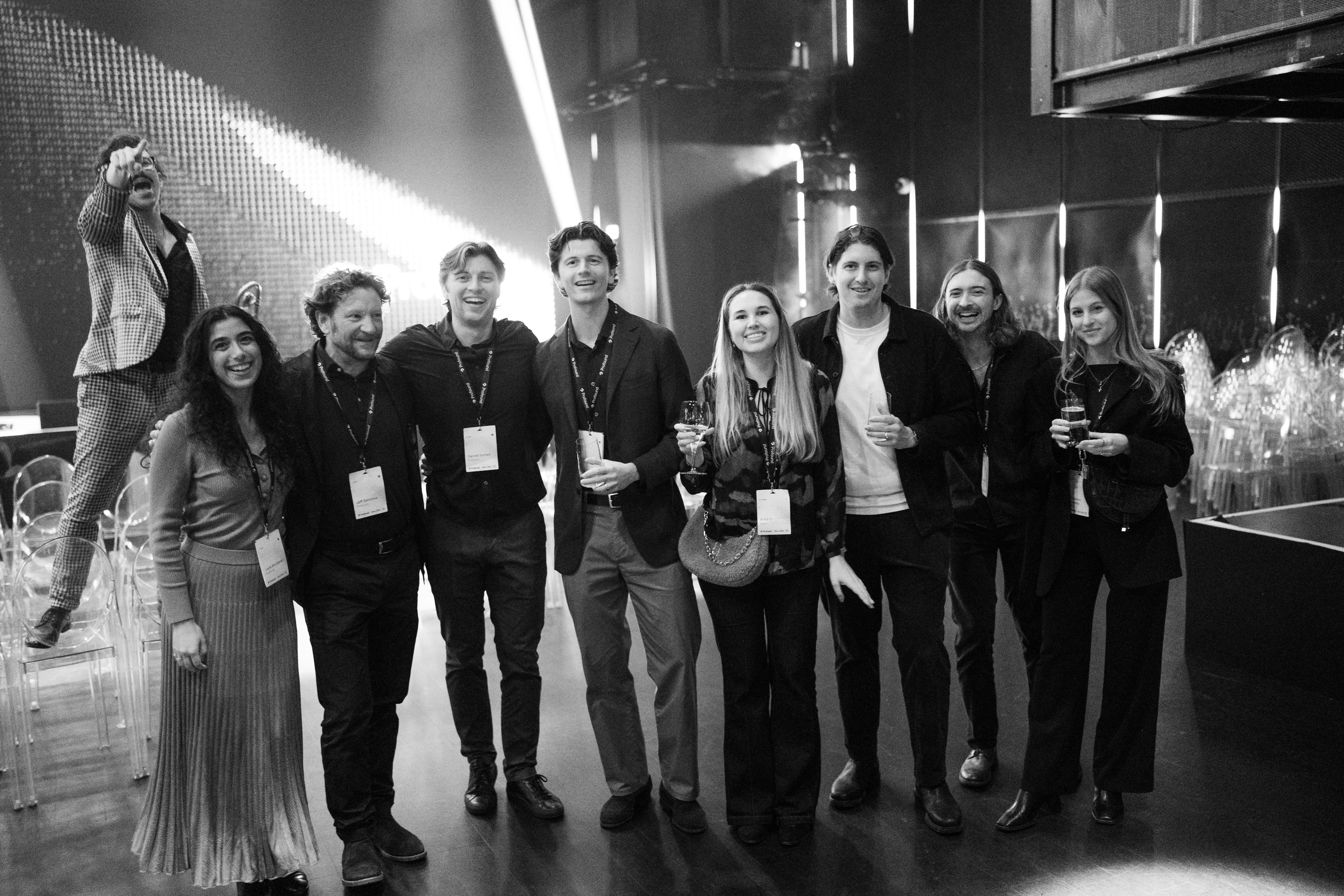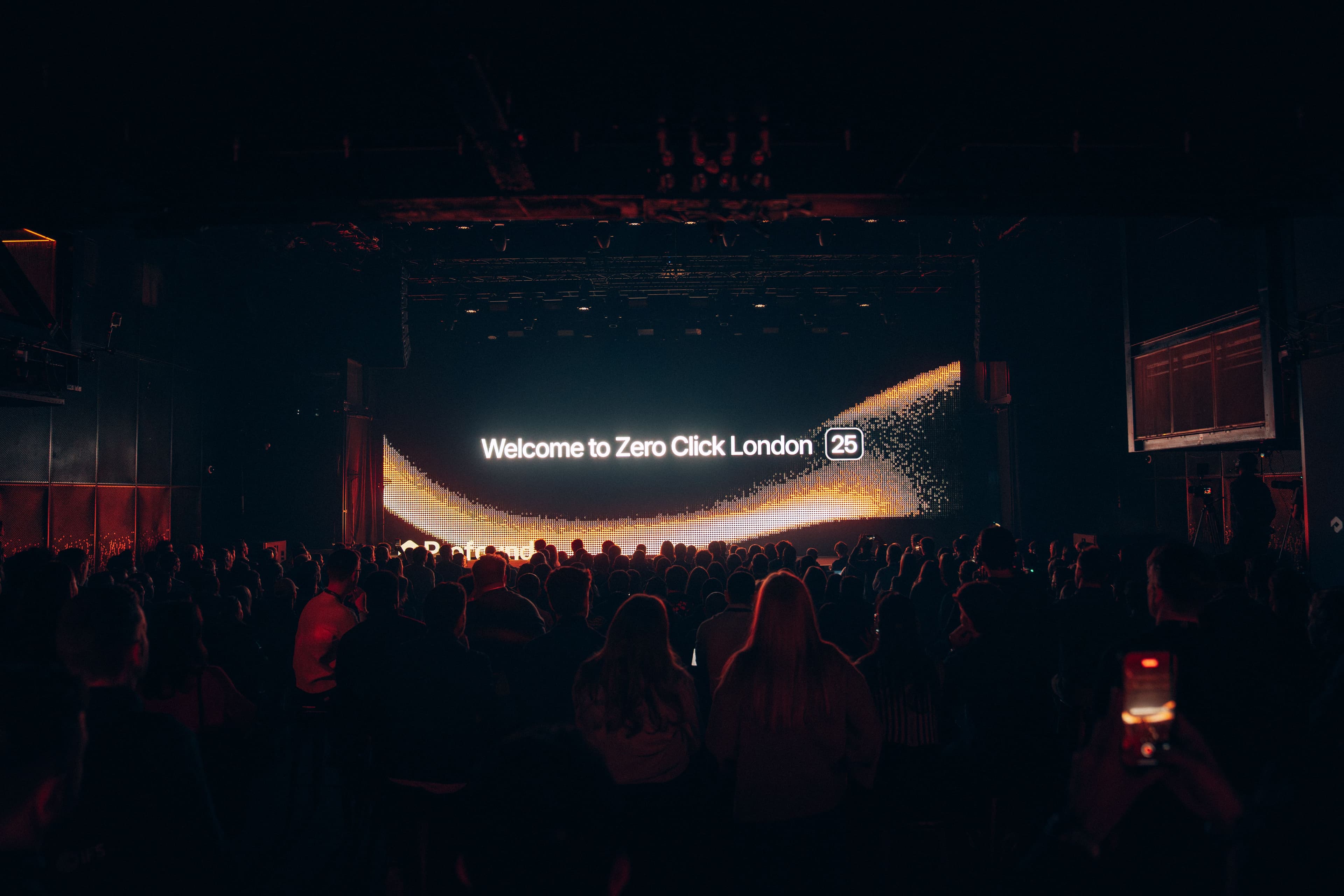
On November 19, 2025, over 500 marketing leaders gathered at the Outernet for our inaugural Zero Click London.
We brought together speakers from Reddit, Golin, Omnicom, Dentsu, and WPP Media to share how they're approaching marketing strategy, team design, and measurement in the AI marketing era.
Alongside them, our AI Strategy team presented the latest research on the sources that drive citations and why the agentic commerce shift has already happened.
This article summarizes our key takeaways from each session.
You can also watch all of the sessions on demand today on our YouTube channel.
A visionary's welcome
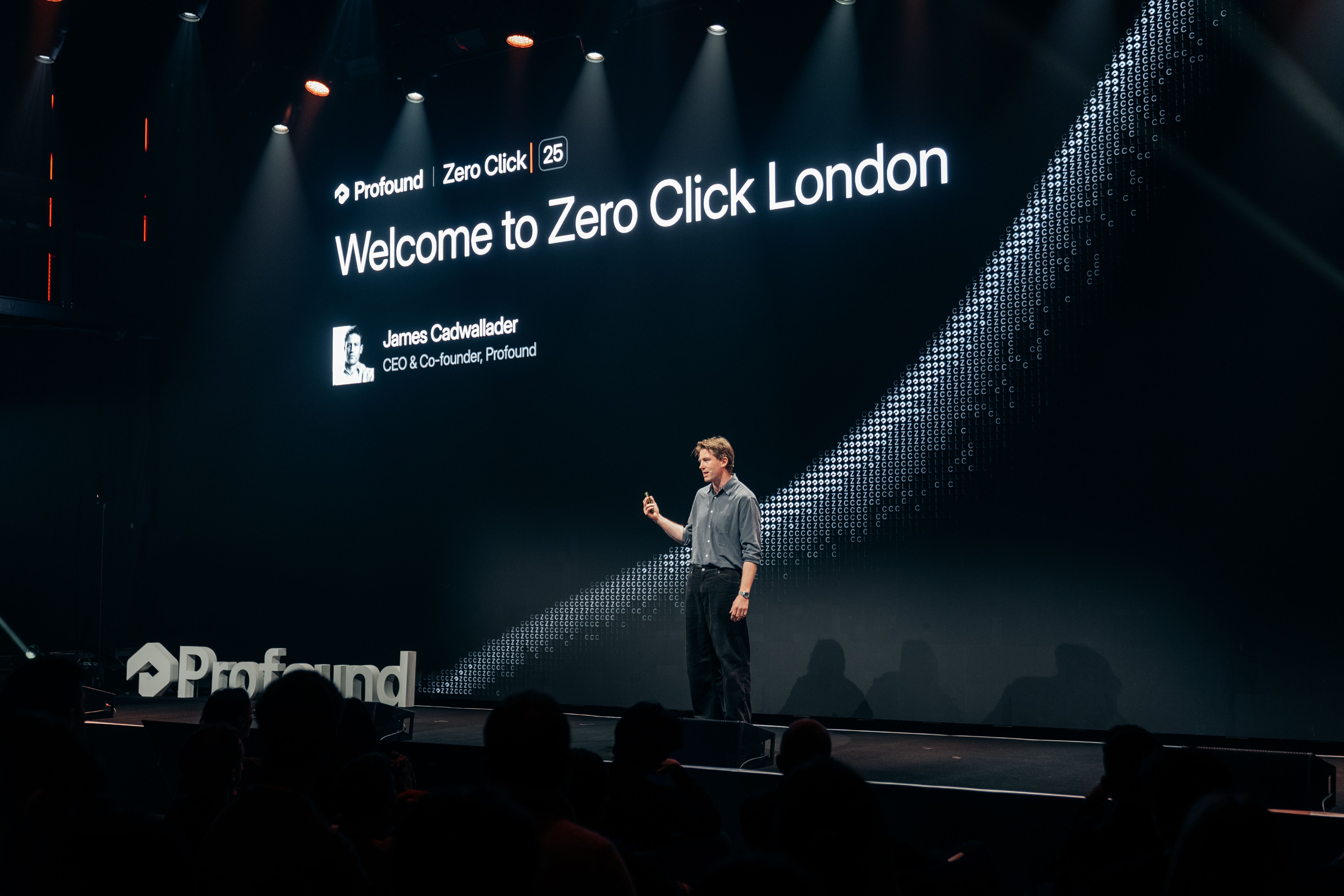
James Cadwallader, Co-Founder & CEO of Profound, opened Zero Click London 2025 by reframing what the zero-click shift actually means, and why the front door of the internet hasn't changed, but who walks through it has.
“ChatGPT sends a user agent through that same front door we've been using for the last 26 years and brings the information back on your behalf. Every company, every website on the planet now needs to think about the user agent visiting on behalf of the human.”

The machine customer era
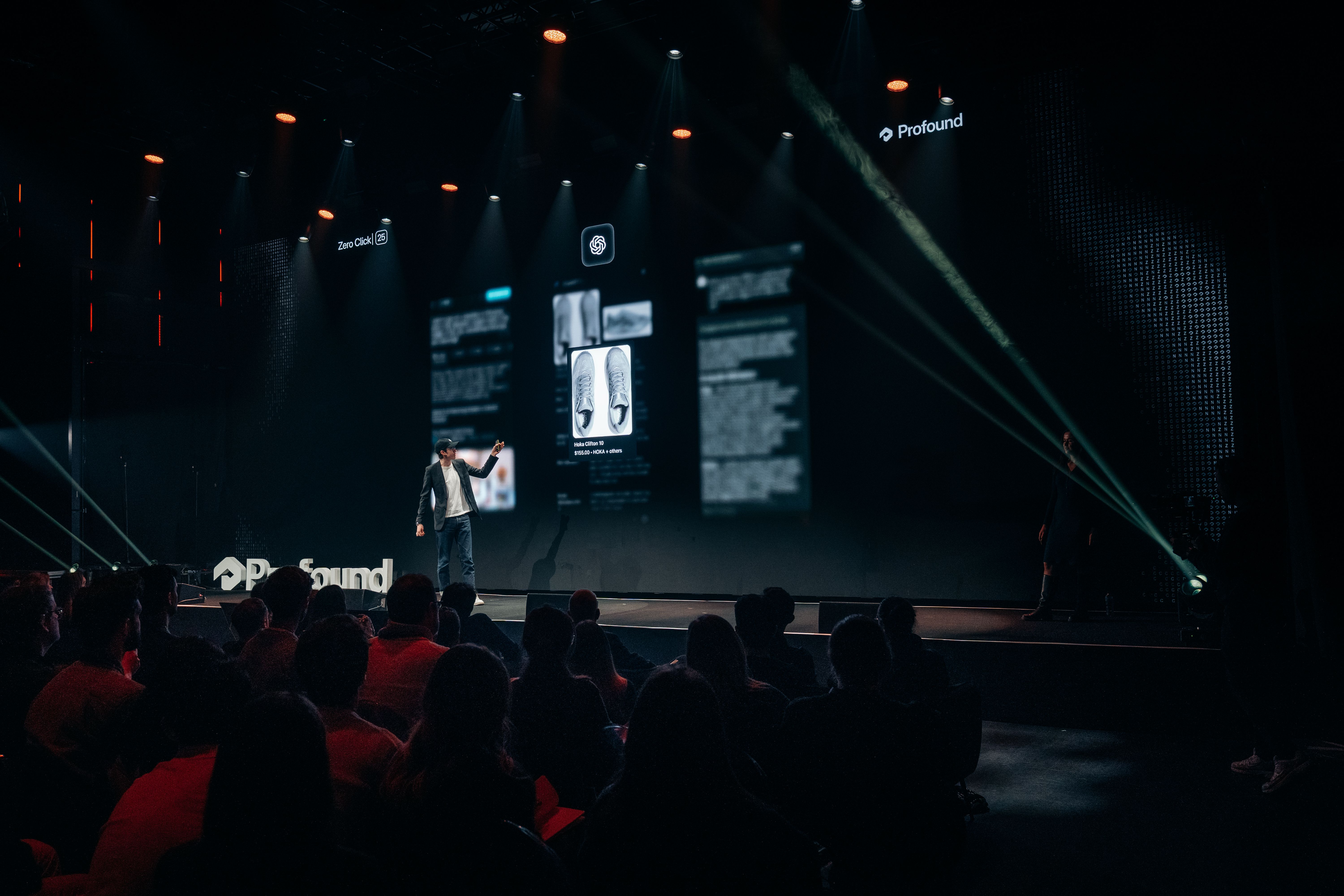
Josh Blyskal andJulia Moseyko from Profound's AI Strategy team unveiled the first real data on how agentic commerce is reshaping buying decisions. A single missing product feed field can cost a brand millions in downstream recommendations.
Key takeaways:
- AI is already influencing $104 billion in commerce annually, not a future projection but today's reality. 58% of consumers already use AI platforms to shop before instant checkout was even available.
- 80% of buyers who made a purchase said an Answer Engine guided at least half of their decision-making process, and those buyers reported an 85% conversion rate, making Answer Engines the most powerful decision machines in commerce history.
- The real revolution in AI shopping is not the checkout button, it's the product feed. This shift has made every product machine-readable, every merchant an API, and every transaction programmable; a single null field in a product feed can filter a brand out of every AI shopping result.
- Top-performing products in ChatGPT Shopping have nearly 10 times more FAQs than lower-performing ones, and rank one products use natural language URLs at nearly twice the rate of lower-ranked products.
Inside AI Search
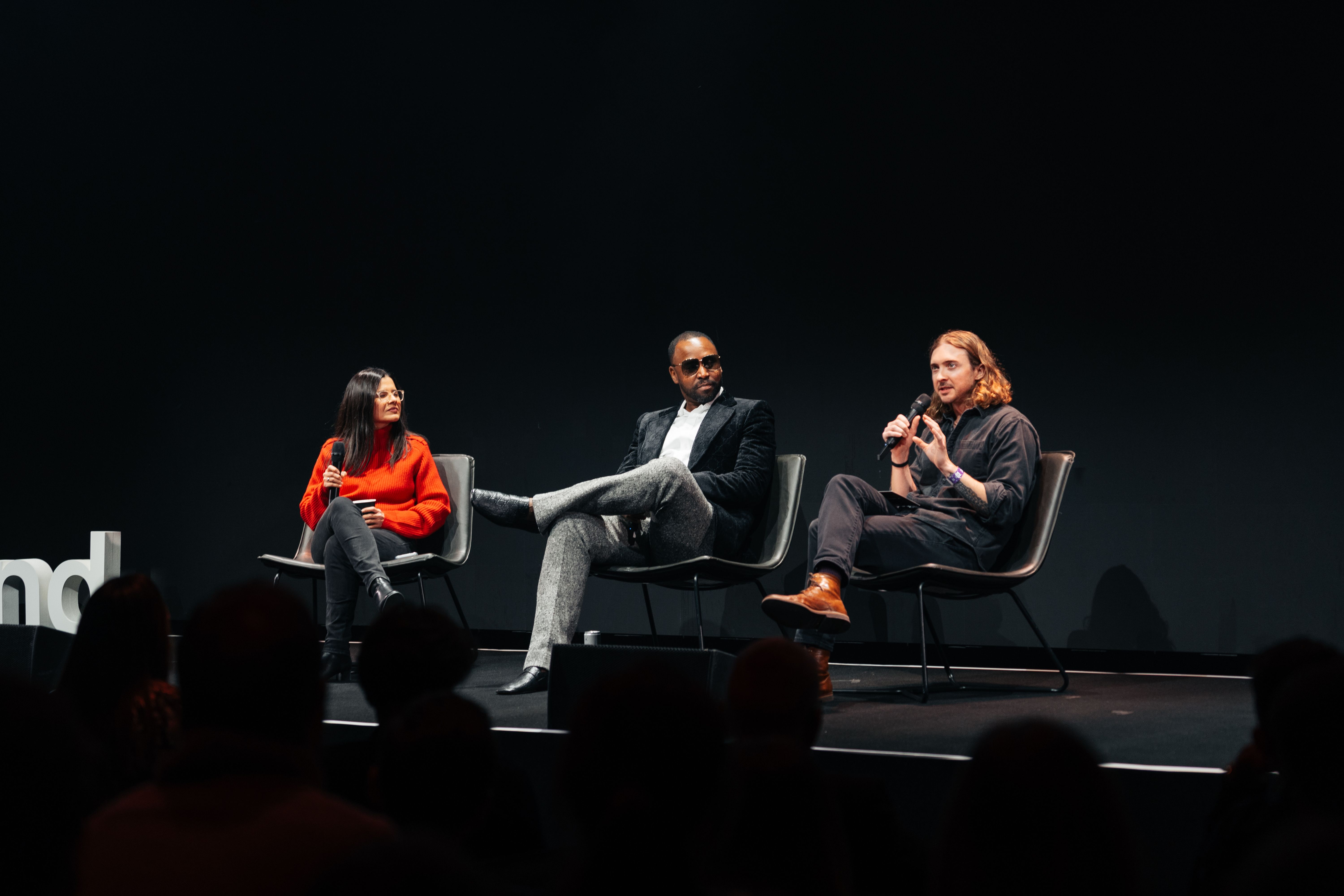
Nick Lafferty, Head of Growth Marketing at Profound, sat down with Mike King, Founder & CEO of iPullRank, and Aleyda Solis, Founder & AEO Consultant at Orainti, for a conversation on the state of AI Search and why SEOs are uniquely positioned to lead if they stop treating this like just another channel.
Key takeaways:
- The biggest false assumption in AI Search is treating it like traditional search and expecting the same KPIs, goals, and performance metrics. Answer engines are primarily branding channels right now, not performance channels, and the conversion impact is happening in ways that current measurement tools cannot yet capture.
- Brands that win AI Search in 18 months will be the ones that break down silos. Query fanout pulls from video, audio, community content, and documents simultaneously, meaning omni-channel consistency is no longer optional.
- SEOs are fumbling a once-in-a-career opportunity. There has never been more executive attention and budget available for what SEO teams do, and those who reframe themselves as strategic integrators across digital PR, content, and technical optimization will finally get the resources they have always needed.
- The right measurement framework for AI Search has three layers: performance metrics like referral traffic and on-site conversion, channel metrics like share of voice and citation quality, and input metrics like bot activity and passage relevance scores. Tracking only one of these layers will lead to the wrong conclusions.
The role of human conversation in the AI ecosystem
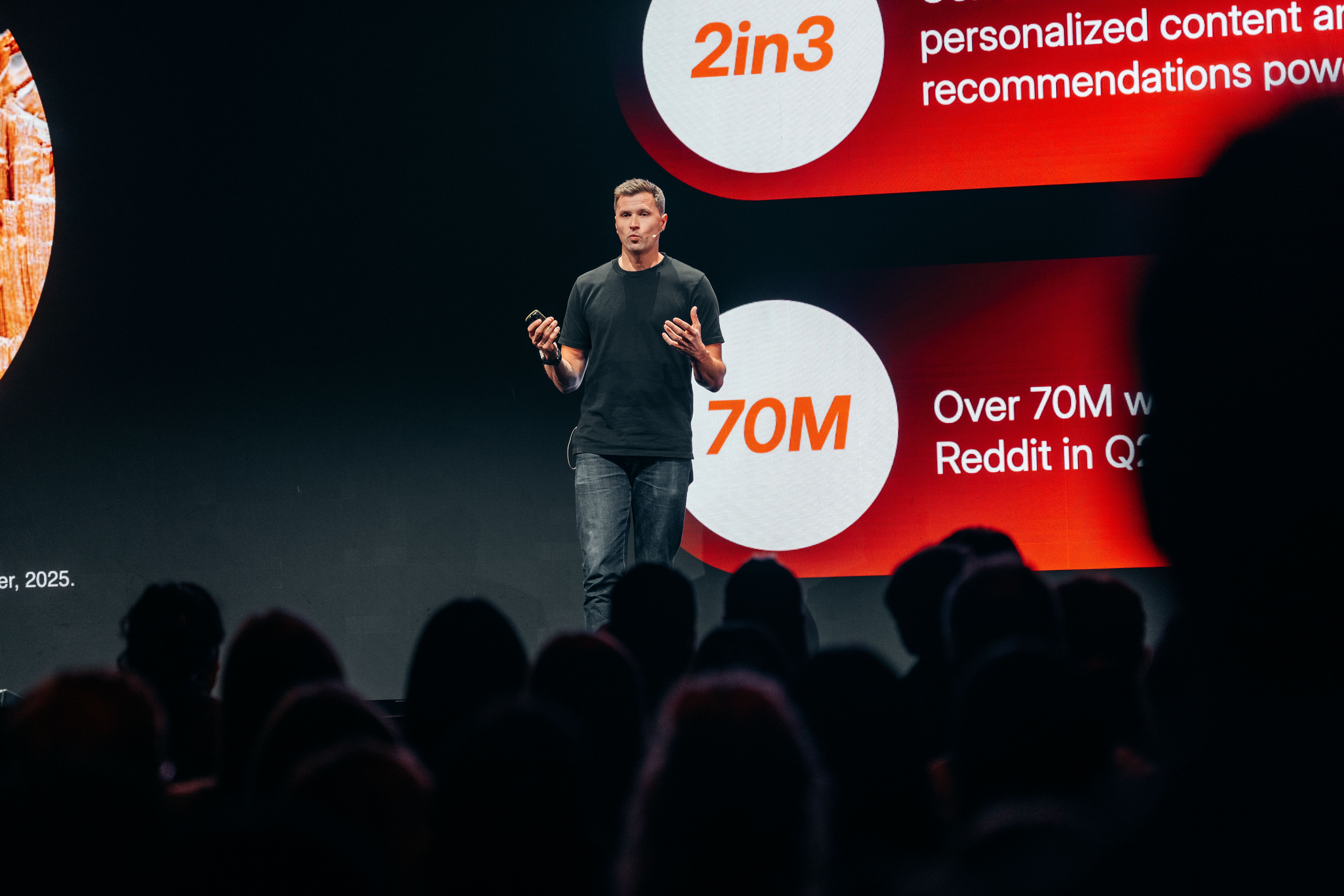
Jonathan Davies, Director, Head of Sales UK and EMEA Sales at Reddit, explained why human conversation is not being replaced by AI Search, it is becoming more essential to it. He also shared new research with Profound on exactly what makes Reddit content get cited.
Key takeaways:
- Reddit remains the number one most cited domain aggregated across AI platforms, and AI-driven search on Reddit grew 5x from Q1 to Q2. Answer engines are not replacing Reddit as a source, they are surfacing it more.
- When Answer Engines cite Reddit, they almost always cite it alongside industry and fact-based sites. Reddit provides the authentic human commentary while other sources provide the technical information, and nine of the top 10 domains co-cited with Reddit were non-conversational sources.
- Answer Engines pull from an average of only three to five subreddits per topic, and 37% of the top cited URLs include the words "best," "favorite," or "most". Opinionated, experience-based content with both positive and negative perspectives is what gets cited, not neutral brand messaging.
- 78% of all Reddit citations trace back to posts more than a year old, suggesting that post authority built through community engagement and repeated referencing matters far more than recency in how Answer Engines select Reddit content.
Agencies on the front line of AI Search
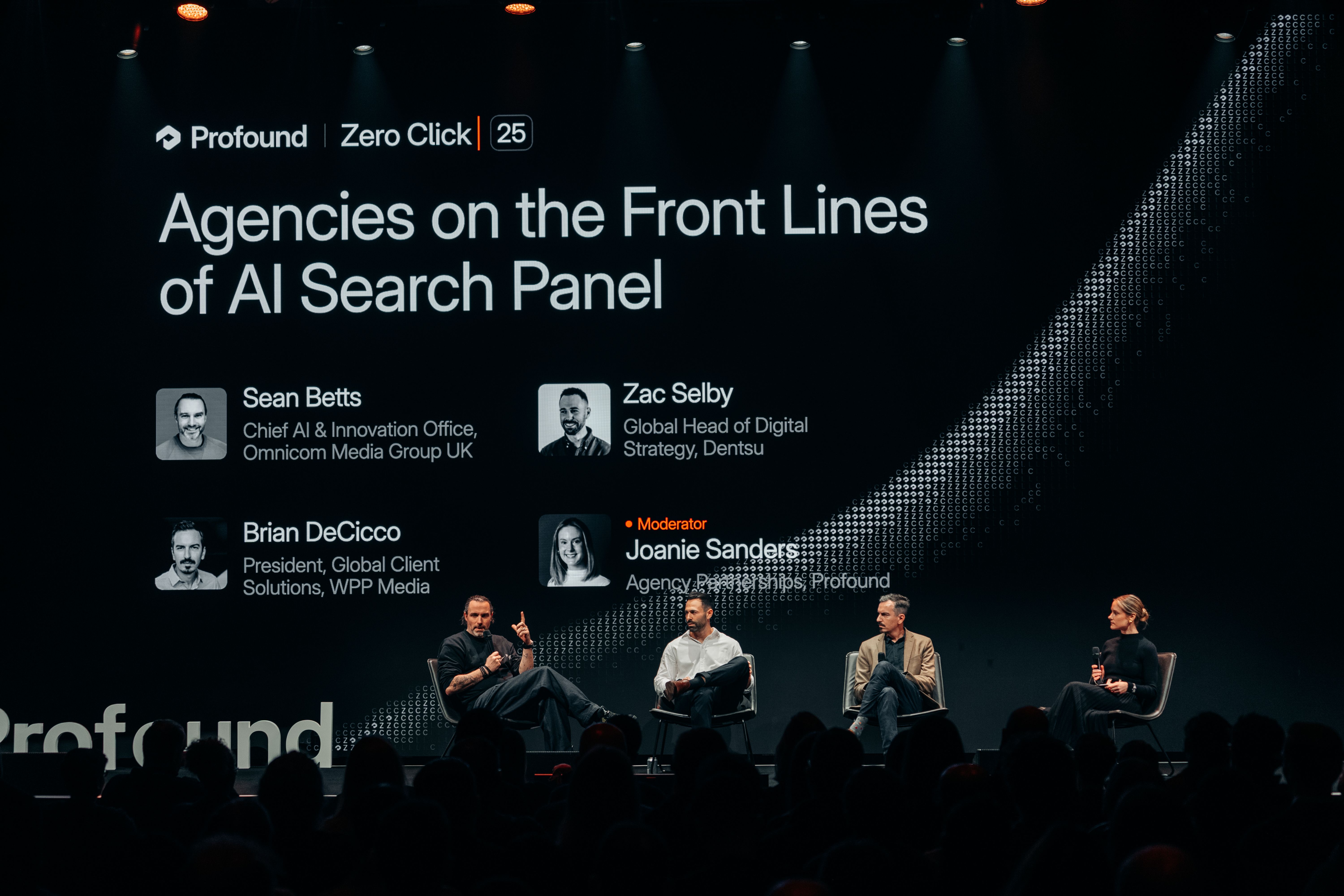
Joanie Sanders, Agency Partnerships Lead at Profound, moderated a panel featuring Sean Betts, Chief AI & Innovation Officer at Omnicom Media Group UK, Zac Selby, Global Head of Digital Strategy at Dentsu, and Brian DeCicco, President, Global Client Solutions at WPP Media. The panel discussed how the world's leading agencies are navigating AI Search and what brands needs to do right now to stay ahead.
Key takeaways:
- AI Search ownership doesn't belong to one team. Search, SEO, PR, brand, and analytics all need to be aligned, with SEO evolving into a new strategic discipline that integrates earned media, retail media, and content into a unified approach.
- The three biggest challenges in the space right now, in the words of the panelists: content commoditization, undefined rules, and not enough data.
- Brands will need two distinct but related strategies going forward. One optimized for humans, and one optimized for AI Search bots. Outputs will include text-heavy FAQ pages, structured data, and semantic URLs designed for machine parsing rather than human browsing.
- Measurement frameworks need to be rebuilt from scratch. The entire purchase funnel is collapsing inside AI platforms with no marketing touch points, and connecting AI Search interactions to sales conversions is the defining challenge agencies and brands will spend the next two years solving.
Earned media in the age of AI Search
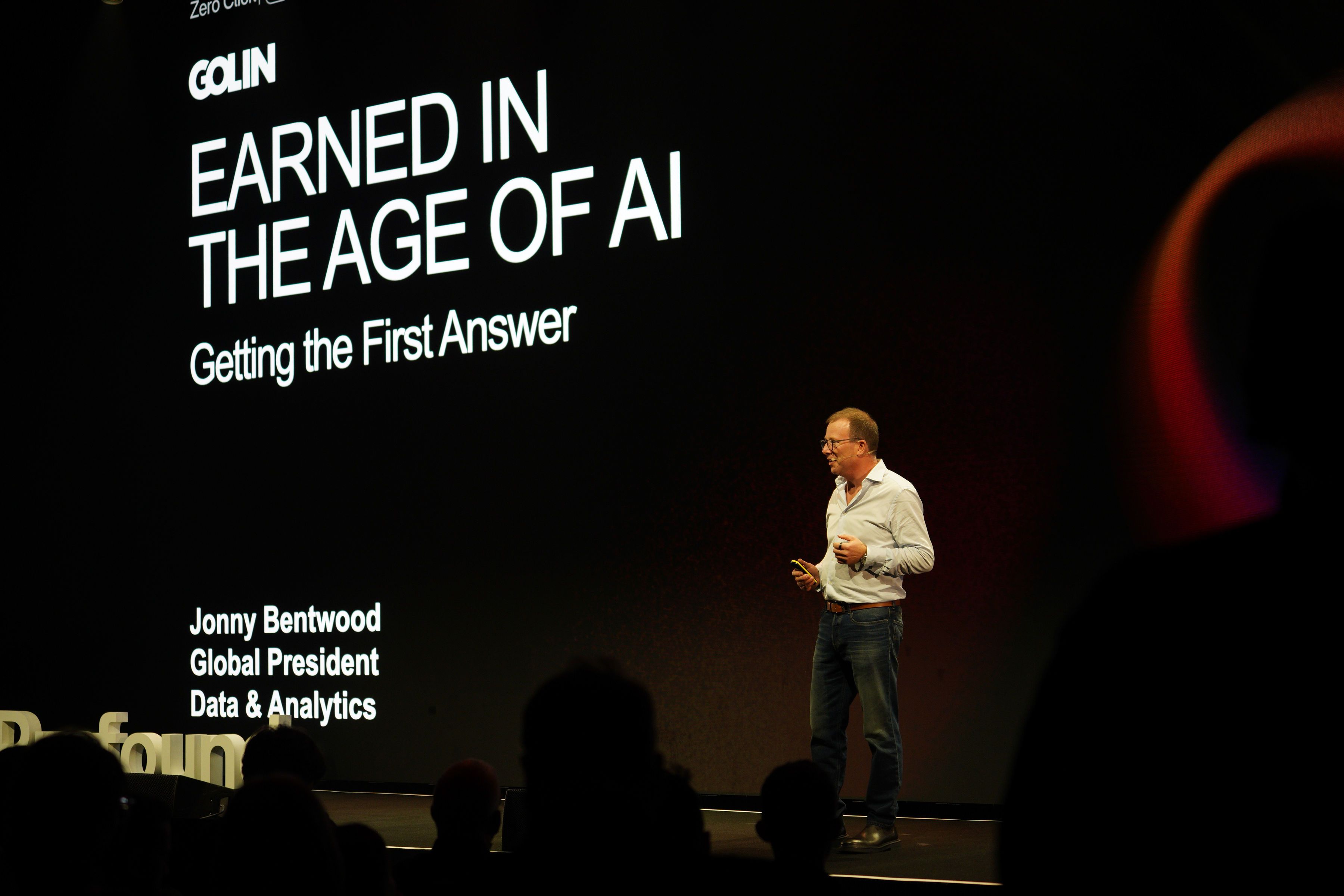
Jonny Bentwood, Global President of Data & Analytics at Golin, shared that earned media is not dying in the age of AI Search, rather, it is becoming the primary driver of AI visibility. During the session he shared a practical playbook for how PR professionals can adapt their strategies to optimize for higher brand visibility.
Key takeaways:
- 90% of AI visibility is driven by earned media citations, not owned content, not social, not Tier 1 publications behind paywalls. This makes earned media the single most important lever any brand can pull in AI Search.
- Social media is effectively invisible to answer engines as Instagram and TikTok content cannot be read. Reddit, Quora, and open web publications are the dominant citation sources.
- Brands need a Tier 1 AI list just as they have a Tier 1 media list and influencer list. It's a specific set of publications, communities, and domains that actually drive citations for their category, which will look completely different from their traditional PR target list.
- Answer-first content such as FAQs, how-to guides, structured press releases, and blog posts hosted on your own domain, and written explicitly for answer engines, can generate AI citations within 20 minutes of publication when structured correctly.
Closing remarks
Thank you to every speaker, partner, and attendee who made Zero Click London possible. The quality of thinking in that room set a standard we intend to build on.
In 2026, we're launching the Zero Click World Tour, with stops in San Francisco, New York, London, Sydney, and Singapore. Request your spot and be on the lookout for updates on our Zero Click website.
We'll see you there.